
- Stone16
- Reports3


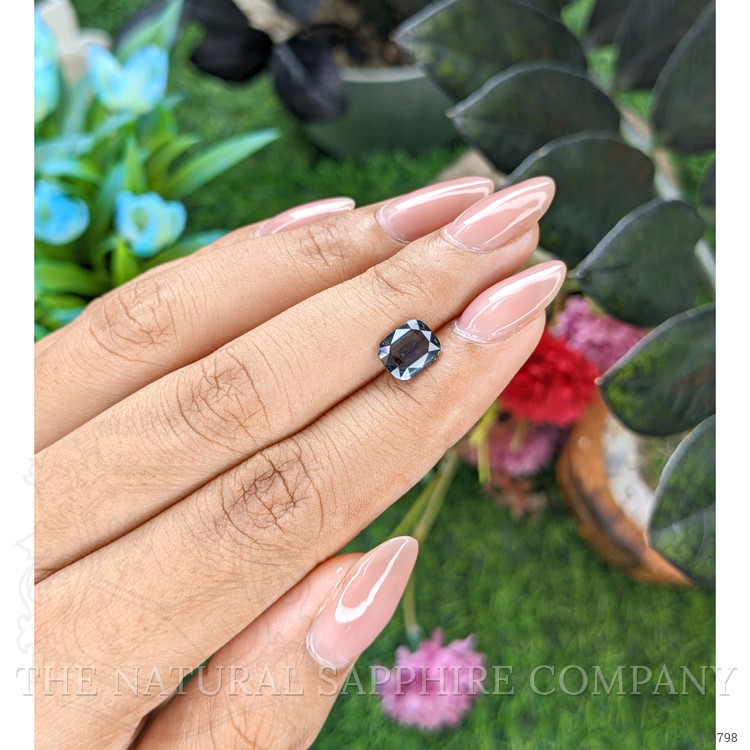


1.70 Ct. Color Change Sapphire from Tanzania
This loose stone ships by Nov 21
Item ID: | S39798 |
|---|---|
Dimensions (MM): help | Length: 7.89 Width: 6.41 Height: 3.15 |
Weight: | 1.70 Ct. |
Color: help | Color Change |
Color intensity: help | Intense |
Clarity: help | Very Slightly Included |
Shape: help | Cushion |
Cut: | Mixed Brilliant Cut |
Cutting style: | Faceted |
Enhancements: help | No Enhancement |
Origin: help | Tanzania |
Per carat price: help | $706 |
This 1.70 carat cushion shape color change sapphire presents as a technically refined specimen, transparent with a mixed brilliant cut that balances step and brilliant facet geometries, dimensions 7.89 x 6.41 x 3.15 mm, depth approximately 44 percent. The cutter has retained a generous table and a pavilion geometry designed to optimize return of light while preserving the stone depth that produces strong color saturation. Clarity is graded very slightly included at eye level, indicating that inclusions are minimal and do not detract from overall transparency when set, and the polish is excellent, giving crisp facet junctions and clean facet reflections. This sapphire is untreated, no enhancement, and originates from Tanzania, offering natural provenance that is sought after by connoisseurs. The mixed brilliant cut provides a controlled balance between scintillation and broad color flash, allowing body color and change phenomena to be read clearly through the crown without excessive light leakage. The cushion outline was maintained with gently rounded corners to preserve carat weight while producing a balanced spread on the finger or pendant.
The color change behavior is one of the most technically interesting aspects of this sapphire, with intense color intensity and a pronounced shift depending on illumination. In cool fluorescent and daylight balanced lighting the stone exhibits a deep teal to bluish green appearance, while under incandescent lighting the stone shifts toward a vivid blue with violet undertone, the latter being more apparent through the table and crown facets. This behavior arises from differential absorption across the visible spectrum caused by transition metal trace elements and strong pleochroism along different crystallographic axes, combined with the facet architecture which modulates apparent hue as the viewing angle changes. The mixed brilliant pavilion facets create flash windows and color zones that emphasize the dichroic and trichroic nature of the sapphire, so that small rotations reveal different dominant wavelengths. For designers and gemologists, this means setting orientation and crown exposure are critical to present the desired color under expected lighting conditions, and the stone rewards versatility with reliable change under common light sources.
When specifying this sapphire for a custom piece, consider complementary gemstones and metal choices that enhance either the teal or blue violet phases. For a cooler, more classical presentation use platinum or 18k white gold with a fine micro prong or low bezel head that keeps the pavilion open to light, and surround the center with single cut or modern brilliant melee diamonds in a halo to increase perceived brightness and contrast. A halo of 1.0 to 1.5 mm diamonds will create a sharp white contrast, while tapered baguette white diamonds will echo the cushion geometry and offer a stepped transition from center stone to shank. To emphasize the teal phase, pair with green garnets such as tsavorite in calibrated trillion or round cuts, using sizes that buttress the shoulders, typically 3.0 to 4.0 mm for balance with the 7.89 by 6.41 mm center. For a design that accentuates violet notes pair with heated tanzanite or violet spinel, using trapeze or shield cuts that sit flush against the cushion shoulders. For metal warmth and color interplay, 18k yellow or rose gold will increase the perceived green teal warmth, creating a vintage sensibility and deepening the change effect under incandescent light.
At The Natural Sapphire Company our gemologists have evaluated this material for cut quality, clarity, and polish, and confirmed its natural, non enhanced status and Tanzanian origin. We can provide detailed imagery and independent laboratory reporting on request, and we advise mounting the stone with an open pavilion or low bezel so that light transmission is maximized and the color change is fully visible in everyday wear. Routine care is straightforward, clean with warm soapy water and a soft brush, avoid ultrasonic cleaning if there is concern about internal fissures, and avoid exposing the mounting to harsh chemicals which can affect metal and settings. For custom design consultations we recommend mockups that simulate both daylight and incandescent lighting to finalize metal choice and side stone selection, ensuring the completed piece showcases the sapphire in both of its distinct color personalities. For more technical specifications, setting recommendations, or to commission a bespoke design centered on this sapphire, contact The Natural Sapphire Company for expert guidance and a tailored design plan.


