
- Stone10
- Reports3
-emeraldcut-blue-sapphire-1.6100-cts-s24713-1.jpg?d=200x200&v=20250513105834)
-emeraldcut-blue-sapphire-1.6100-cts-s24713-lifestyleimage-1.jpg?d=200x200&v=20250515012650)



-emeraldcut-blue-sapphire-1.6100-cts-s24713-1.jpg?d=750x750&s=nsc&v=20250513105834)
-emeraldcut-blue-sapphire-1.6100-cts-s24713-lifestyleimage-1.jpg?d=750x750&s=nsc&v=20250515012650)


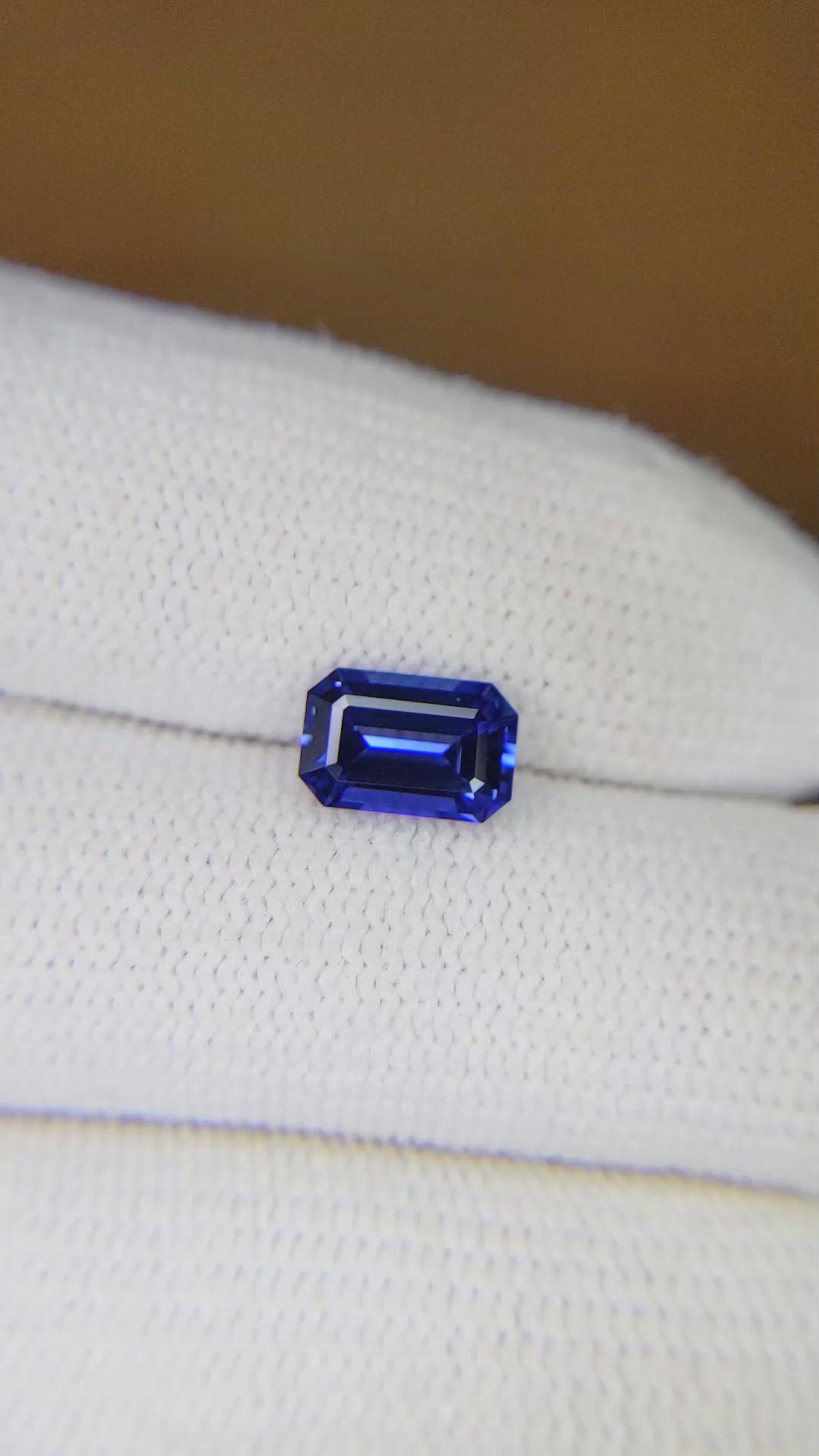
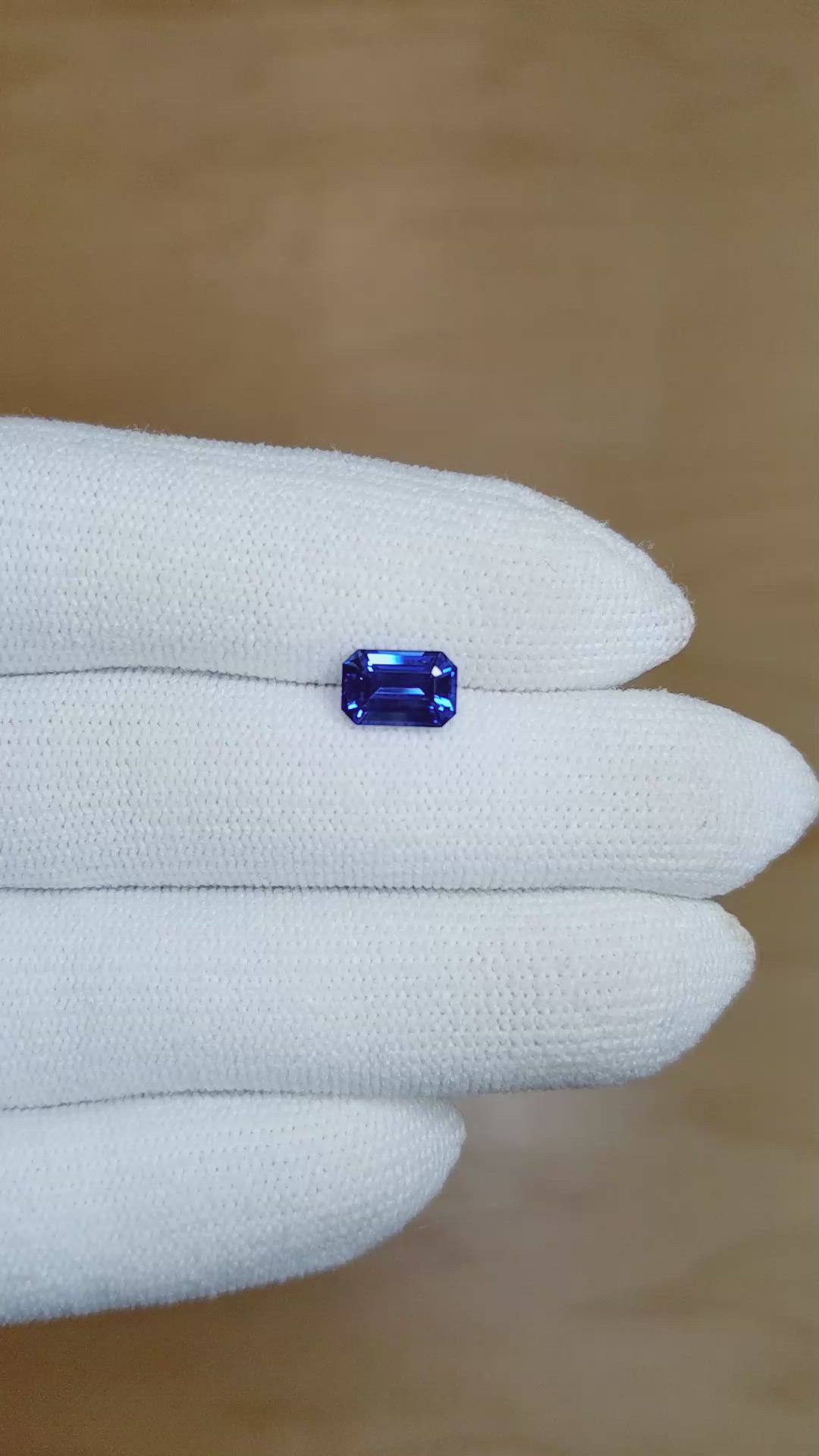
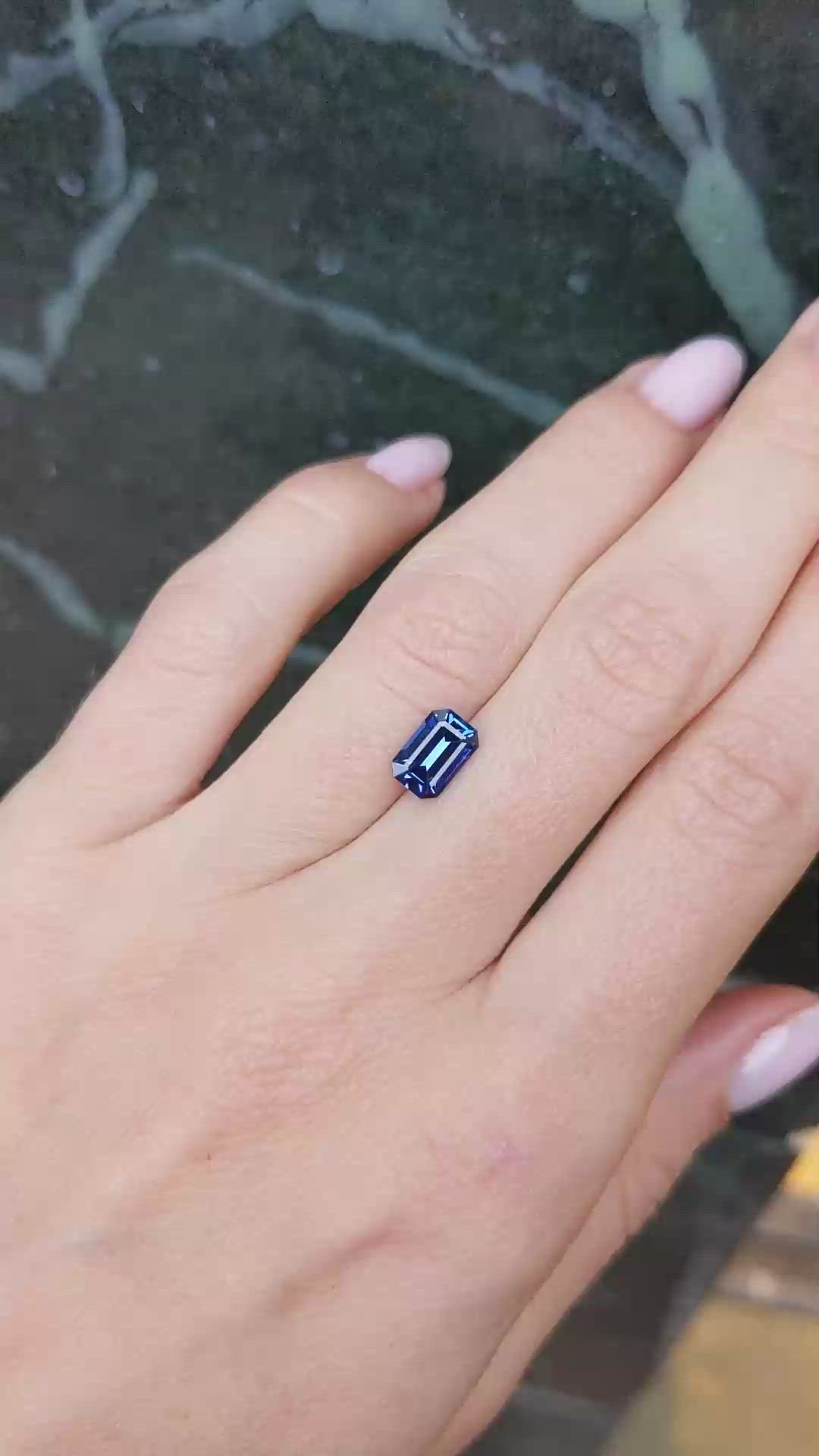
1.61 Ct. Blue Sapphire from Ceylon (Sri Lanka)
This loose stone is available to ship now
Item ID: | S24713 |
|---|---|
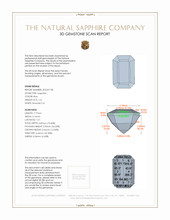
Dimensions (MM): help | Length: 7.77 Width: 5.16 Height: 3.87 |
Weight: | 1.61 Ct. |
Color: help | Blue |
Color intensity: help | Intense |
Clarity: help | Very Very Slightly Included |
Shape: help | Emerald Cut |
Cut: | Emerald Cut |
Cutting style: | Faceted |
Enhancements: help | Heat Treated |
Origin: help | Ceylon (Sri Lanka) |
Per carat price: help | $1,800 |
This sapphire is a transparent, faceted, emerald cut blue sapphire weighing 1.61 carats, with precise measurements of 7.77 x 5.16 x 3.87 mm, and a length to width ratio of approximately 1.50, a proportion chosen to balance elegance with optimal light performance. The cutting style is an emerald step cut, with broad parallel crown and pavilion facets, truncated corners and a generous rectangular table, engineered to present colour face up while preserving the stone integrity. Clarity is graded as very very slightly included when evaluated at eye level, a quality that allows the step facets to read clean and even, producing hall of mirrors flashes rather than distracting contrast. Colour intensity is classified as intense, with a vivid Ceylon blue that reads slightly medium dark in tone, and the polish is excellent, suggesting crisp facet junctions, uniform facet angles and a mirror like finish that maximizes both saturation and spectral return. Enhancement by heat treatment is disclosed, a stable and accepted process applied to improve both hue and apparent clarity, and provenance is Ceylon, Sri Lanka, a source renowned for sapphire material that combines lively saturation with a slightly violet leaning blue in its best examples. The Natural Sapphire Company stands behind the origin and treatment disclosure, and provides full documentation on request.
The narrative of formation begins hundreds of millions of years ago during episodes of high grade metamorphism and orogenic activity that transformed Sri Lanka into a gem bearing terrain. Corundum crystals, the mineralogical name for gem quality sapphire, grew within aluminum rich, silica poor metamorphic host rocks, often within marble lenses or in contact zones where fluid flux and recrystallization organized chemical constituents into single crystal growth. Trace impurities of iron and titanium became incorporated into the corundum lattice during crystal growth, and the specific interaction between iron and titanium creates the intervalence charge transfer mechanism that produces the characteristic blue. Over geological time, crystal growth proceeded slowly, allowing large, well formed corundum prisms to develop, and subsequent tectonic uplift and erosion liberated these crystals from their parent bedrock. Secondary concentration processes then deposited sapphire crystals into alluvial gravels and residual soils, where natural tumbling and sorting removed weaker overgrowths but preserved durable facies. The material that we now cut was liberated during these ancient cycles, and carries within it the structural memory of those high temperature and pressure conditions, which is visible as growth zoning and occasionally as minute silk or mineral inclusions that attest to an authentic geological genesis.
From a lapidary and technical perspective, the selection of an emerald step cut for this particular crystal is an intentional decision informed by the stone chemistry and internal habit. Step faceting places emphasis on color and clarity rather than on scintillation, using broad facets that act as planes of colour and depth, and providing a calm, architectural aesthetic that is well suited to material with very very slight inclusions and intense saturation. The cutter calibrated facet angles and pavilion depth to produce a depth ratio that mitigates windowing while preserving face up weight, the result being a balanced appearance in table brightness and body colour when viewed face up under standard daylight conditions. Heat treatment was applied prior to cutting to enhance overall hue uniformity and to reduce the visual impact of inclusions by altering the microstructure, this process being thermal annealing rather than any form of filling, and it is considered stable for normal wear. The excellent polish and tight symmetry demonstrate skilled lapidary execution, with facet intersections that align precisely to control light pathing and to maximize the apparent colour velocity as the stone is tilted. In practical terms, the sapphire will present as an intensely blue, near eye clean gem that displays the hallmark Ceylon vibrancy and a controlled, sophisticated sparkle appropriate for a high quality emerald cut stone. The Natural Sapphire Company offers this piece with full treatment disclosure and origin verification, and I am available to discuss its optical characteristics, provide detailed imagery, or explain how the cutting choices were optimized to bring out the best in this 1.61 carat, 7.77 x 5.16 x 3.87 mm, Ceylon blue sapphire.


