
- Stone14
- Reports3


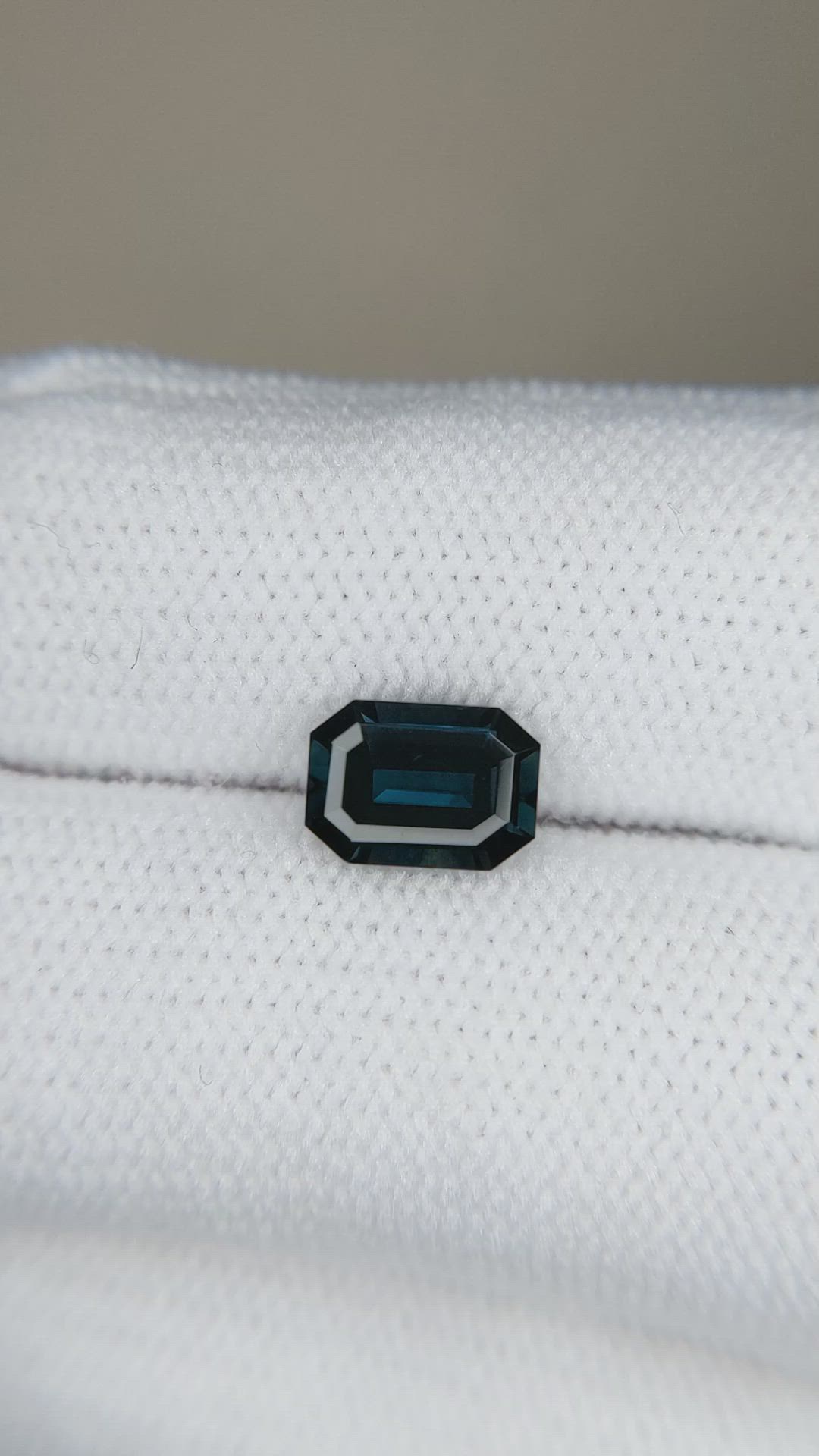
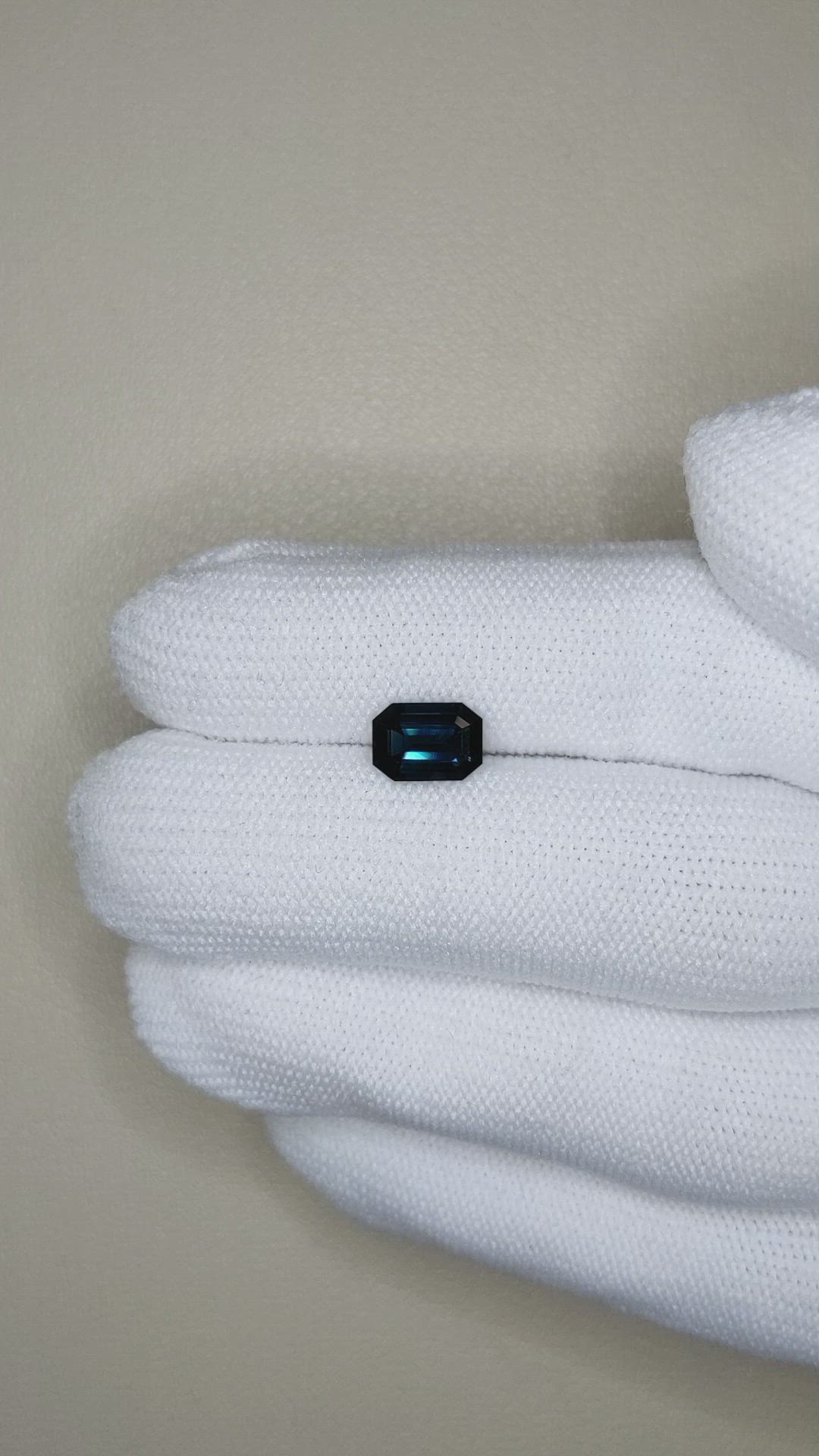
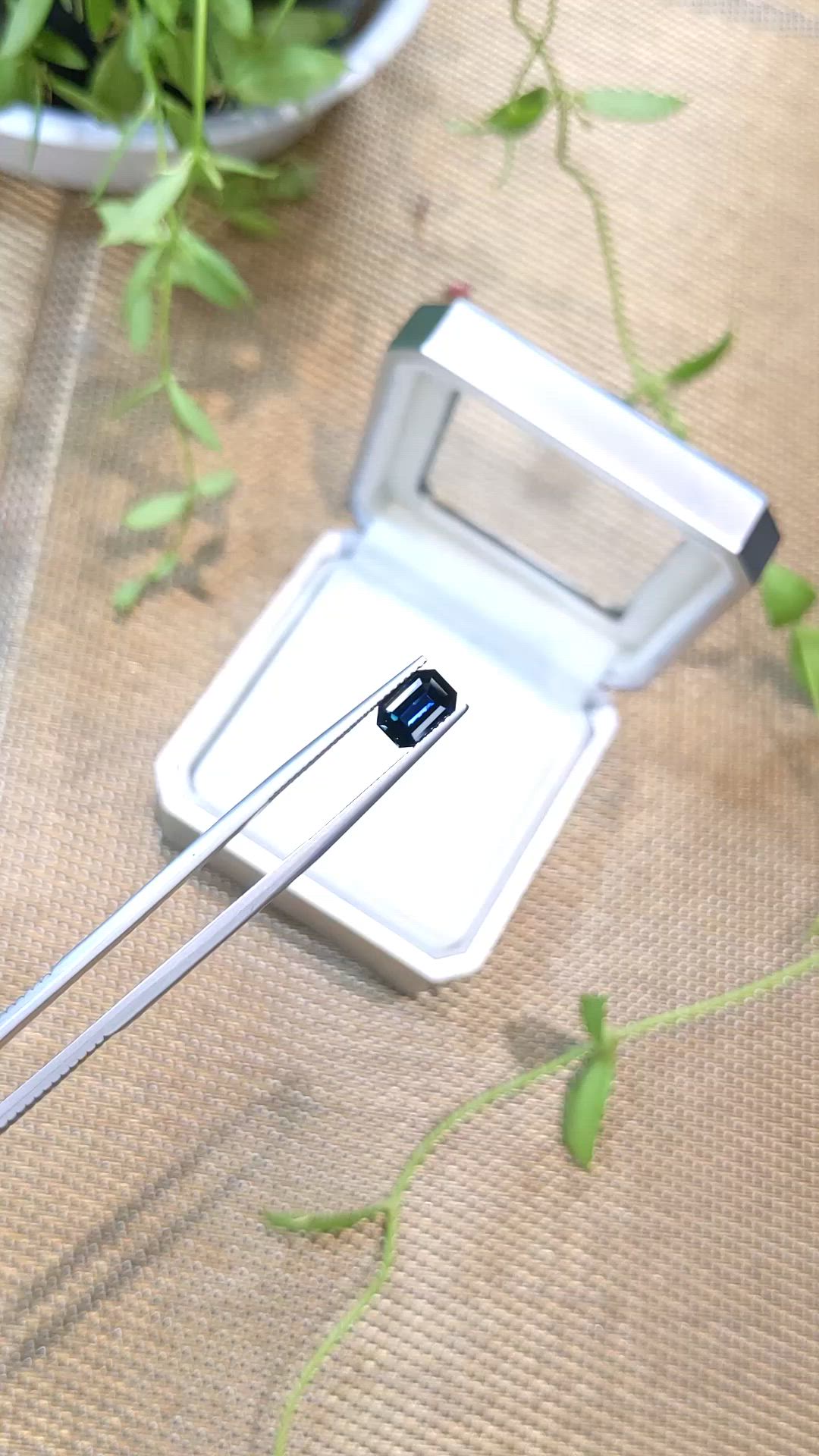
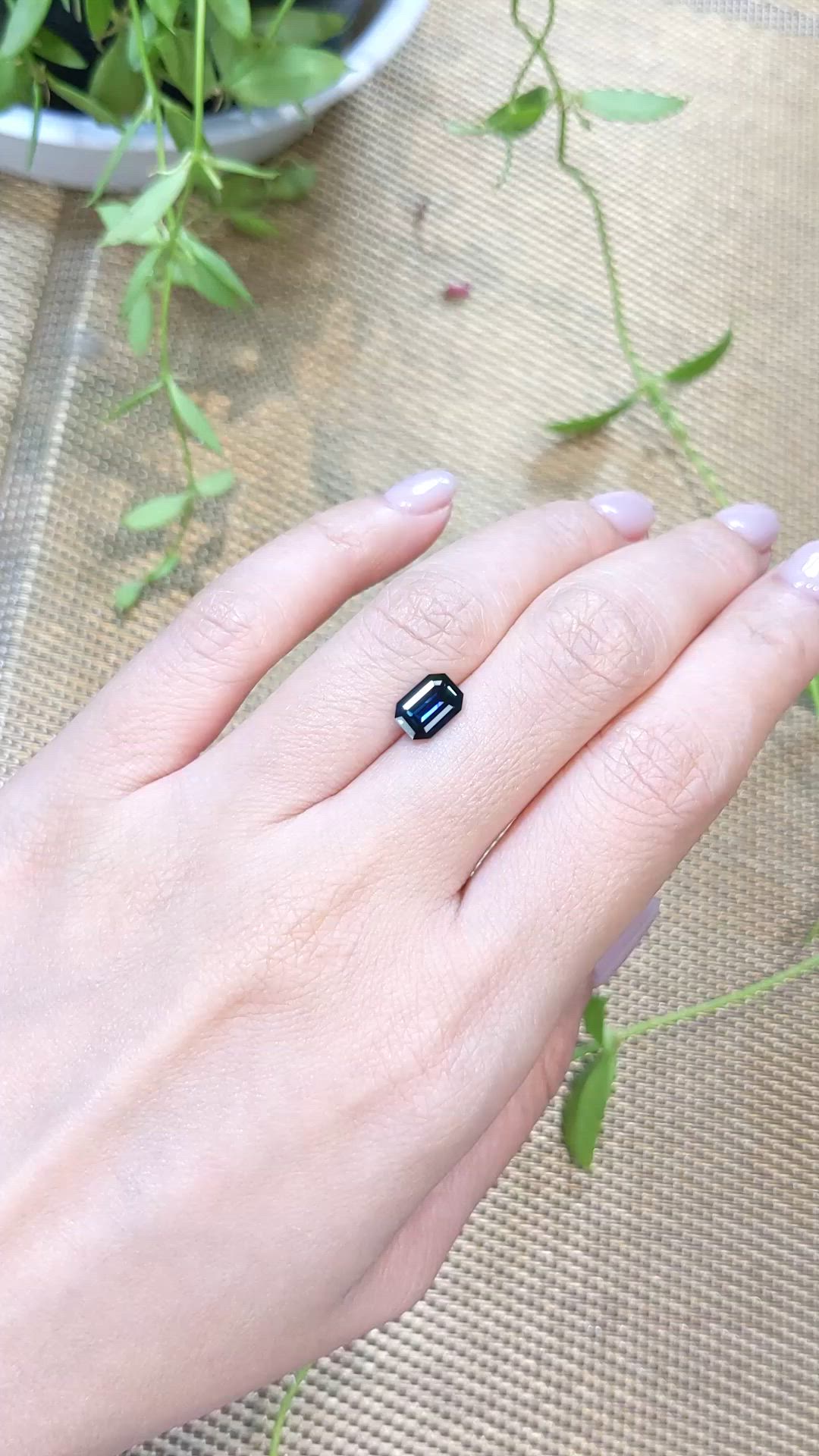
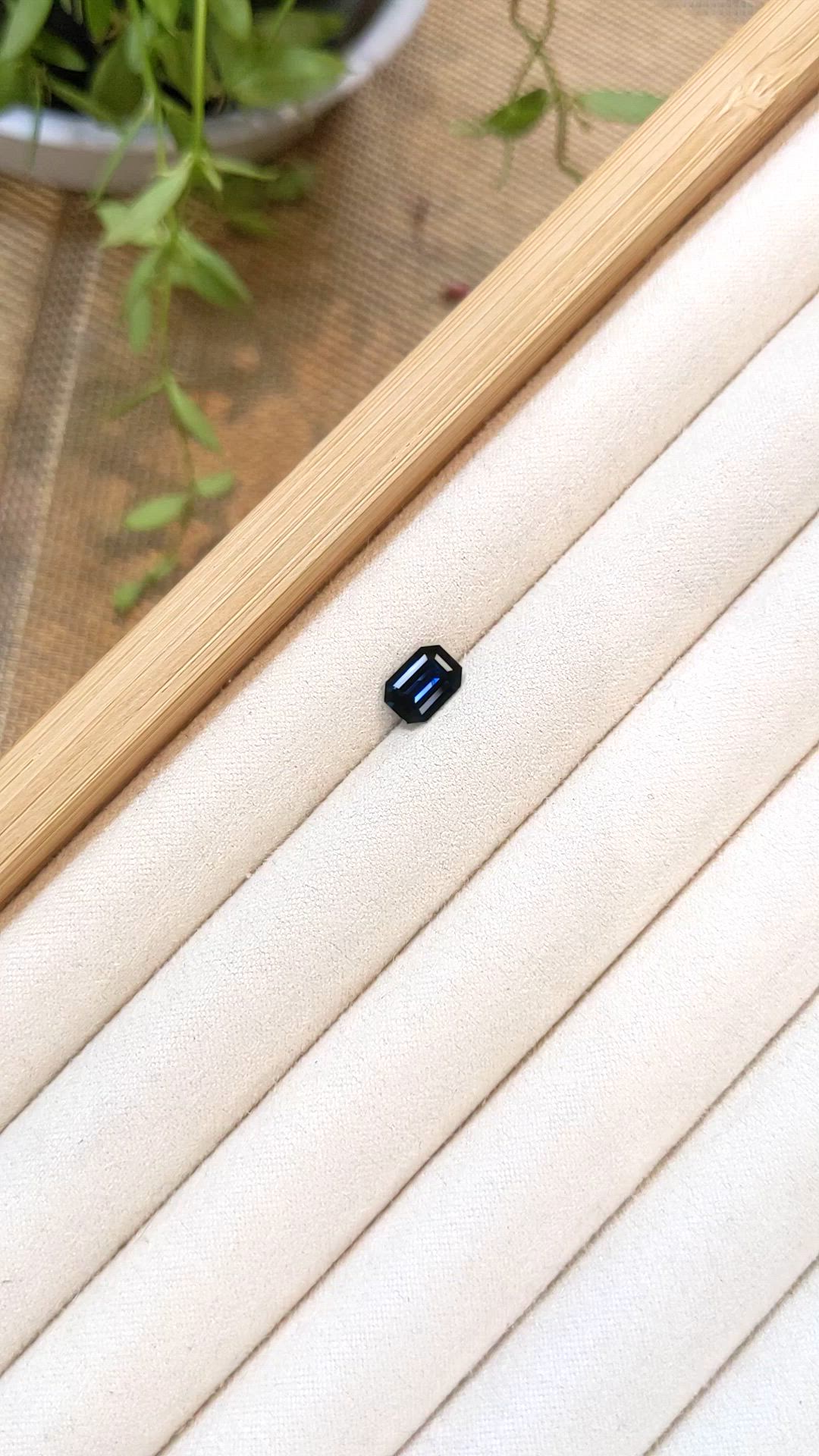




1.54 Ct. Blue Sapphire from Australia
This loose stone is available to ship now
Item ID: | S40335 |
|---|---|
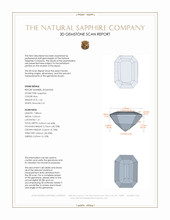
Dimensions (MM): help | Length: 7.88 Width: 5.59 Height: 3.49 |
Weight: | 1.54 Ct. |
Color: help | Blue |
Color intensity: help | Dark |
Clarity: help | Very Slightly Included |
Shape: help | Emerald Cut |
Cut: | Emerald Cut |
Cutting style: | Faceted |
Enhancements: help | Heat Treated |
Origin: help | Australia |
Per carat price: help | $800 |
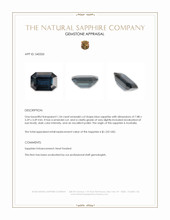
This sapphire is a transparent, emerald cut blue sapphire weighing 1.54 carats, with precise dimensions of 7.88 by 5.59 by 3.49 millimeters. The rectangular step cut presents crisp facet planes and an emphasized color window, and the gem carries a clarity grade described as very slightly included when evaluated at eye level, indicating only minimal internal features that do not materially interrupt the color or light return. Color intensity is classified as dark, yielding deep, saturated blue tones across the table and step facets, and the stone displays an excellent polish with sharp facet junctions and a mirror like finish. The gem has undergone standard heat treatment to improve color and clarity, and its documented origin is Australia, a source known for producing sapphires with darker blue to blue green character. This sapphire is offered by The Natural Sapphire Company, and the technical presentation here is intended to give a clear and accurate basis for evaluation by connoisseurs and setters.
From a cutting and optical perspective the emerald cut used on this piece is a considered choice for a darker blue sapphire, because the long step facets create broad planes that emphasize hue and tone rather than scintillation. The table is sufficiently large to present a stable field of color, while the step cut pavilion and crown angles are tuned to a depth of 3.49 millimeters which corresponds to a depth ratio of approximately 51.8 percent based on the average of the length and width. That depth ratio preserves a balance between face up spread and saturated color, avoiding a closed up appearance that can occur in overly deep stones. The step faceting produces characteristic linear flashes and broad color reflections, and because sapphire exhibits pleochroism in different crystal directions the gem will reveal subtle shifts between richer and cooler blue tones as it is rotated. The cutting also maintains consistent symmetry and well aligned facet junctions, important factors for mounting stability and for achieving predictable light behavior under both daylight and artificial illumination.
Regarding clarity, treatment and provenance the description of very slightly included evaluated at eye level indicates that the inclusions are minor and typically masked by the stone s dark color and step cut planes. Inclusions in natural sapphires often consist of mineral crystals, thin rutile silk needles, or growth zoning and these features serve as diagnostic evidence of natural formation. Heat treatment applied to this sapphire is a standard trade accepted enhancement used to dissolve certain included phases and to refine color by modifying the distribution of iron and titanium within the corundum lattice. The result is a stable, durable color improvement, and when executed correctly the treatment does not detract from the stone s integrity or long term performance. Originally sourced in Australia this sapphire reflects the region s typical color palette with deeper saturation and occasional greenish overtones, and The Natural Sapphire Company discloses origin and treatment history as part of our commitment to transparent sourcing and responsible supply chain practices.
When comparing this natural Australian sapphire to laboratory grown counterparts it is important to evaluate both material and provenance factors with technical clarity. Lab grown sapphires produced by flame fusion, flux, or other growth techniques can offer very high clarity and uniform color, however their internal growth features tend to be diagnostic and consistent across stones, showing curved growth lines in flame fusion material, flux inclusions in flux grown crystals, or gas bubble presence that differs from natural crystal inclusions. Natural sapphires like this Australian specimen present a more complex internal topology, including natural growth zoning, discrete mineral inclusions, and silk patterns that interact with light to produce nuanced color depth, and these subtleties are prized by collectors and by setters who value unique optical character. From an investment and rarity standpoint natural gems maintain a scarcity premium and provenance history that lab grown material cannot replicate, and for buyers who prioritize heritage and long term value retention the natural stone offers distinct advantages. Additionally the natural stone s response to heat treatment is well documented and widely accepted in the trade, whereas disclosure of treatment and origin is an essential differentiation that The Natural Sapphire Company provides to ensure informed purchasing decisions.
For precise selection and setting purposes this sapphire s emerald cut proportions, its 1.54 carat weight and its depth ratio make it highly suitable for a range of fine jewelry applications where color stability and elegant geometry are desired. The combination of very slightly included clarity, dark color intensity and excellent polish produces a visually dense yet refined face up presentation that performs well in solitaire, halo or three stone designs, and the step faceting will allow a skilled lapidary or jeweler to leverage the stone s optical properties to maximum effect. In comparison with lab grown alternatives the natural Australian sapphire carries the irreplaceable markers of geological origin and crystal growth, attributes that inform both aesthetic appreciation and market value. The Natural Sapphire Company stands behind the technical description and provenance of this gem, and we supply the relevant disclosure and documentation to support confident appraisal, setting, and long term stewardship of the stone.


