
- Stone14
- Reports3


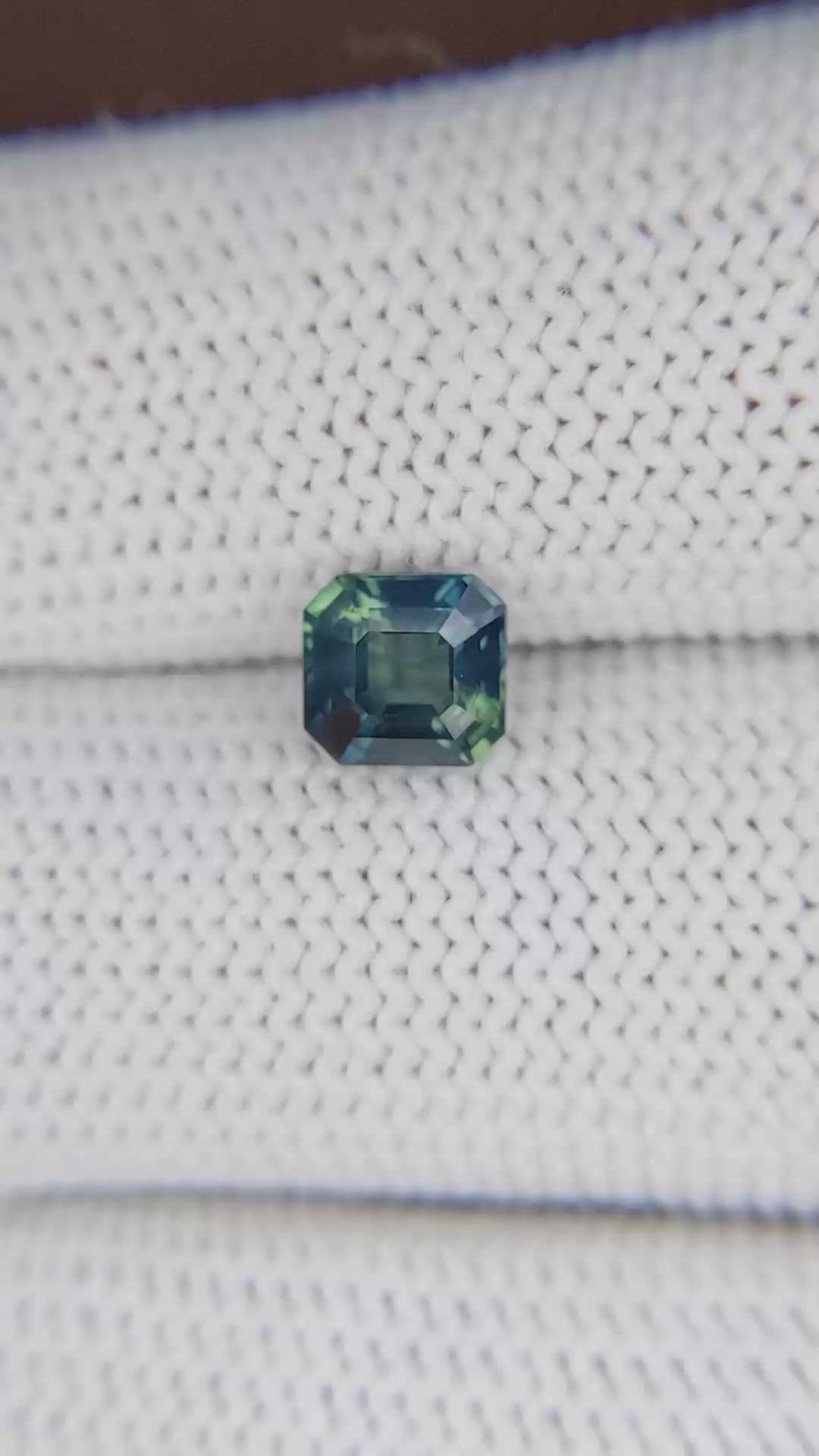
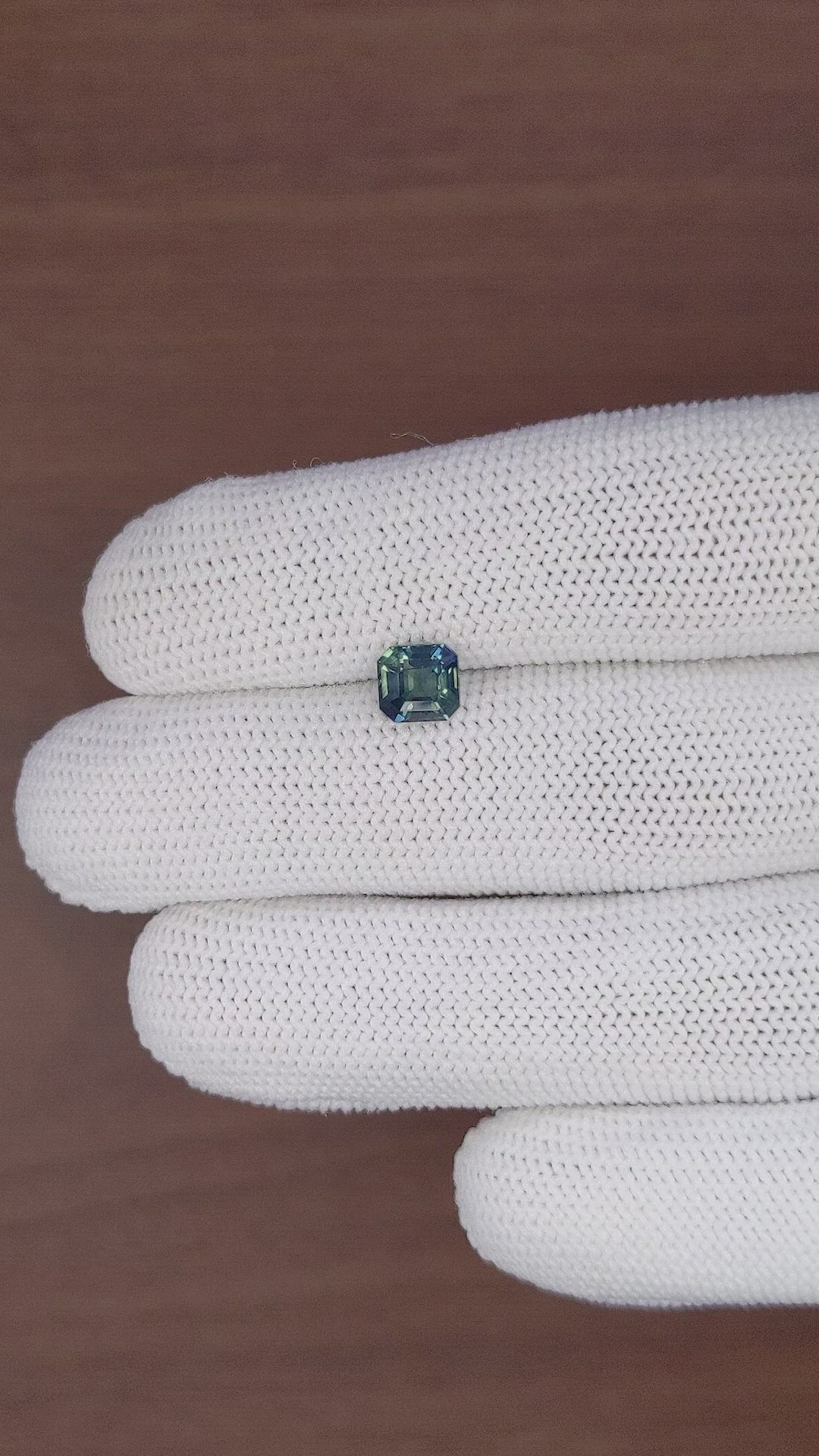
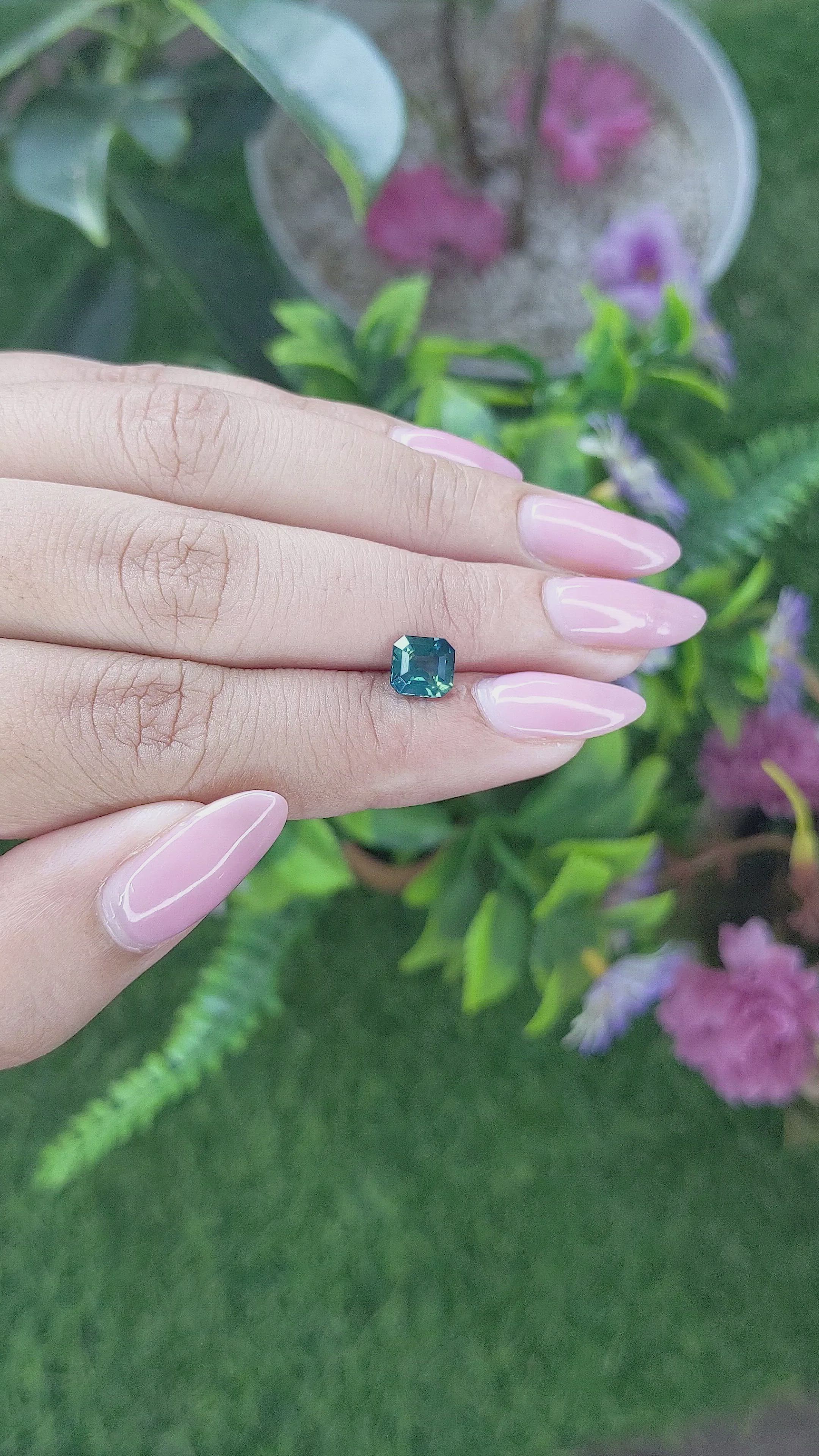
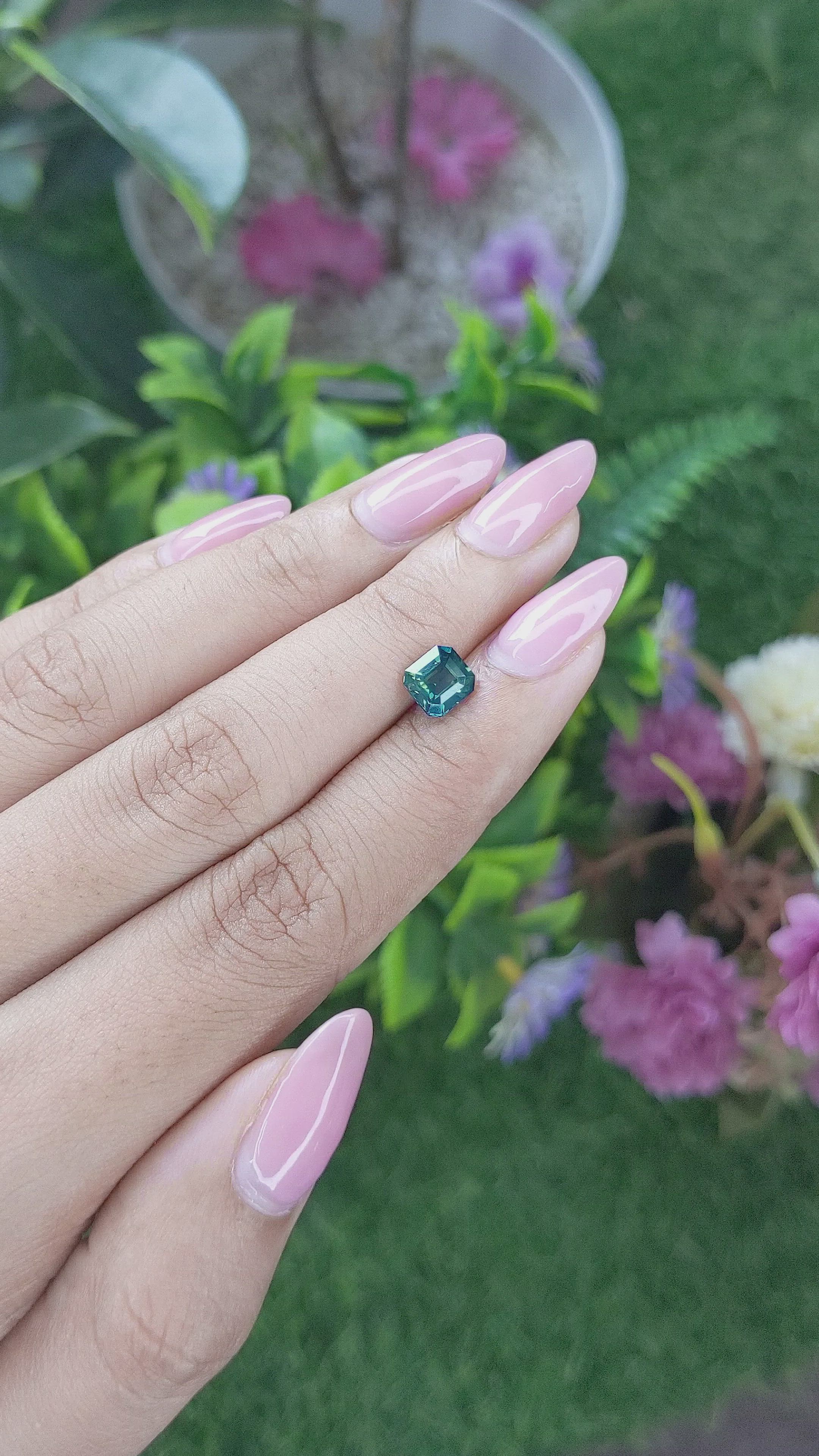
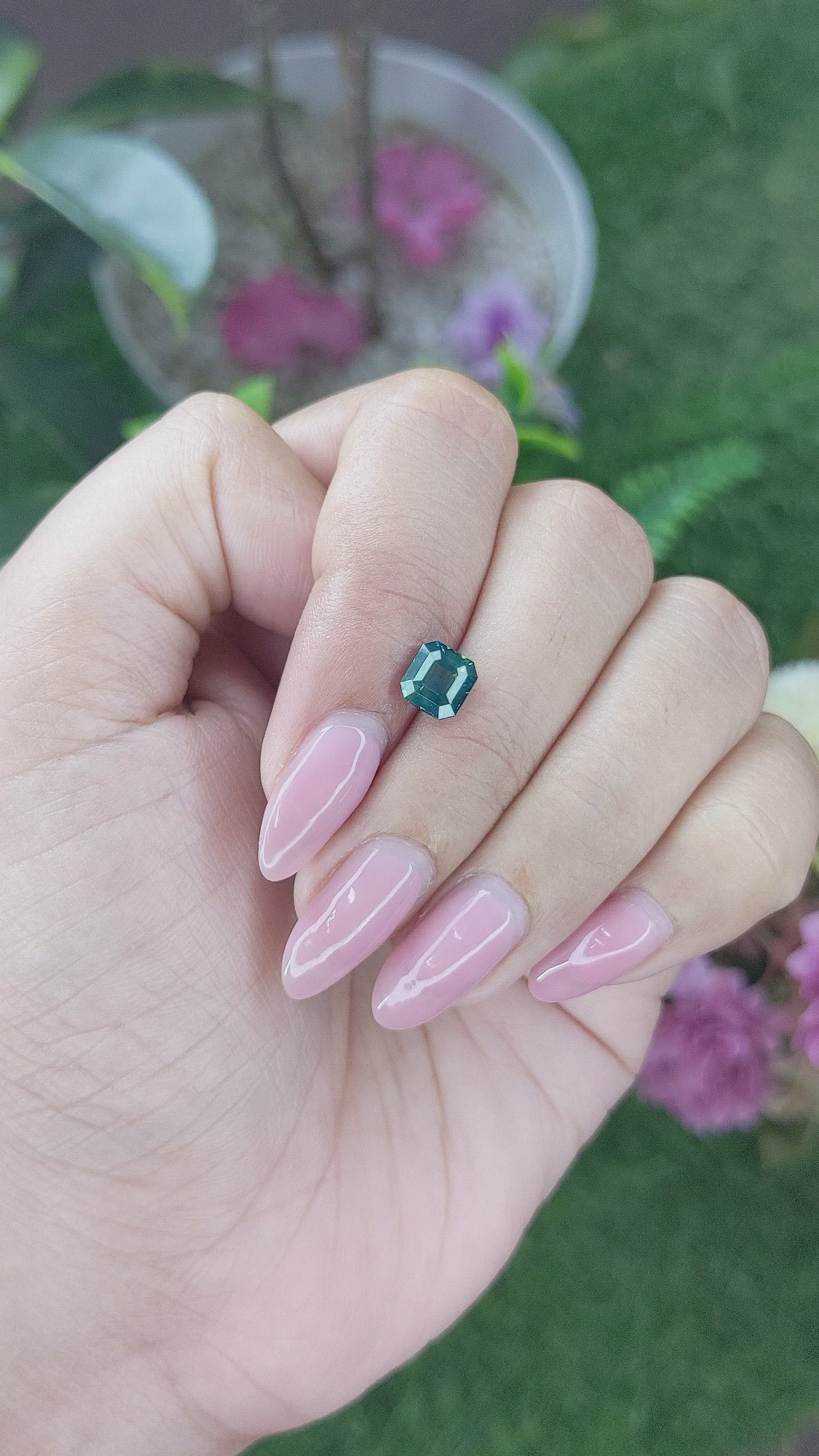




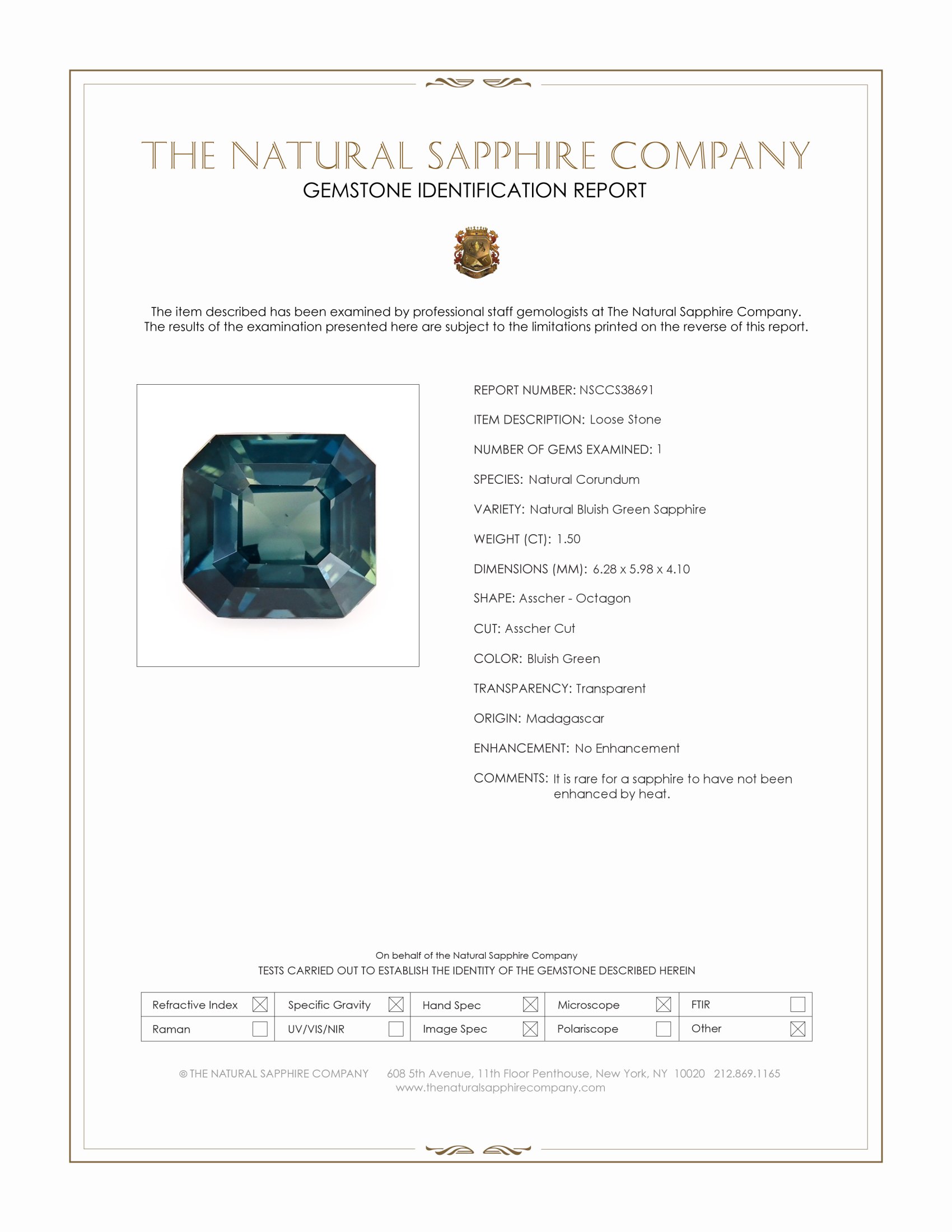
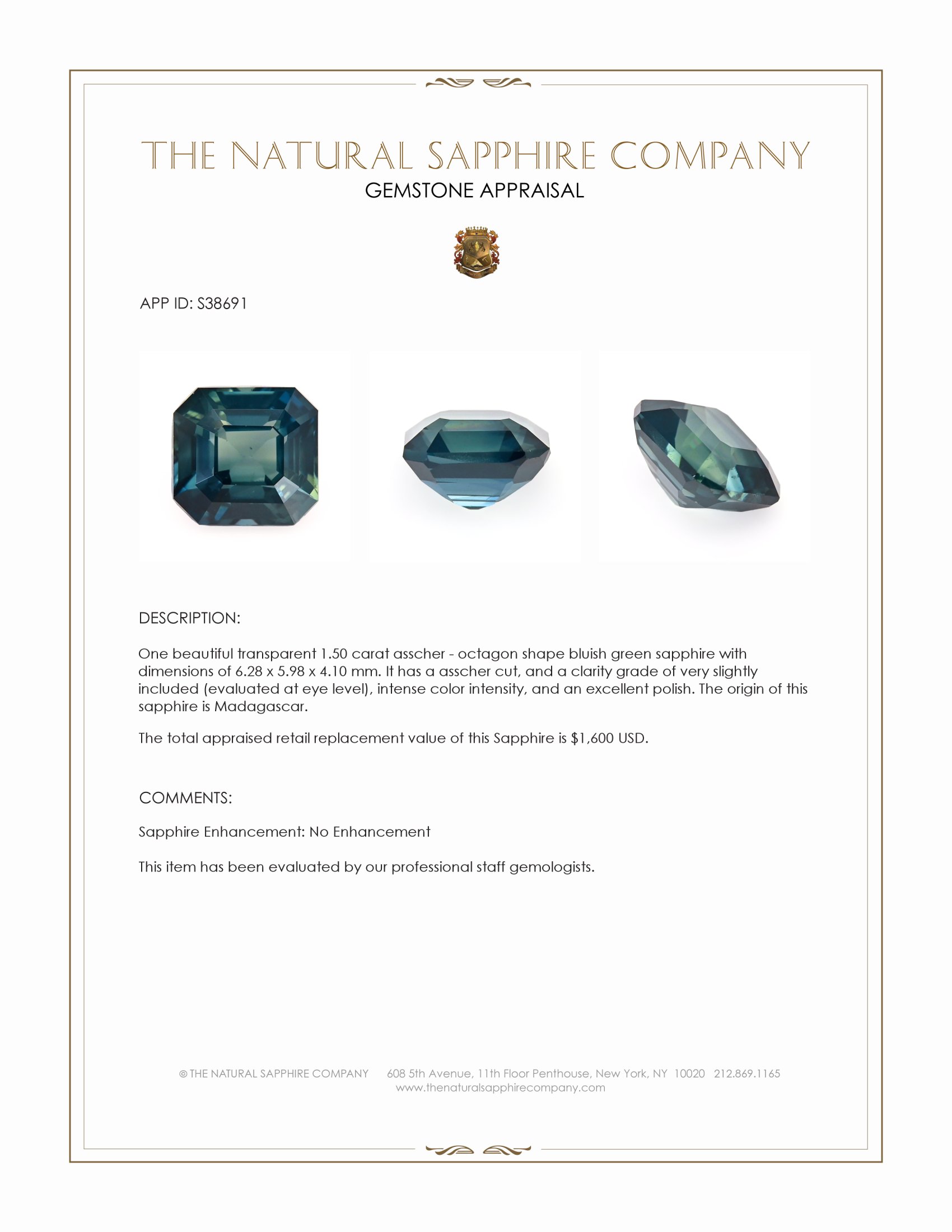
1.50 Ct. Bluish Green Sapphire from Madagascar
This loose stone ships by Jun 29
Item ID: | S38691 |
|---|---|
Dimensions (MM): help | Length: 6.28 Width: 5.98 Height: 4.1 |
Weight: | 1.50 Ct. |
Color: help | Bluish Green |
Color intensity: help | Intense |
Clarity: help | Very Slightly Included |
Shape: help | Asscher - Octagon |
Cut: | Asscher Cut |
Cutting style: | Faceted |
Enhancements: help | No Enhancement |
Origin: help | Madagascar |
Per carat price: help | $1,067 |
This gem is a transparent 1.50 carat asscher octagon shaped bluish green sapphire, with dimensions of 6.28 x 5.98 x 4.10 mm, cut and finished by expert lapidary work. The asscher cut is executed with precise stepped faceting, producing a geometric octagonal outline with cropped corners, and a pavilion depth that yields a depth to average dimension ratio of approximately 66.9 percent. The stone carries a clarity grade of very slightly included, evaluated at eye level, which indicates minimal internal characteristics that do not materially interrupt face up clarity. Color is described as bluish green with intense color intensity, a lively saturation that remains strong under varied lighting, and the surface shows an excellent polish. The sapphire is from Madagascar, and importantly it is natural and untreated, no enhancement, an attribute that affects both desirability and value. This description is offered by The Natural Sapphire Company, where we prioritize provenance and technical transparency.
From a faceting and light performance standpoint the asscher cut employed here creates a distinct optical behavior that differs from brilliant and mixed cuts. The step facets on the crown and pavilion are concentric and parallel to the table, producing a hall of mirrors effect that emphasizes color zones and pleochroic character. Bluish green corundum commonly exhibits dichroism or pleochroism, and in this example the asscher geometry translates those color shifts into broad, elegant flashes rather than minute scintillation. The relatively deep pavilion and measured table proportion favor internal reflection and color saturation over extreme fire, consistent with corundum physics where dispersion is modest compared to diamond. The excellent polish maximizes internal light return and preserves crisp facet junctions, enabling clean facet contrast and strong geometric flash when rotated under a direct light source.
Clarity and treatment status are central to evaluating a sapphire technically and commercially, and this piece presents a compelling combination. The very slightly included grade at eye level implies inclusions are small and localized, permitting an almost ocular purity that elevates apparent transparency and brightness. In the market, untreated sapphires of this quality and color are uncommon, and lack of enhancement is a critical differentiator against the majority of heat treated stones. When compared to historically famous gemstones, the character of this sapphire invites a technical comparison rather than a literal scale. The Star of India is renowned for its size and resilience rather than eye clarity, while the Logan Sapphire is cited for its striking deep blue and monumental scale. Kashmir sapphires are celebrated for velvety cornflower tones and exceptional saturation. This Madagascar asscher offers a different, but equally compelling, technical proposition, its intense bluish green saturation combined with an eye friendly clarity and precision faceting producing a face up presence that recalls the visual purity prized in the most collectible sapphires, while its untreated state aligns it with the rarer historical examples that command premium interest from connoisseurs.
For setting and presentation, this 1.50 carat asscher octagon performs exceptionally well as a centerpiece in designs that emphasize symmetry and architectural lines. The asscher faceting benefits from open settings that permit light entry through the pavilion, therefore four prong or minimal bezel designs that retain corner visibility will preserve the octagonal outline and hall of mirrors effect. The proportions and excellent polish also make this stone suitable for precision jewelry settings where the lapidary geometry can be matched by metalwork, for example step cut side stones or channel set rails that echo the facet planes. From a technical valuation perspective, the combination of measured dimensions, intense saturation, eye level clarity, Madagascar origin, and no enhancement produces a hardness and durability profile consistent with long term wear, and a collector value profile that is improved by the untreated status. The Natural Sapphire Company is available to provide additional technical data, calibrated photography, and viewing under controlled lighting conditions to support connoisseur level assessment and secure acquisition.


