
- Stone14
- Reports3


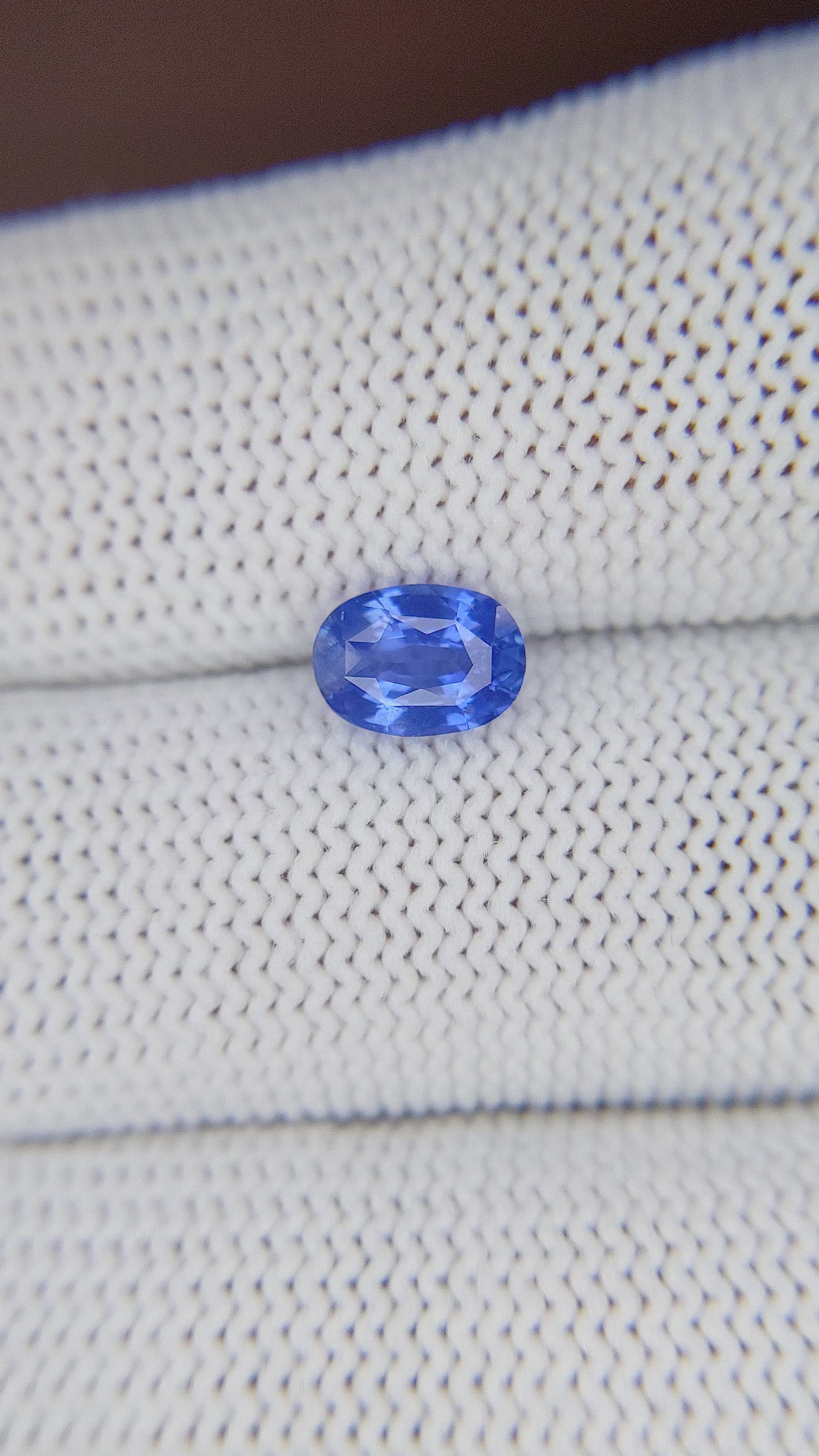
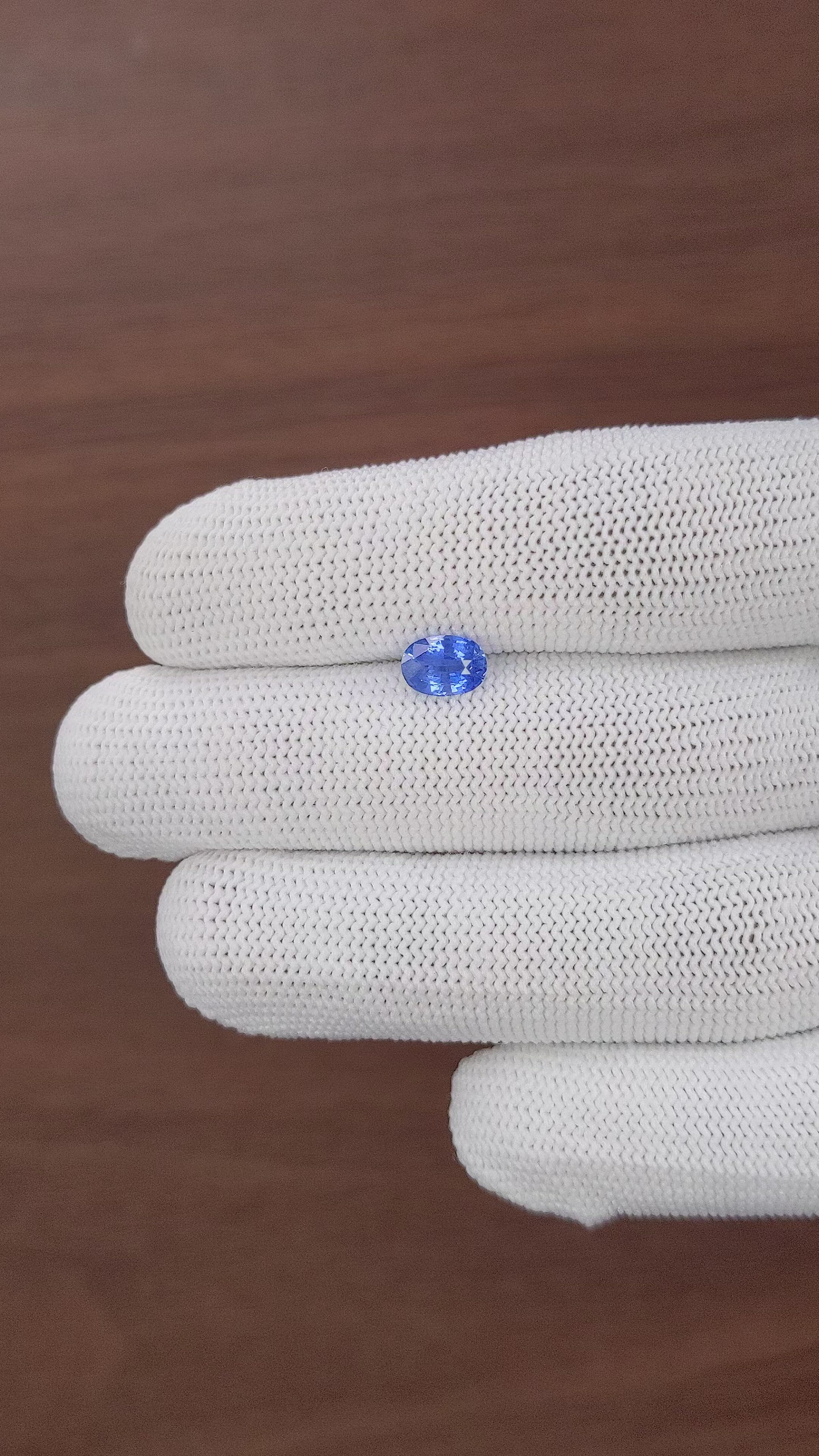
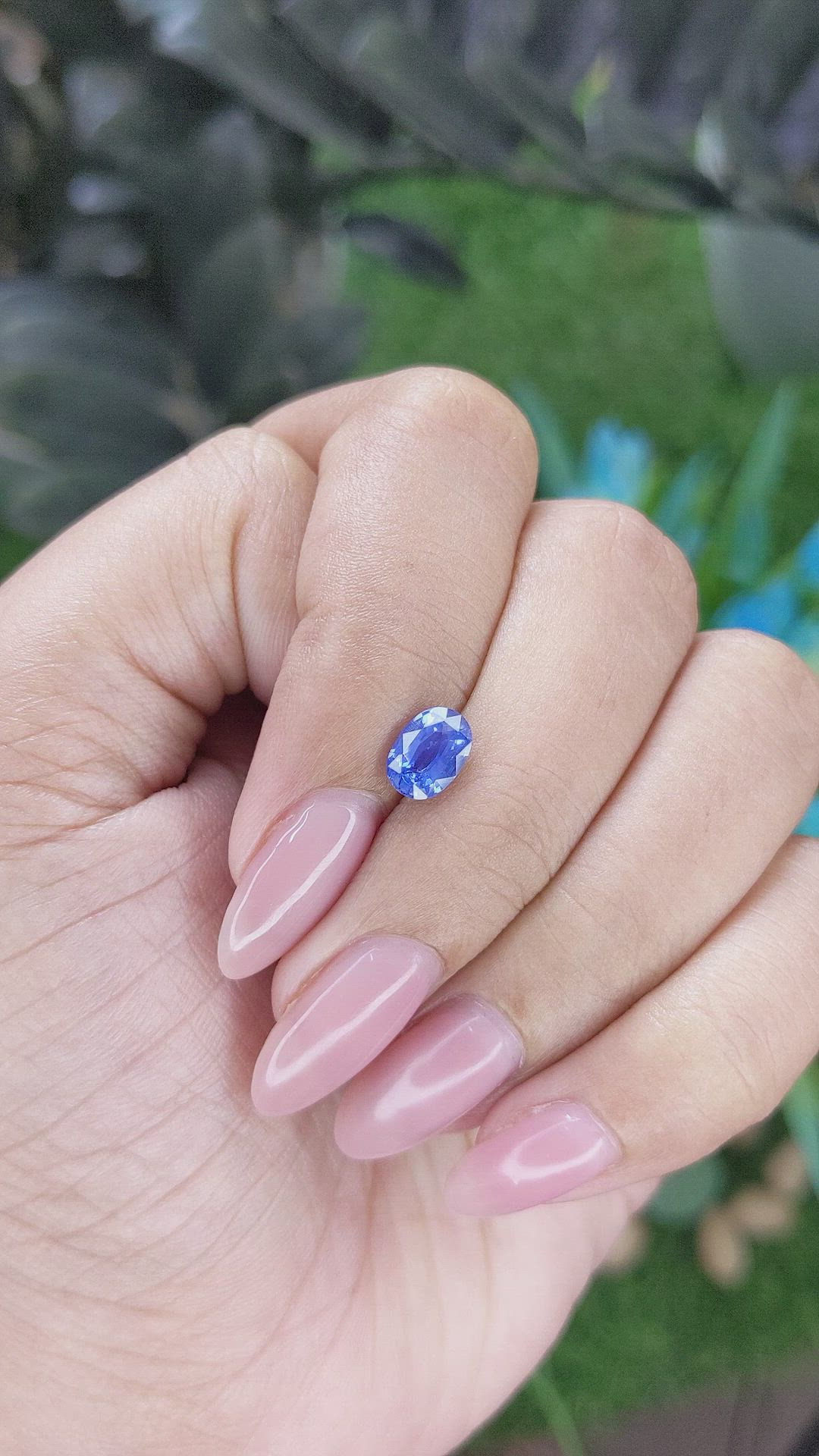
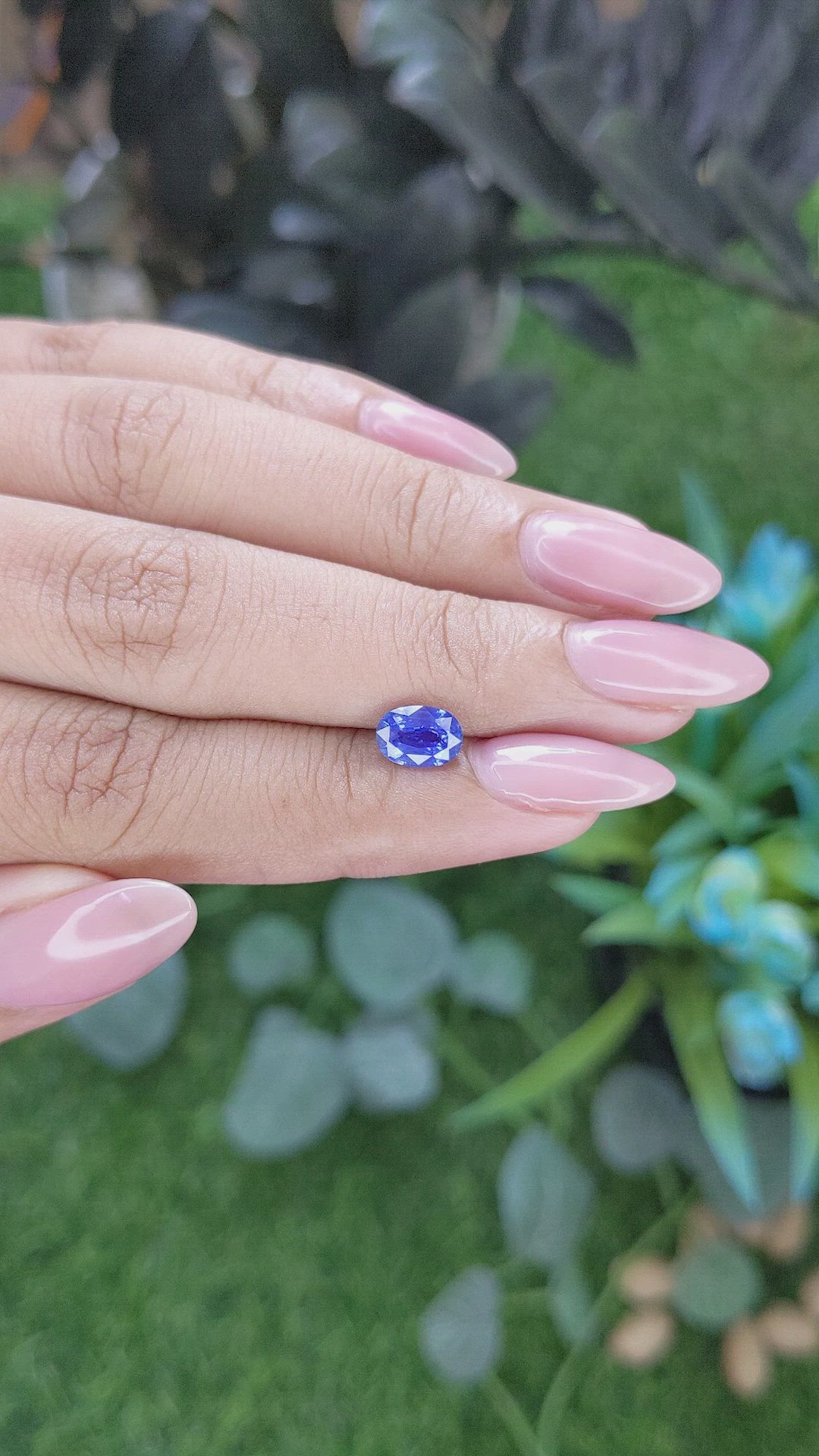


1.19 Ct. Blue Sapphire from Tanzania
This loose stone ships by Jul 7
Item ID: | S42317 |
|---|---|
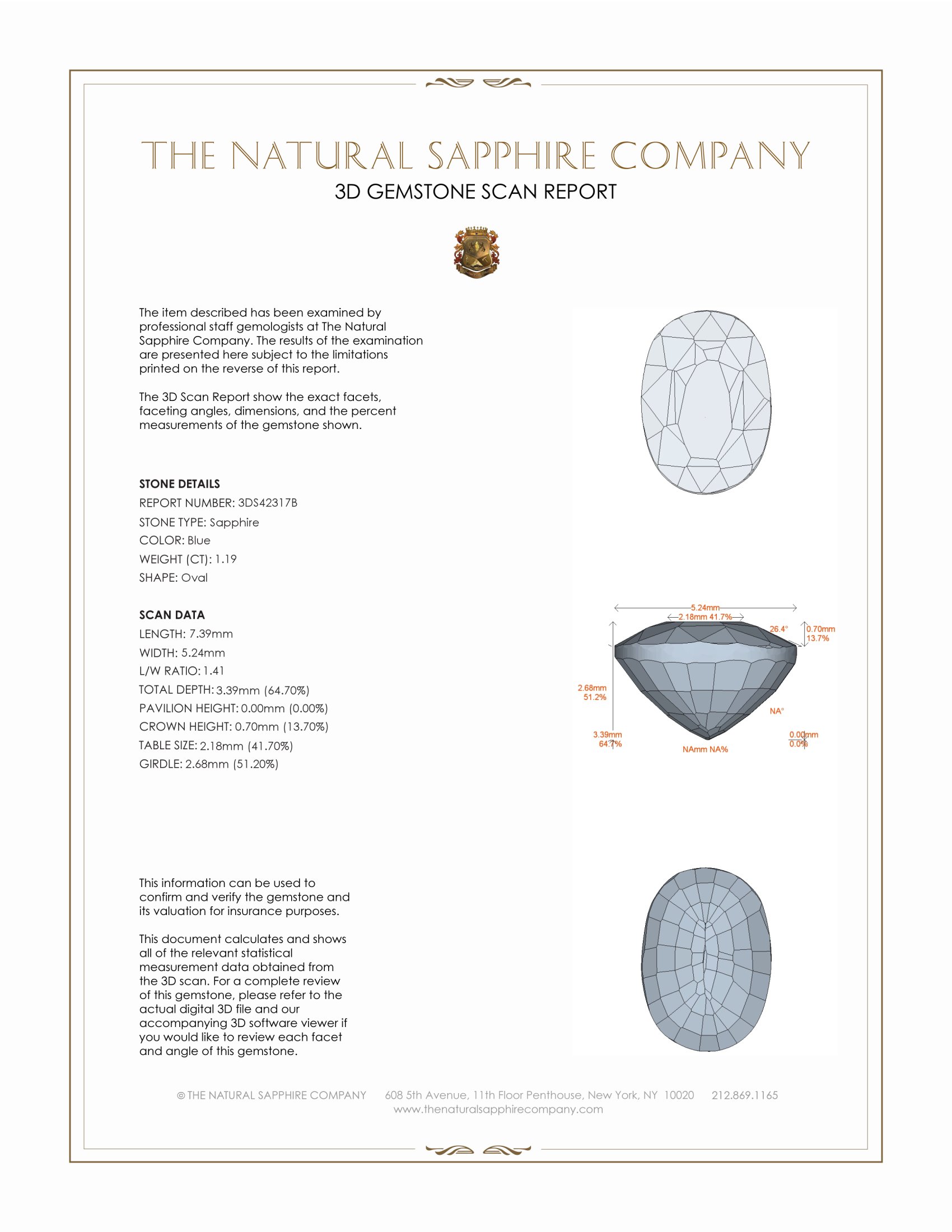
Dimensions (MM): help | Length: 7.39 Width: 5.24 Height: 3.39 |
Weight: | 1.19 Ct. |
Color: help | Blue |
Color intensity: help | Intense |
Clarity: help | Slightly Included |
Shape: help | Oval |
Cut: | Mixed Brilliant Cut |
Cutting style: | Faceted |
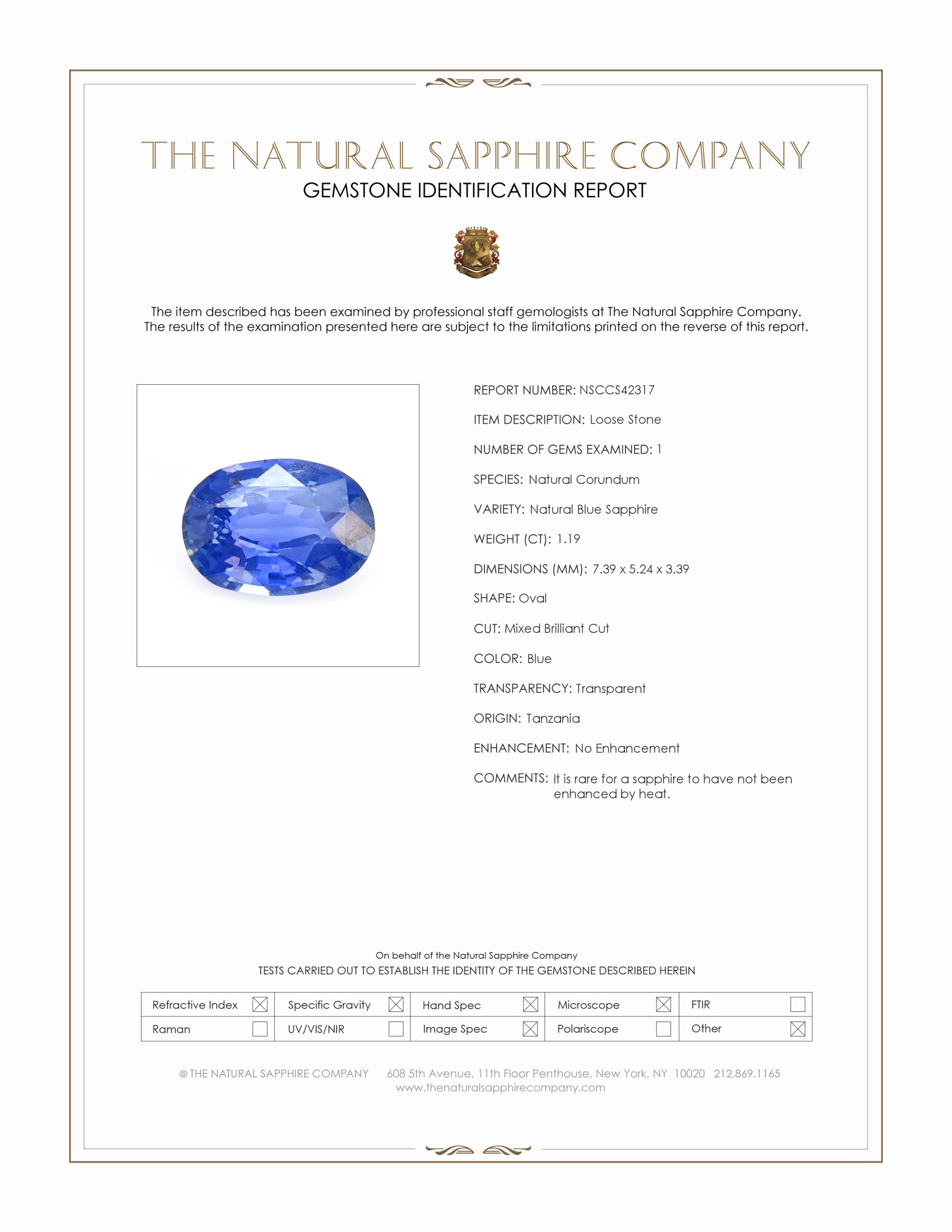
Enhancements: help | No Enhancement |
Origin: help | Tanzania |
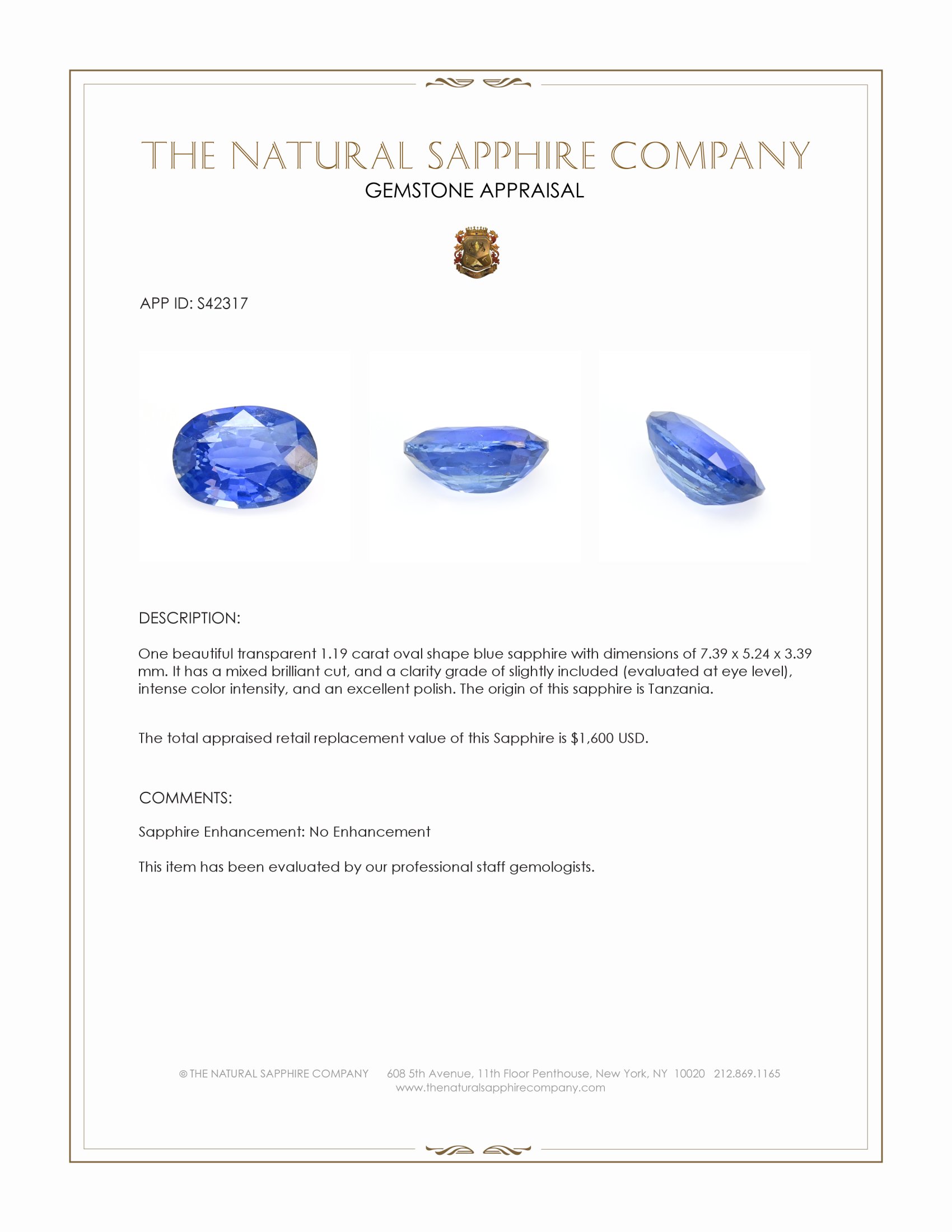
Per carat price: help | $1,345 |
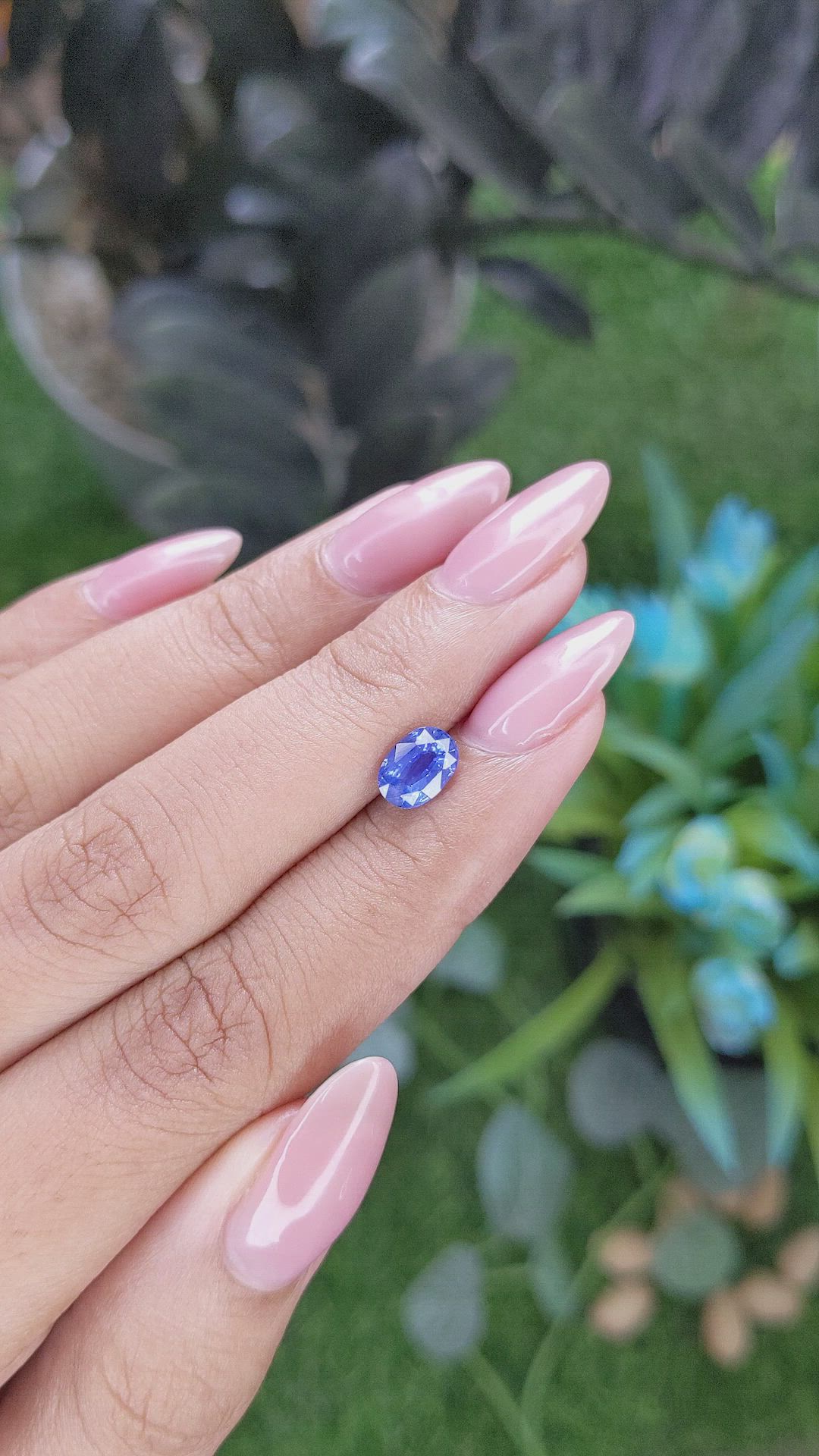
This parcel presents a single transparent oval shaped blue sapphire weighing 1.19 carats, with calibrated dimensions of 7.39 by 5.24 by 3.39 millimeters, cut in a mixed brilliant style and originating from Tanzania. The mixed brilliant execution combines a brilliant facet arrangement on the crown with more angular pavilion facet architecture, engineered to balance strong face up color saturation with lively scintillation. The cutter has retained a moderate pavilion depth relative to the length and width, producing a depth percentage of approximately 53.7 percent, which is an intentional proportion to preserve weight while maintaining optimal light return. The table and crown angles are coordinated to direct incident light into the body of the gem, rather than allowing excessive light leakage, and the facet junctions display crisp meet points consistent with an excellent polish, which accentuates both sparkle and the integrity of the stone surface.
Color is the defining attribute of this sapphire, and it presents an intense blue hue with a cool purity that reads primarily as true blue with subtle violet leaning depending on viewing direction. The intensity grade describes a strong saturation and medium to slightly deep tone, which gives the gem a rich, bold presence when set. This chromatic intensity functions visually as a symbol of personal power and distinction, conveying authority without overt flashiness. Optical characteristics typical of corundum are evident, including pleochroism that shifts slightly between deeper blue and a marginally lighter blue green axis when the stone is rotated. The mixed brilliant cut amplifies the perception of saturation by controlling facet sizes and orientations to concentrate blue light back to the observer, resulting in a face up visage that is both vivid and cohesive rather than patchy.
Clarity is evaluated as slightly included at eye level, a condition that confirms natural origin while remaining readily wearable for fine jewellery. Inclusions are modest, appearing as fine needles or minor crystals typical of Tanzanian material, and they do not disrupt the overall transparency or the lively internal reflections produced by the mixed brilliant facet set. The stone is unenhanced, with no heat treatment or diffusion recorded, which enhances its desirability among connoisseurs who prioritize untreated provenance. The excellent polish noted across crown and pavilion facets yields strong facet brilliance and crisp light return, and the symmetry of the oval outline supports uniform light distribution across the table and bezel facets. Taken together these attributes provide a balance of natural character, technical cutting skill, and clean presentation suitable for a collector or for use as a signature centre stone.
From a practical and design perspective this sapphire performs well in a variety of mounting options. Its dimensions and depth percentage make it especially suitable for classic four prong or six prong settings where the table orientation can be emphasized, and the mixed brilliant cut benefits from open head designs that allow light access to the pavilion. For clients seeking to maximize perceived size and color depth a halo of small white diamonds set in platinum or eighteen karat white gold will create a strong contrast that intensifies the blue, while a warmer metal such as eighteen karat yellow gold will highlight the gem as a badge of distinction with a vintage aesthetic. Protective settings such as a low bezel can be chosen where daily wear is anticipated, offering edge protection without significantly muting the stone s brilliance when expertly finished. The Natural Sapphire Company certifies the origin as Tanzania and confirms the no enhancement status, and we recommend routine professional inspections, avoidance of harsh chemicals, and cautious use of ultrasonic cleaners if significant negative inclusions are present. This sapphire s rich, bold color and precise workmanship make it a refined emblem of personal power and distinction, suitable for a bespoke commission or as the central element of a refined heirloom piece.


