
- Stone10
- Reports3
-emeraldcut-blue-sapphire-1.0600-cts-s17965-1.jpg?d=200x200&v=20241122170308)
-emeraldcut-blue-sapphire-1.0600-cts-s17965-lifestyleimage-1.jpg?d=200x200&v=20241127001847)


-emeraldcut-blue-sapphire-1.0600-cts-s17965-1.jpg?d=750x750&s=nsc&v=20241122170308)
-emeraldcut-blue-sapphire-1.0600-cts-s17965-lifestyleimage-1.jpg?d=750x750&s=nsc&v=20241127001847)


1.06 Ct. Blue Sapphire from Ceylon (Sri Lanka)
This loose stone is available to ship now
Item ID: | S17965 |
|---|---|
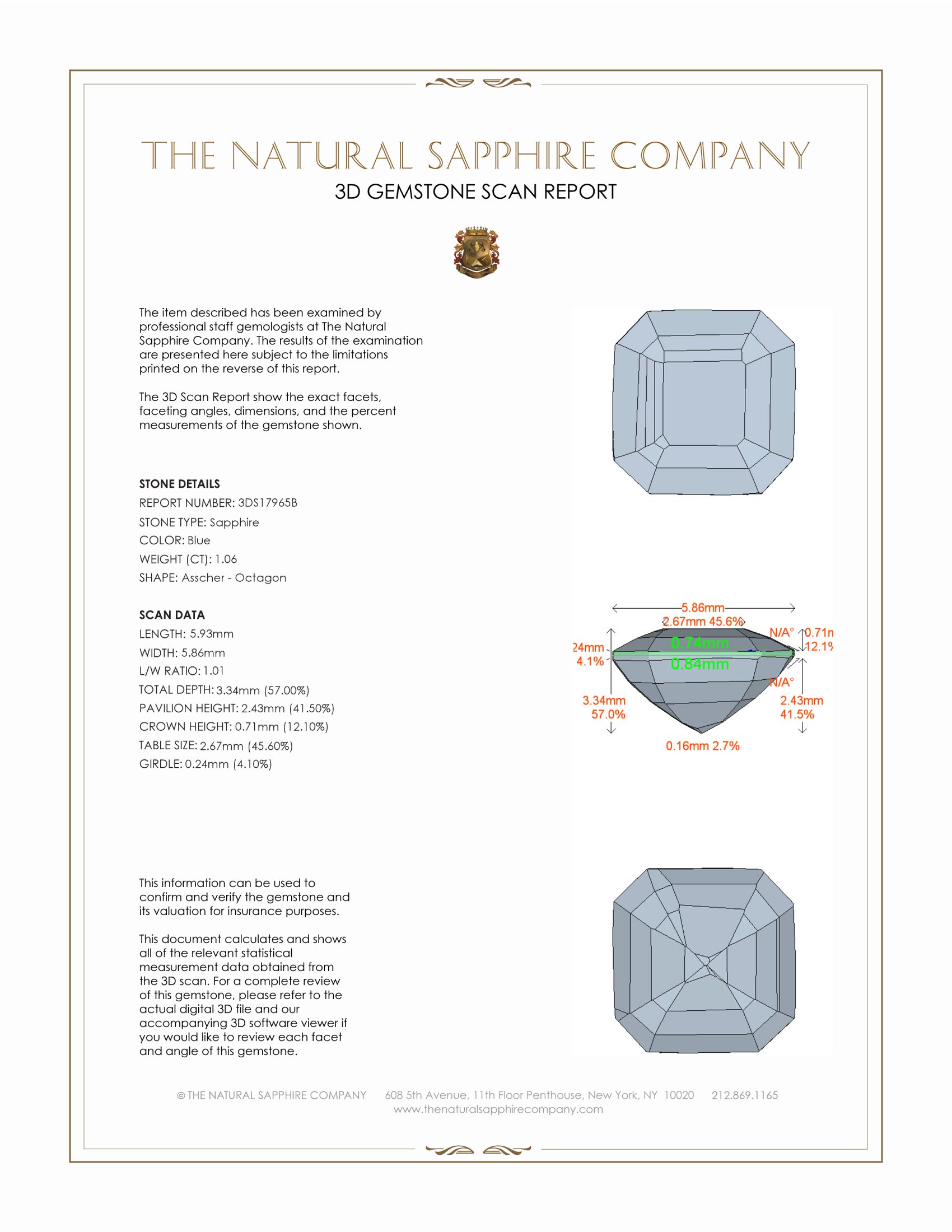
Dimensions (MM): help | Length: 5.93 Width: 5.86 Height: 3.34 |
Weight: | 1.06 Ct. |
Color: help | Blue |
Color intensity: help | Vivid |
Clarity: help | Eye Clean |
Shape: help | Asscher - Octagon |
Cut: | Asscher Cut |
Cutting style: | Faceted |
Enhancements: help | Heat Treated |
Origin: help | Ceylon (Sri Lanka) |
Per carat price: help | $3,608 |
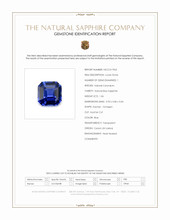
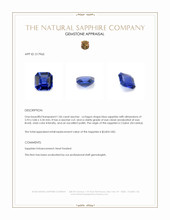
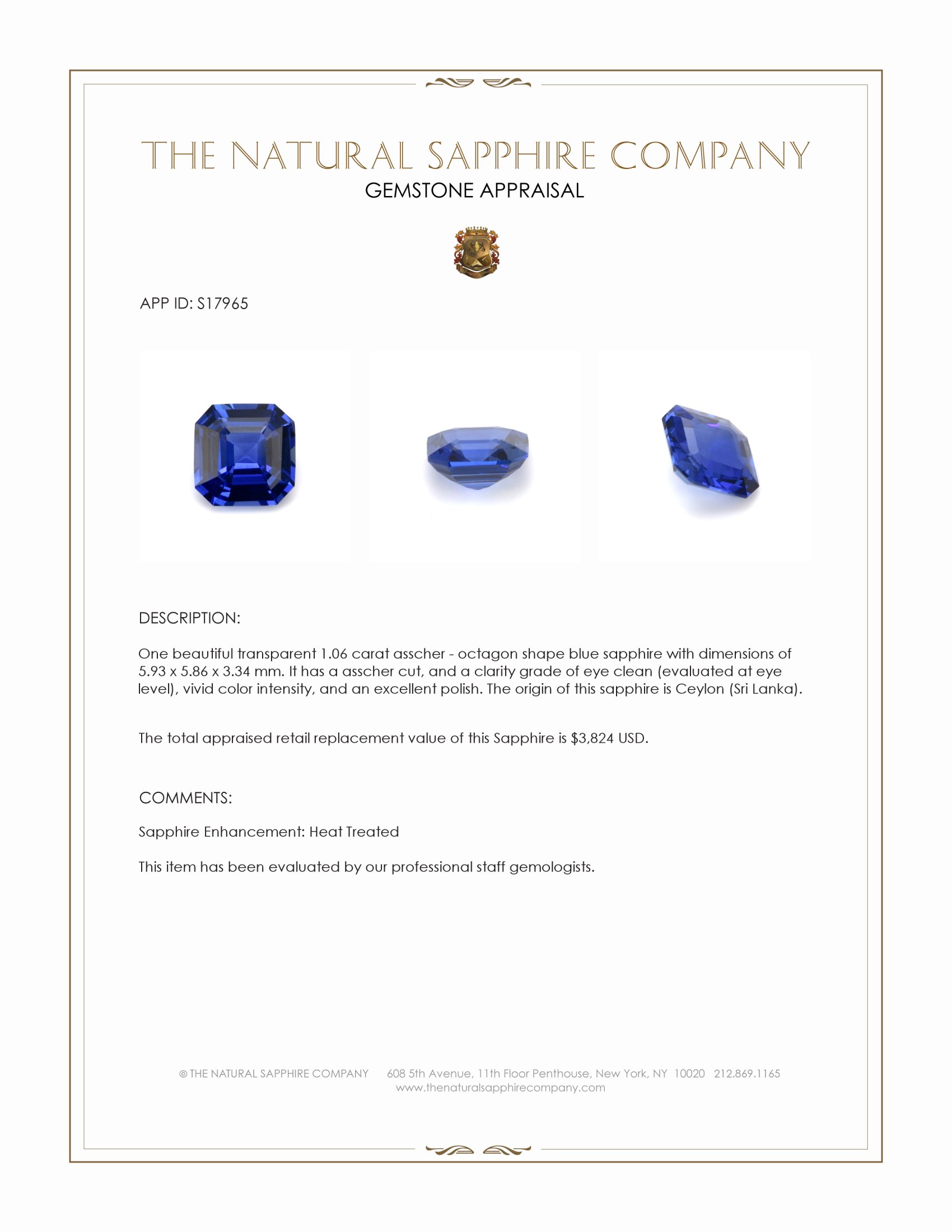
One transparent blue sapphire, weight 1.06 carats, shape asscher octagon, dimensions 5.93 by 5.86 by 3.34 millimeters, cutting style faceted, asscher cut, clarity grade eye clean as evaluated at eye level, color intensity vivid, polish excellent, enhancement heat treated, origin Ceylon Sri Lanka. The asscher octagon outline provides a compact face up appearance that maximizes depth of color within the 5.93 by 5.86 millimeter table, while the 3.34 millimeter depth contributes to balanced optical performance. The faceted asscher style combines square step facets and trimmed corners, producing a hall of mirrors effect that emphasizes controlled flashes of light and well defined facet reflections. The eye clean clarity assures observers that there are no visible inclusions to interrupt light passage, and the excellent polish on all facet planes produces crisp facet junctions and optimal surface reflection. Heat treatment is a stable and widely accepted enhancement for sapphires, used to intensify blue color and improve clarity, and the documented origin of Ceylon Sri Lanka is consistent with the vivid cornflower to royal blue tones that are highly regarded in gemological and connoisseur circles.
Optically, this sapphire presents a different kind of brilliance than what is typically associated with colorless gems. Diamonds achieve their signature fire and scintillation through a combination of high refractive index and a faceting scheme designed to maximize dispersion and rapid contrast flashes across many small facets. By contrast, a sapphire with a refractive index near 1.76 returns light with less dispersion, and when cut in an asscher step style the result is not a multitude of tiny scintillating points, but rather larger, directional flashes and deep internal reflections. The vivid color intensity of this stone interacts with its facet geometry to produce a luminous, saturated appearance, where color and brightness are inseparable. The asscher cut creates broad, mirror like planes that reflect color back to the viewer and produce an elegant, architectural light pattern, rather than the frothy brilliance of a brilliant cut. Because the gem is eye clean and has an excellent polish, the asscher facets remain visually stable, showing crisp internal reflections and a consistent color face up, which enhances perceived brightness despite the inherently lower dispersion compared to a diamond.
When compared to more common blue gemstones, this sapphire's strength is its combination of saturated color, clarity, and durability. Blue topaz often appears brighter because it is typically a lighter, more pastel blue and is commonly given surface or irradiation and heat treatments to achieve its hue, however it usually lacks the depth and richness seen in this Ceylon sapphire. Aquamarine displays a pale, watery blue that can be quite luminous in the right cut, yet it seldom attains the vivid saturation present here, and it is typically lower on the gem hardness scale. Spinel in blue tones can show excellent optical performance and lively colors, but fine Ceylon sapphires remain prized for their specific tonalities and the way intense blue saturation is conveyed in larger step facets. Compared to emeralds, which are valued primarily for their green color and natural inclusions, this sapphire offers clean transparency and a uniform, vivid blue that reads as more pure in tone. Against rubies, which are evaluated on red saturation and fluorescence, this sapphire is distinguished by its cool, stable blue and excellent polish that give it a distinct presence in jewelry.
Beyond visual comparisons, practical considerations also underscore why this stone stands out. Sapphire ranks nine on the Mohs scale, providing robust resistance to abrasion and chipping, which makes an asscher cut durable for daily wear settings. The documented heat treatment is a permanent enhancement under normal wear conditions, and it brings out the vivid color while preserving the stone's structural integrity. At 1.06 carats and with the measured dimensions, the gemstone sits comfortably in a variety of setting styles, offering a balanced face up size that reads larger than many stones of similar weight when set in low profile mounts. For clients seeking a classical, architectural cut with a deep, saturated Ceylon blue, this asscher octagon sapphire presents an exceptional combination of provenance, optical character, and practical durability. The Natural Sapphire Company provides full disclosure of origin and treatment, and this stone exemplifies the firm standards of clarity, cut, and color that professional gemological assessment aims to communicate.


