- Stone14
- Reports3


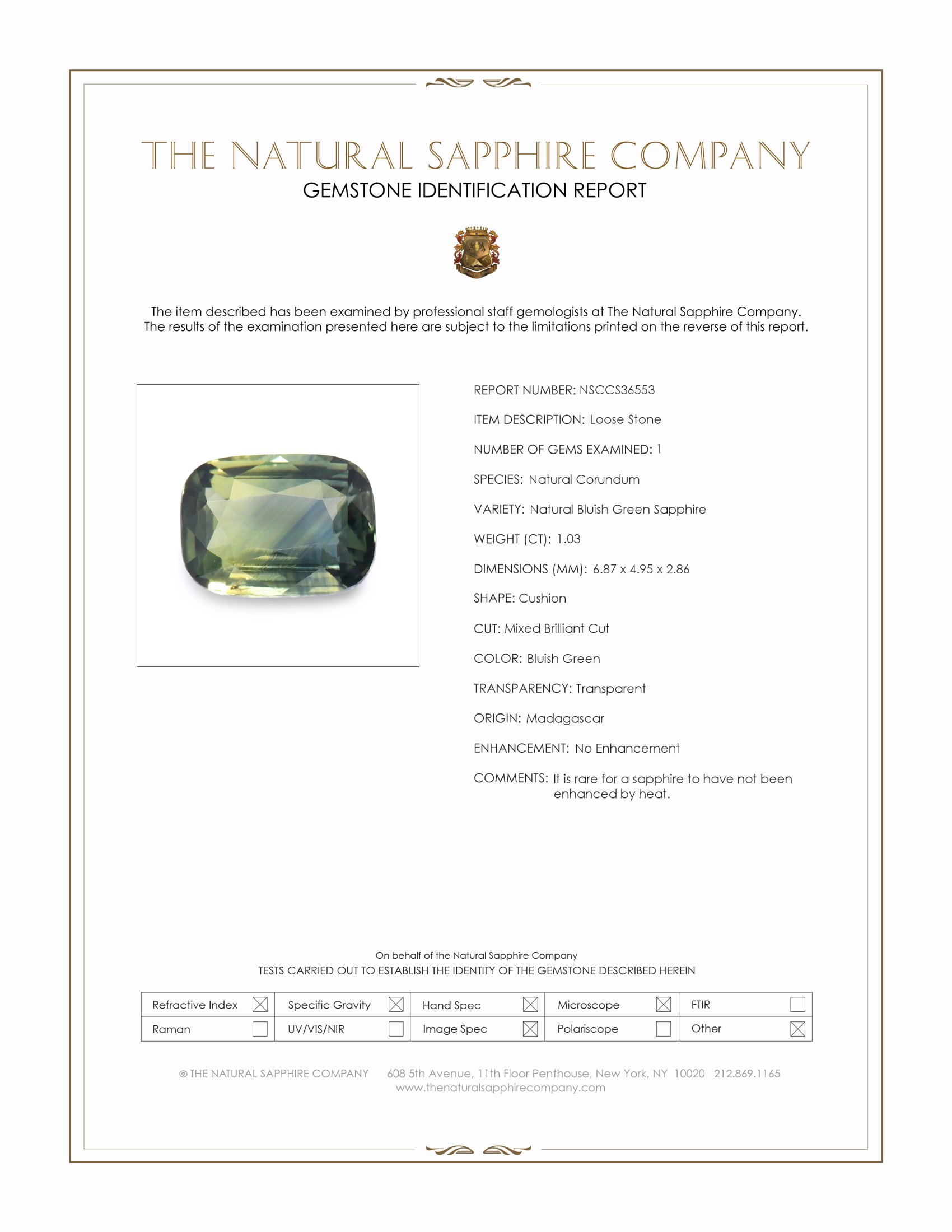

1.03 Ct. Bluish Green Sapphire from Madagascar
This loose stone is available to ship now
Item ID: | S36553 |
|---|---|
Dimensions (MM): help | Length: 6.87 Width: 4.95 Height: 2.86 |
Weight: | 1.03 Ct. |
Color: help | Bluish Green |
Color intensity: help | Medium |
Clarity: help | Very Very Slightly Included |
Shape: help | Cushion |
Cut: | Mixed Brilliant Cut |
Cutting style: | Faceted |
Enhancements: help | No Enhancement |
Origin: help | Madagascar |
Per carat price: help | $630 |
This cushion shape sapphire weighs 1.03 carat and measures 6.87 x 4.95 x 2.86 mm, presenting a compact yet assertive spread for its weight. It is faceted with a mixed brilliant cut, a choice that combines a sparkling crown with a complementary pavilion arrangement to balance brilliance and color saturation. The depth of the stone is approximately 48.4 percent when calculated from the mean diameter, a proportion that supports strong light return while preserving the medium color intensity that characterizes this bluish green material. Clarity is graded as very very slightly included at eye level, which means that inclusions are minimal and do not interfere with the visual performance or the transparency of the gem under normal viewing conditions. The polish is excellent, ensuring crisp facet junctions and superior surface reflection. This sapphire originates from Madagascar and is supplied without any enhancement, offering the natural state of the corundum as found in its geologic source. The combination of natural color, precise proportions, and careful finishing positions this gem as a technically refined choice for collectors and connoisseurs.
The mixed brilliant faceting scheme has been applied to maximize both scintillation and color depth. On the crown, small star facets and kite facets converge toward a slightly generous table area, producing lively face up brilliance and strong scintillation patterns as the stone moves. The pavilion features a mix of pavilion mains and smaller break facets that act to return light efficiently into the viewer s eye, rather than allowing excessive leakage through the base. This interplay is particularly important for a gem with a medium color intensity, because it allows for a balance between light return and color saturation. The refractive index of corundum at approximately 1.76 to 1.77 gives this sapphire a bright refractive character, while a modest birefringence produces subtle doubling of facet junctions when viewed through magnification, an attribute that can enhance the perception of depth. Excellent polish minimizes surface diffusion and preserves the contrast between bright and dark facets, yielding crisp flashes of light and well defined facet reflections. The cutter s attention to facet symmetry and junction cleanliness supports optimal optical behavior, with the mixed brilliant arrangement delivering both broad flashes and scintillating pinfire highlights.
Under varying lighting conditions the bluish green tone of this sapphire reveals a nuanced and dynamic personality. In natural daylight the stone typically reads as a balanced bluish green, the blue component tending to dominate in cool northern daylight and the green becoming more perceptible in warmer midday light. The mixed brilliant cut enhances this behavior by producing concentrated flashes of lighter tone from the crown and deeper color from the pavilion, so movement will reveal alternating zones of teal and sea blue. Under warm incandescent or halogen illumination the stone will often display a slightly greener leaning teal, as the warmer spectrum emphasizes the green wavelengths, while cool white LED sources can accentuate the blue component, making the gem appear more oceanic. In low light conditions or candle light the sapphire s medium intensity and transparent body will yield a richly saturated window of color with softer scintillation, due to reduced overall light levels and a higher apparent color saturation. Fluorescent light can push the blue component depending on the spectral output of the lamp, often making the stone appear slightly cooler. The absence of enhancement contributes to a natural and stable appearance across these lighting environments, without the dramatic shifts sometimes seen in treated material. Pleochroic behavior can be observed when rotating the gem, with subtle shifts between greener and bluer facets as the viewing axis changes, an effect that is attractive to experienced observers because it adds depth and complexity.
From a practical and design perspective the stone s proportions and optical qualities recommend it for settings that allow light to enter from multiple angles and that showcase the cushion silhouette. A low bezel could preserve the clean outline while permitting light access to the girdle region, whereas a classic prong setting, properly engineered to secure the rounded corners, will maximize dispersion and scintillation for a ring application. In a pendant or pair of earrings where the stone can interact with ambient light continuously, the mixed brilliant faceting will provide lively movement and frequent flashes that reveal the bluish green character. The very very slightly included clarity grade assures that the gem reads cleanly to the naked eye, supporting use in high visibility pieces without compromise to visual appeal. The Madagascar origin and untreated status add provenance and rarity, elements that appeal to collectors and to clients seeking responsibly sourced, natural color. The Natural Sapphire Company presents this sapphire as an example of careful lapidary work combined with desirable natural color, offering a stone that performs predictably and attractively under a wide range of lighting scenarios, and that integrates readily into both contemporary and classic jewelry designs.


