
- Stone12
- Reports3


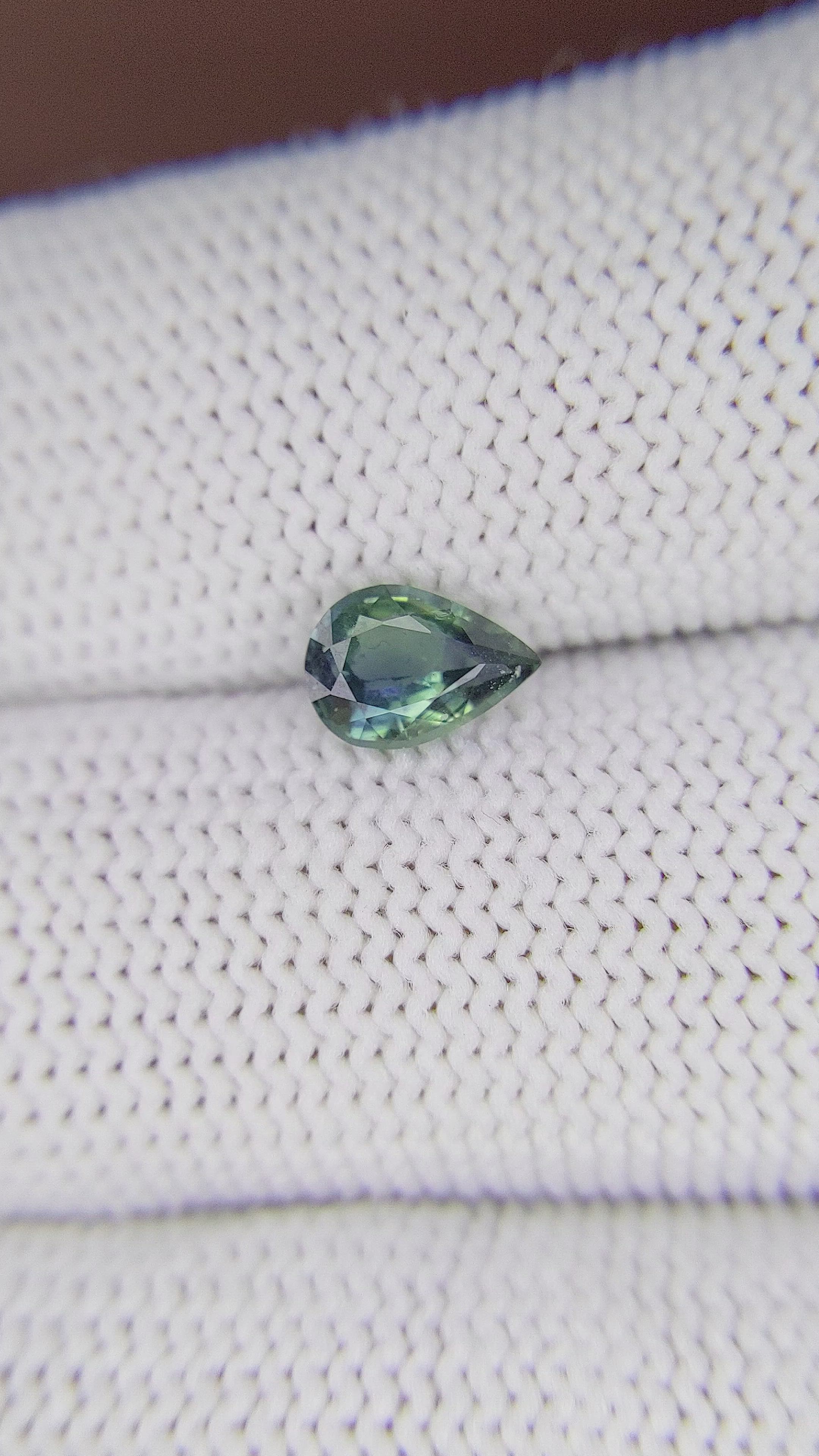
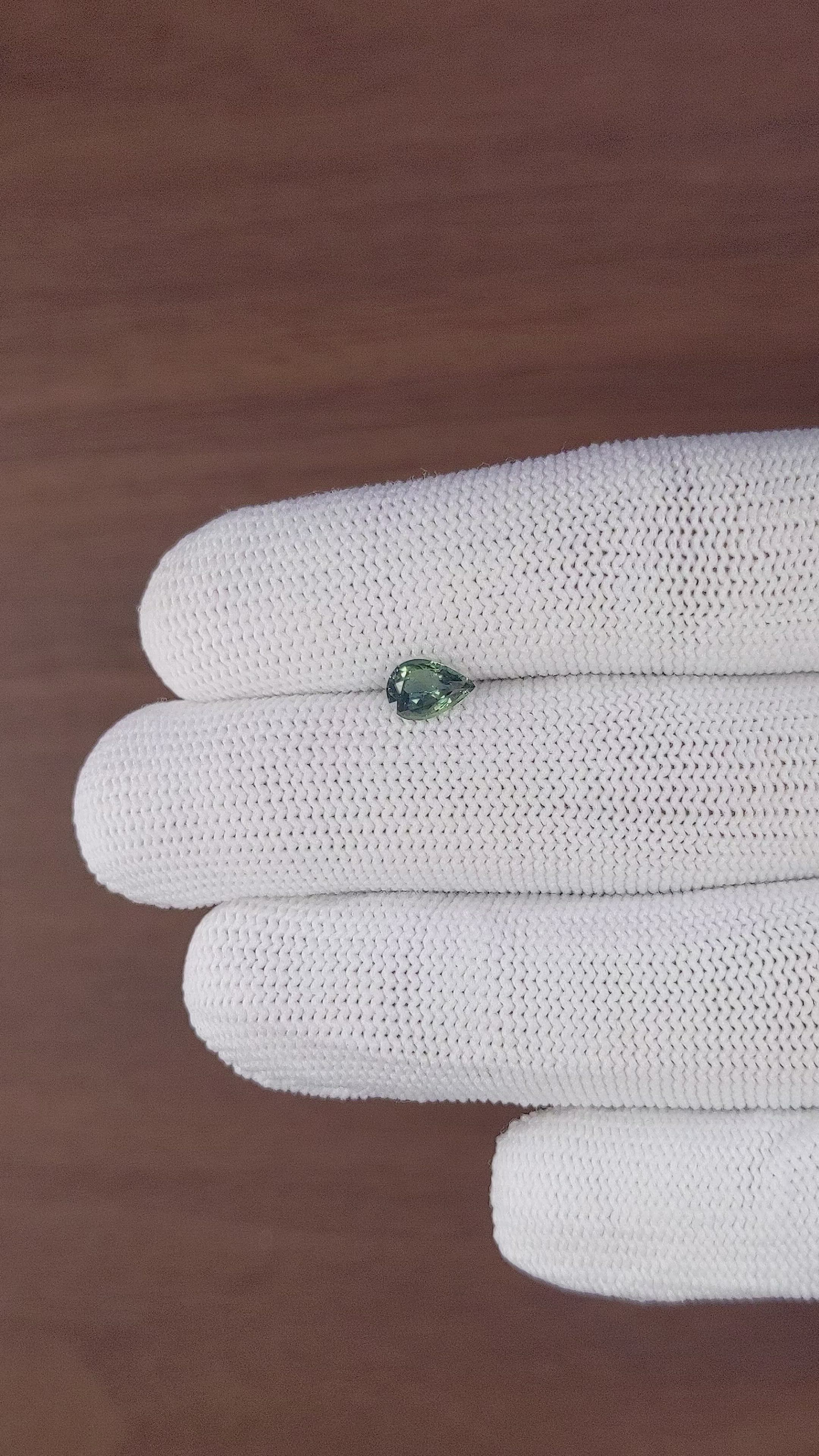
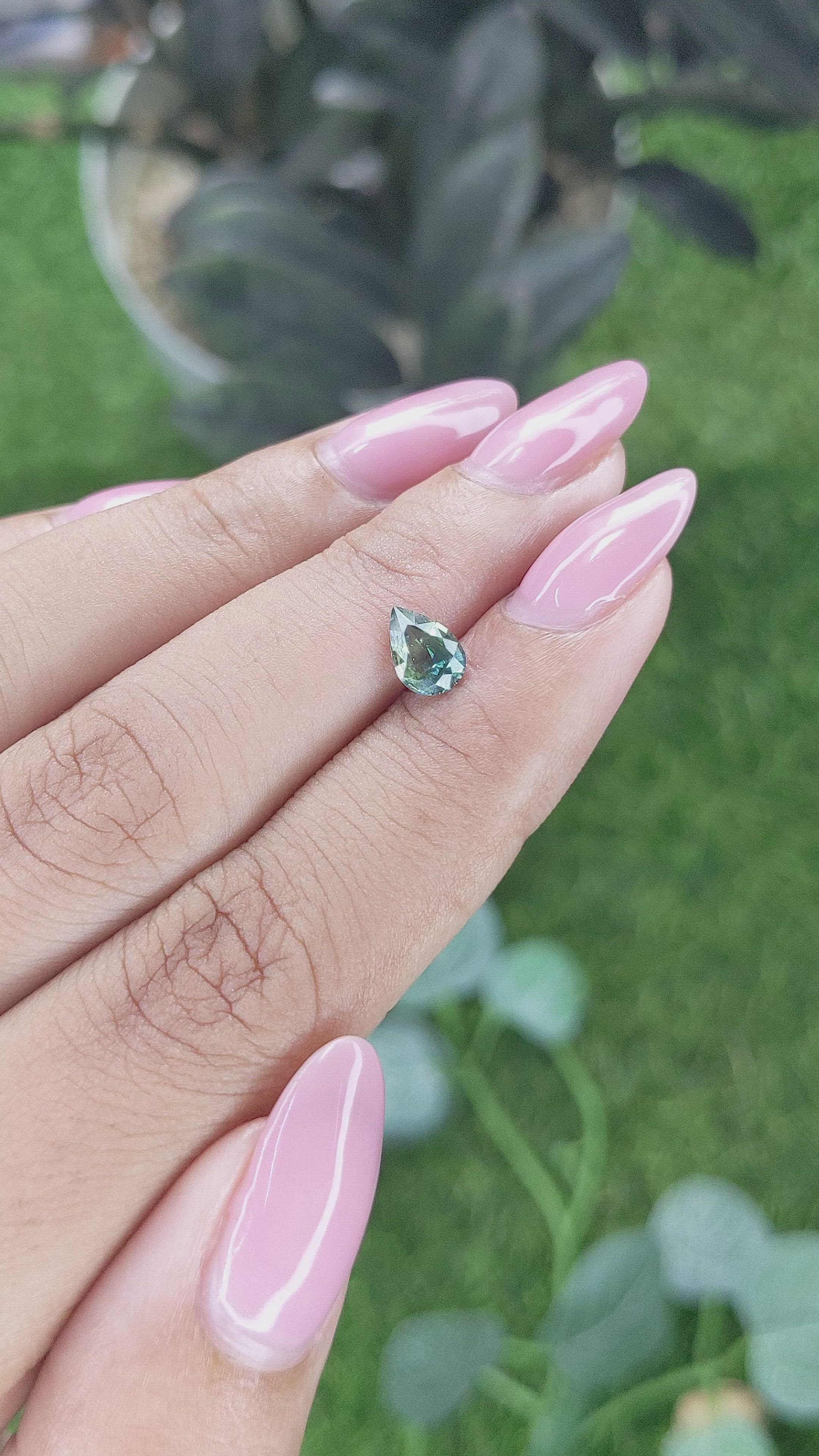
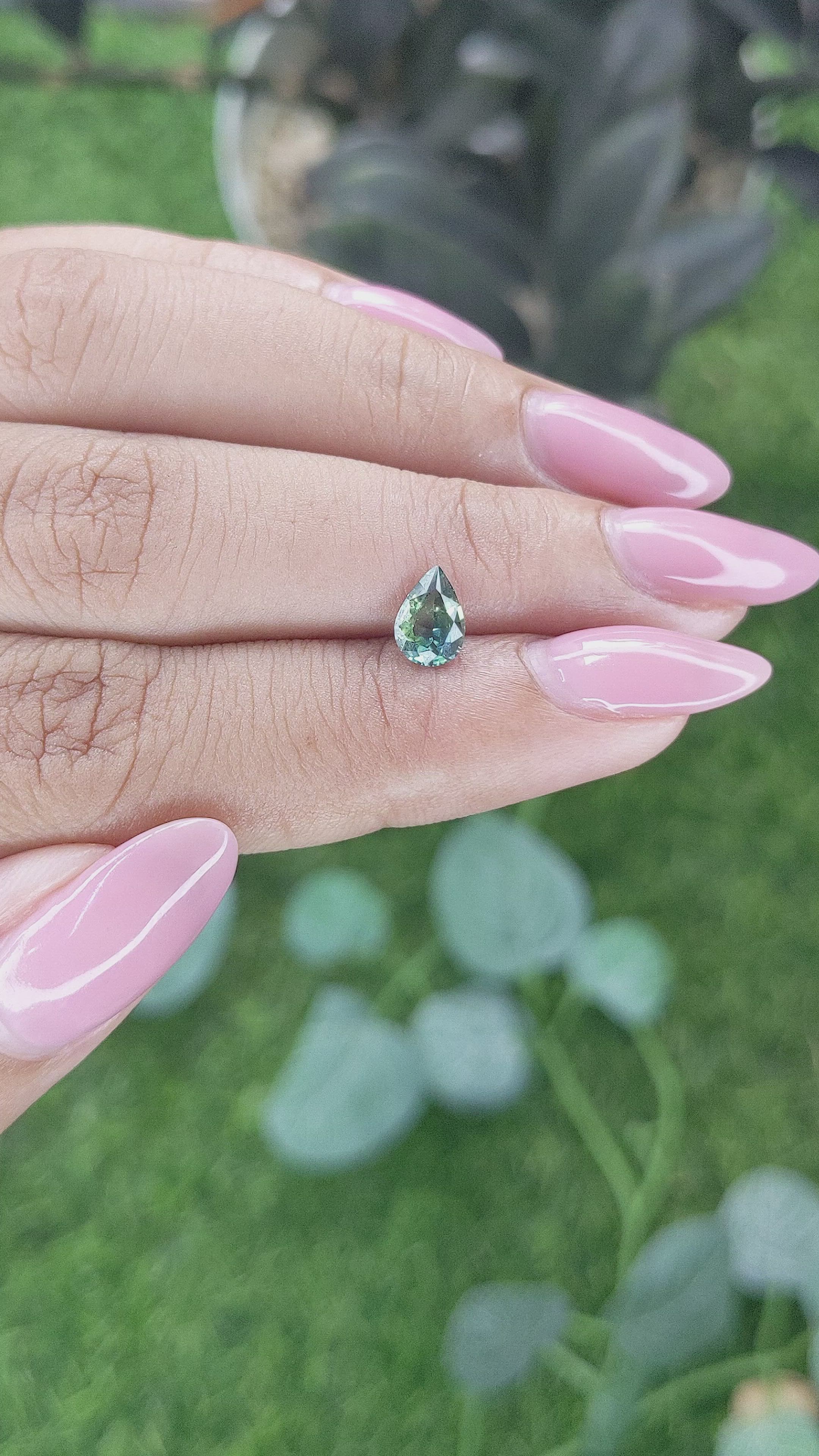


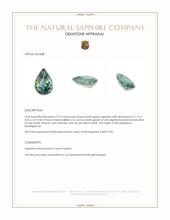


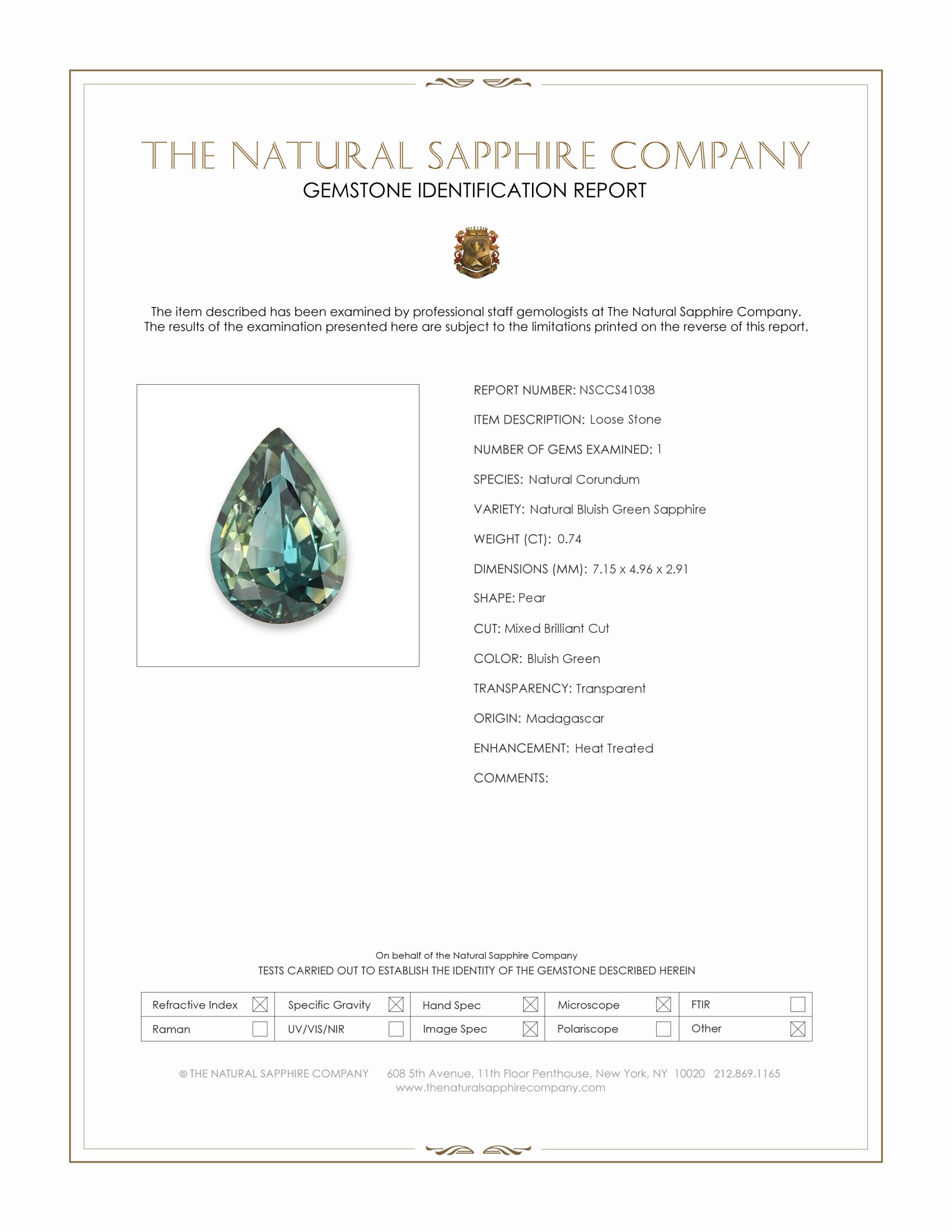
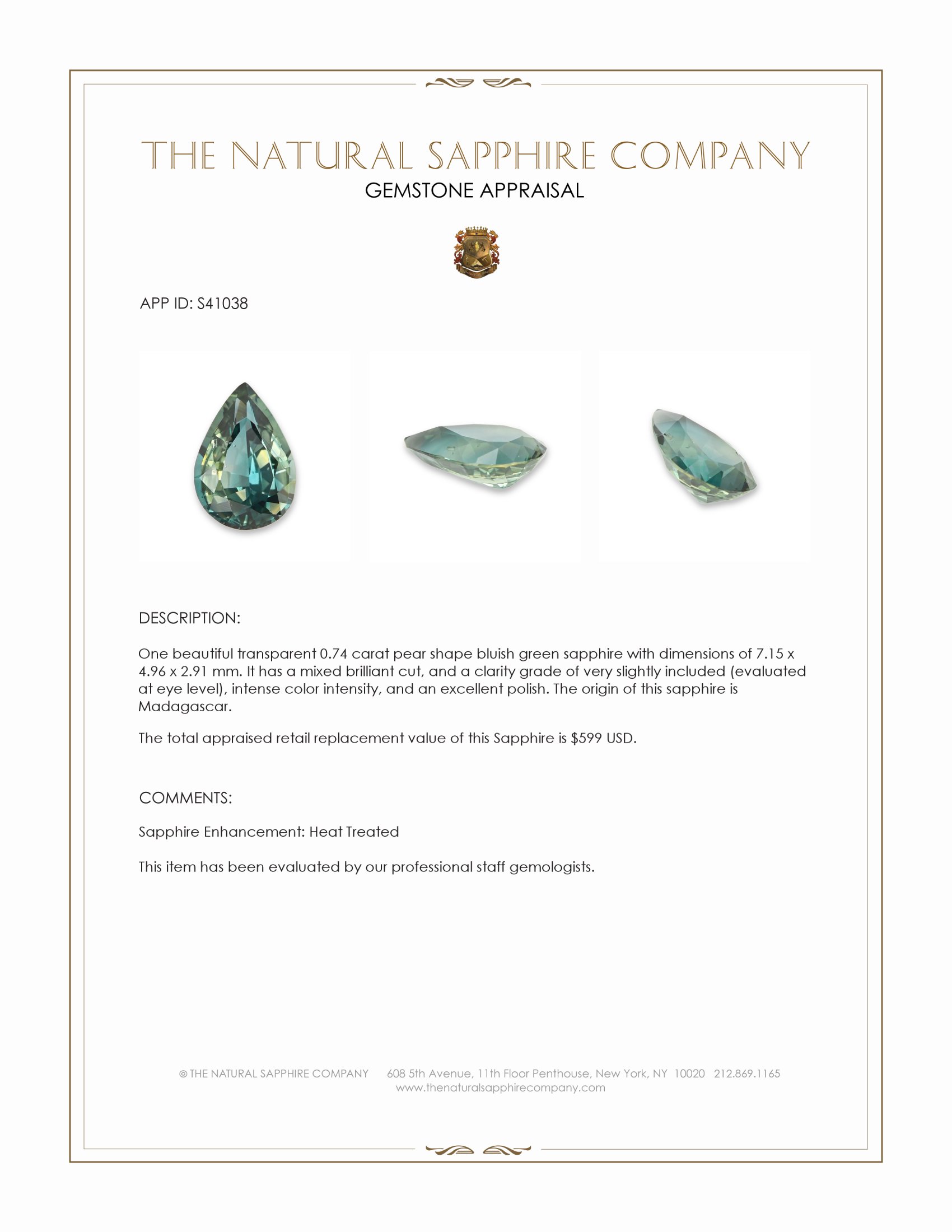
0.74 Ct. Bluish Green Sapphire from Madagascar
This loose stone ships by Jul 20
Item ID: | S41038 |
|---|---|
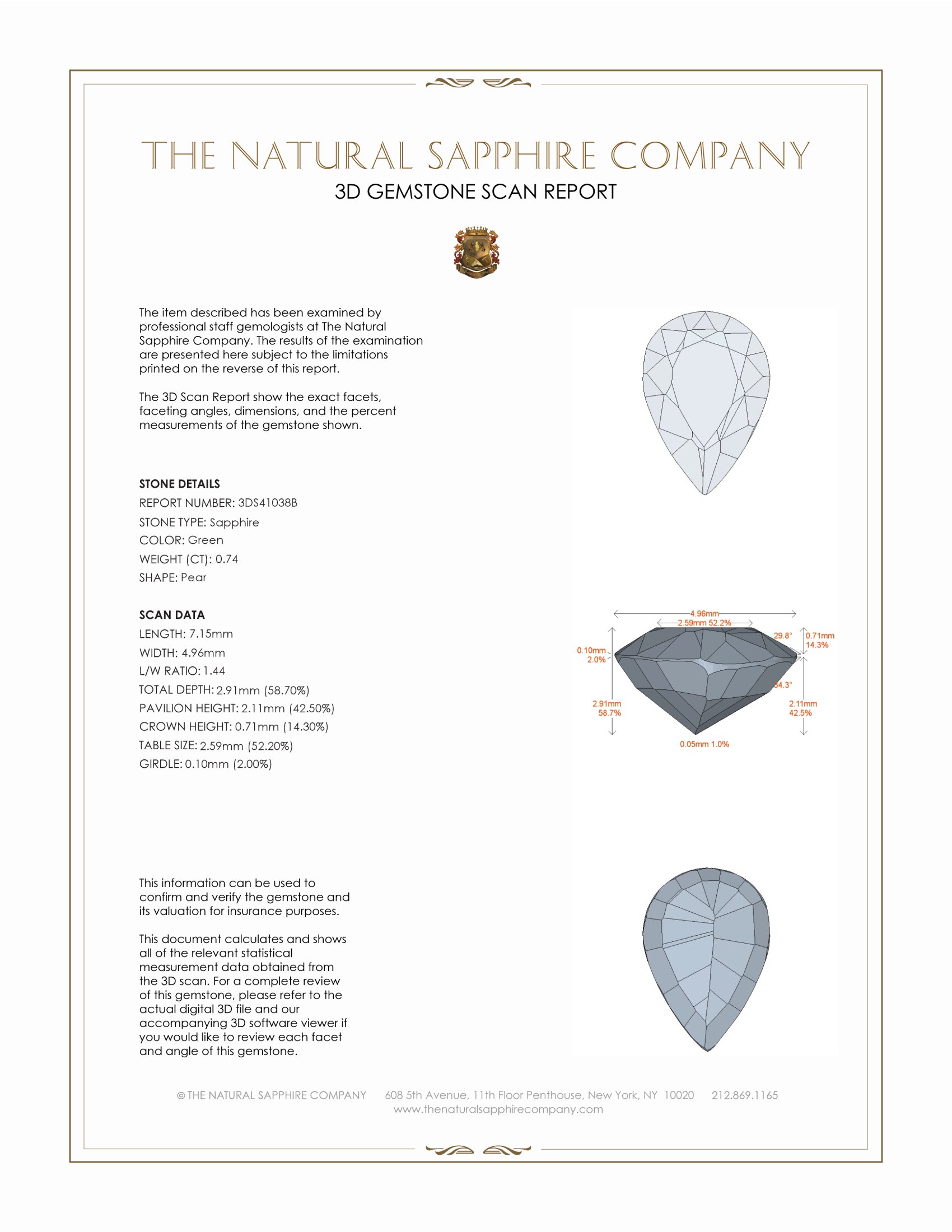
Dimensions (MM): help | Length: 7.15 Width: 4.96 Height: 2.91 |
Weight: | 0.74 Ct. |
Color: help | Bluish Green |
Color intensity: help | Intense |
Clarity: help | Very Slightly Included |
Shape: help | Pear |
Cut: | Mixed Brilliant Cut |
Cutting style: | Faceted |
Enhancements: help | Heat Treated |
Origin: help | Madagascar |
Per carat price: help | $809 |
This pear shaped bluish green sapphire from Madagascar presents a compact and technically refined package, weighing 0.74 carat, with dimensions of 7.15 x 4.96 x 2.91 mm. The pavilion and crown have been executed in a mixed brilliant faceting style, combining a brilliant facet arrangement on the crown with modified pavilion facets that are calibrated to balance fire and color saturation. The cutter preserved an efficient table and crown angle relationship to concentrate the stone core, while maintaining a moderate overall depth that supports both scintillation and face up color. Clarity is graded as very slightly included evaluated at eye level, indicating that the stone contains only minor internal features that do not distract under normal viewing. Color intensity is described as intense, with a bluish green hue that shifts subtly with viewing angle, and the polish is excellent, providing crisp facet junctions and high surface luster. Enhancement is restricted to standard heat treatment, a stable and widely accepted practice that improves color uniformity and reduces undesirable overtones, and provenance is Madagascar, a locality noted for producing sapphires with strong color and fine crystallographic character. The Natural Sapphire Company presents this gem as a meticulously evaluated piece for connoisseurs who prioritize technical precision.
To appreciate this crystal fully it helps to consider how it formed over geological time, back through episodes of pressure and temperature that predate human history by millions of years. Sapphires are aluminum oxide crystals that nucleate and grow under conditions that mobilize aluminum and oxygen in the earths crust, and in Madagascar this occurs in both high grade metamorphic terranes and in basaltic host rocks. The bluish green color of this specimen is the product of trace element substitution during crystal growth, principally iron in combination with titanium and possibly vanadium, which occupy octahedral sites within the corundum lattice. During slow cooling and recrystallization the diffusion of these transition metal ions becomes locked into the corundum structure, producing the stable absorption bands that generate the observed hue. Zoning and subtle color banding can result from fluctuating local chemistry during growth, and the mixed brilliant cut exposes and integrates these growth features into a coherent visual presentation. Over the span of millions of years tectonic uplift and erosion liberated the crystals from their primary matrix, and subsequent transport and alluvial concentration may have assisted in delivering hand sized parcels to modern miners. The result is a gem whose color and internal architecture record a protracted geological history, a history that The Natural Sapphire Company documents as part of its provenance assurances.
From a gemological and lapidary standpoint the decision to cut this stone in a pear shape with a mixed brilliant facet pattern was driven by the need to reconcile weight retention with optimal optical performance. The length to width ratio of the pear profile was selected to approximate classical proportions that yield elegant outline and symmetry while maximizing the face up area for color presence. The 2.91 mm depth reflects a deliberate compromise, providing enough pavilion mass to foster internal light return and dispersion, while avoiding excessive depth that would mute saturation when set. The mixed brilliant approach uses kite shaped and triangular facets on the crown to generate lively table and crown sparkle, while employing larger modified facets on the pavilion to act as color concentrators, directing light through the chromophore rich core. The excellent polish enhances facet transparency and minimizes surface scattering, so that the sapphire's intense bluish green color is presented with clarity and controlled brilliance. Very slightly included clarity at eye level indicates minimal feather or crystal inclusions that are stable under normal wear, and the heat treatment employed has been carefully applied to enhance chroma and reduce unwanted color zoning, without compromising the stone's structural integrity.
For jewelry applications the stone responds well to settings that allow light ingress and present the pear profile in a way that accentuates its color dynamics, for example a three prong or bezel with an open gallery to support refraction and color play. The intense bluish green is versatile, pairing with both white and warm metals, and the mixed brilliant cut ensures scintillation under both direct and diffused light. When considering mounting, attention to orientation and head height will preserve the balance between face up size and depth percentage, thereby maintaining the visual impact the cutter intended. The Natural Sapphire Company stands behind the gemological description and origin attribution for this sapphire, and can provide detailed documentation of the heat treatment and microscopic observations that inform the very slightly included clarity grade. For collectors and designers seeking a technically distinguished specimen with a well documented geological pedigree, this 0.74 carat pear shaped bluish green sapphire from Madagascar offers a rare combination of measured proportions, refined faceting, intense color, and durable enhancement practices, all presented with the exacting standards of The Natural Sapphire Company.


