
- Stone16
- Reports3
-pear-bicolor-sapphire-0.7100-cts-s46049-1.jpg?d=200x200&v=20260827115657)
-pear-bicolor-parti-sapphire-0.7100-cts-s46049-lifestyleimage-1.jpg?d=200x200&v=20260828150641)
-pear-bicolor-parti-sapphire-0.7100-cts-s46049-lifestyleimage-2.jpg?d=200x200&v=20260828150641)
-pear-bicolor-parti-sapphire-0.7100-cts-s46049-lifestyleimage-3.jpg?d=200x200&v=20260828150641)
-pear-bicolor-parti-sapphire-0.7100-cts-s46049-lifestyleimage-4.jpg?d=200x200&v=20260828150641)


-pear-bicolor-sapphire-0.7100-cts-s46049-1.jpg?d=750x750&s=nsc&v=20260827115657)
-pear-bicolor-parti-sapphire-0.7100-cts-s46049-lifestyleimage-1.jpg?d=750x750&s=nsc&v=20260828150641)
-pear-bicolor-parti-sapphire-0.7100-cts-s46049-lifestyleimage-2.jpg?d=750x750&s=nsc&v=20260828150641)
-pear-bicolor-parti-sapphire-0.7100-cts-s46049-lifestyleimage-3.jpg?d=750x750&s=nsc&v=20260828150641)
-pear-bicolor-parti-sapphire-0.7100-cts-s46049-lifestyleimage-4.jpg?d=750x750&s=nsc&v=20260828150641)


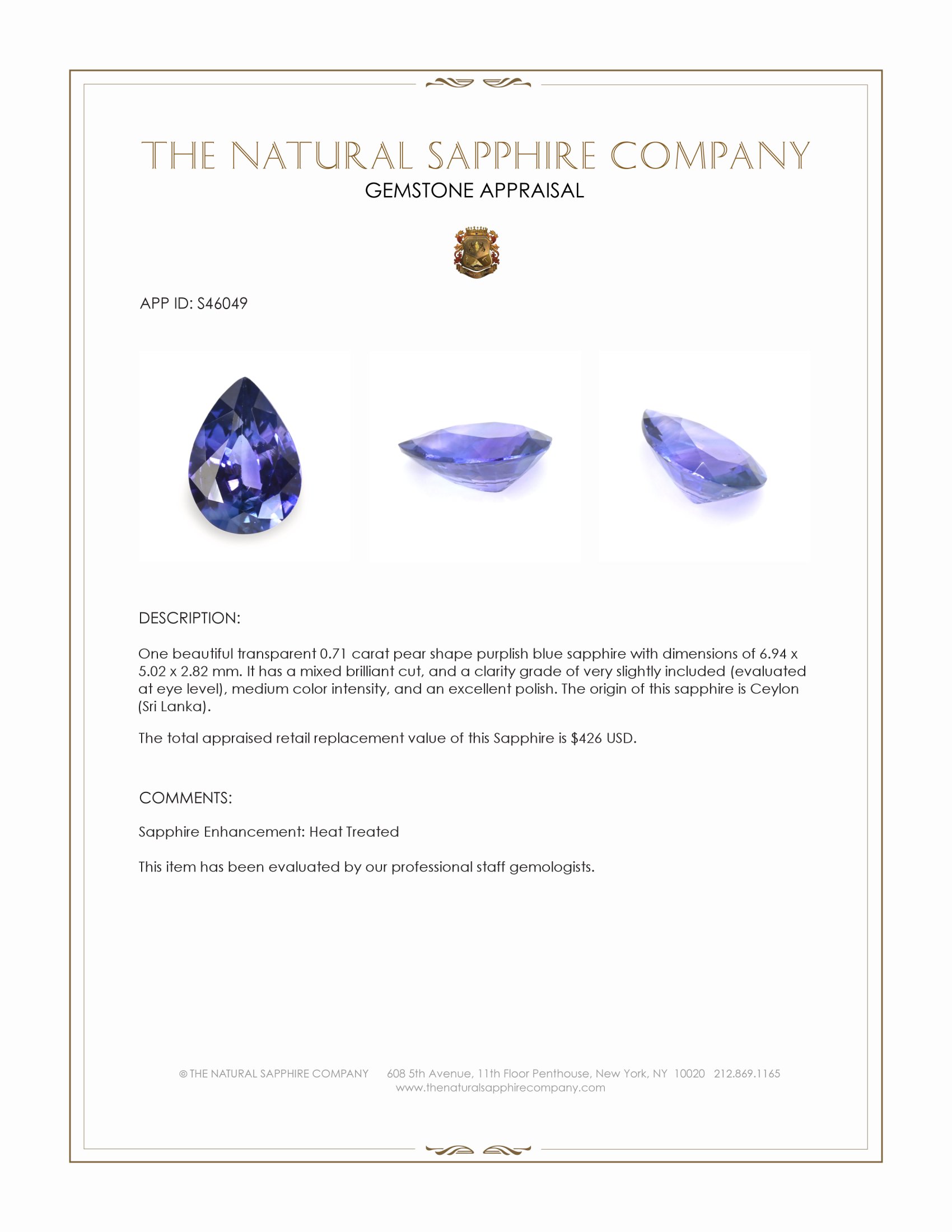
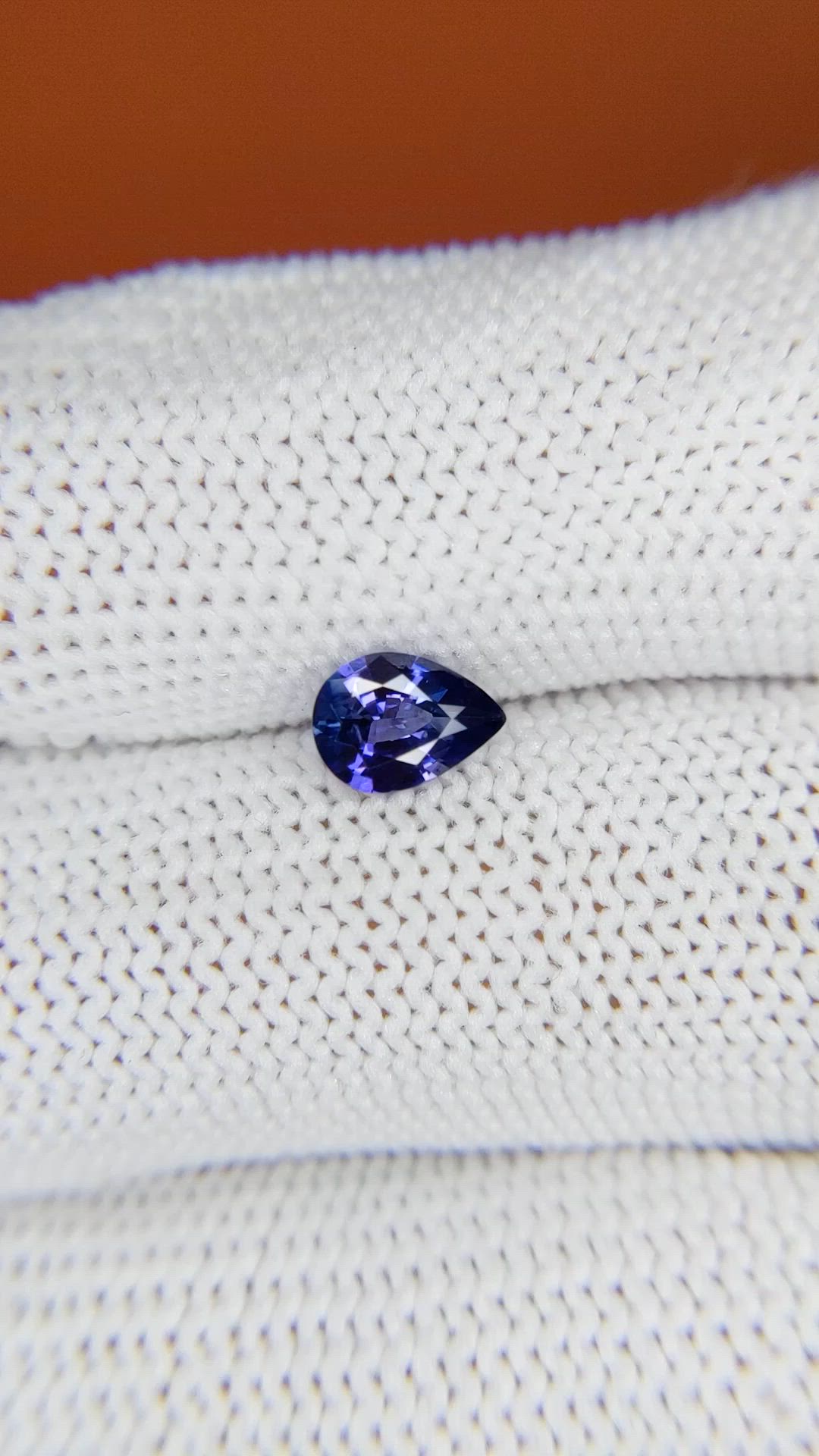
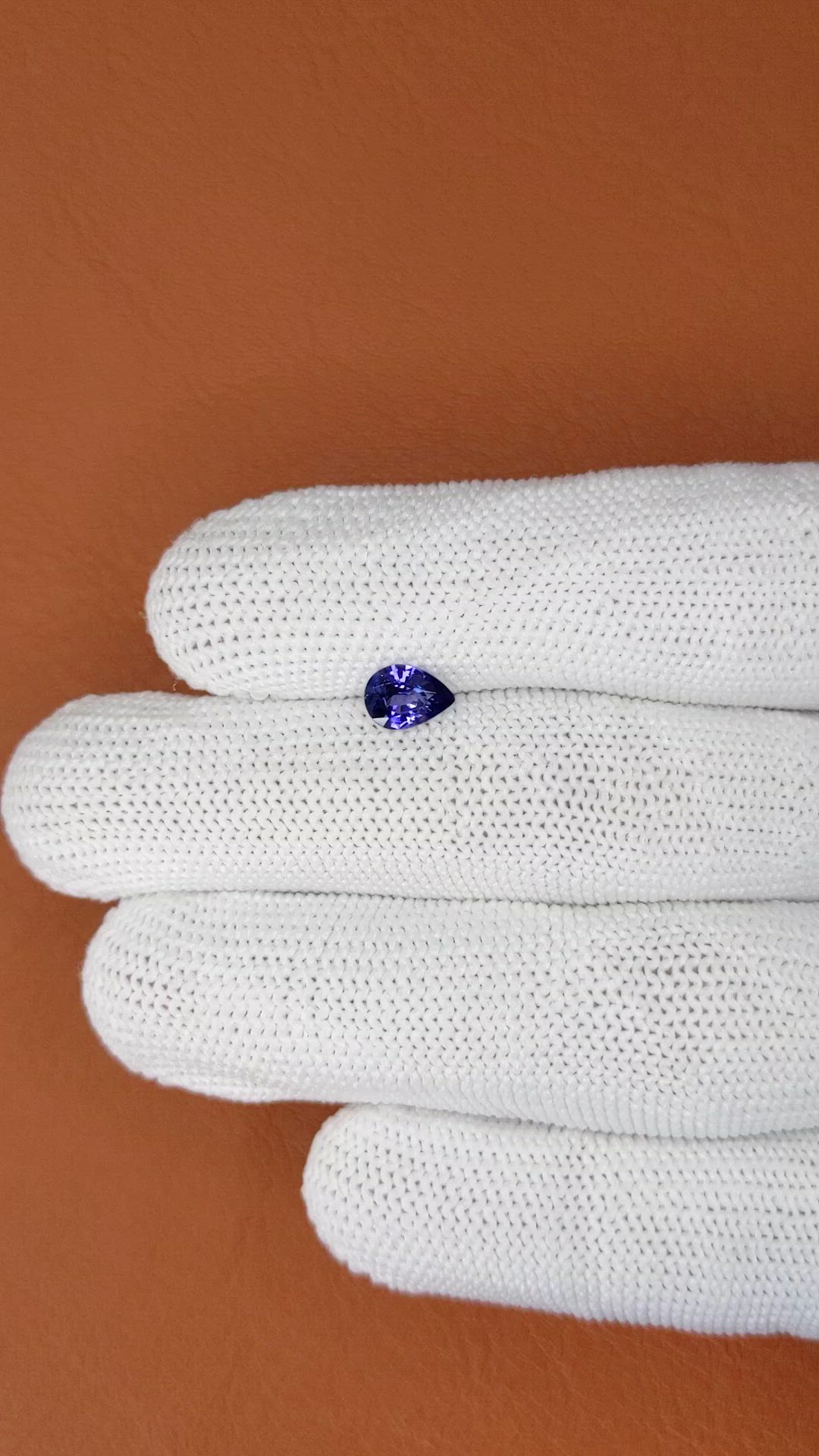
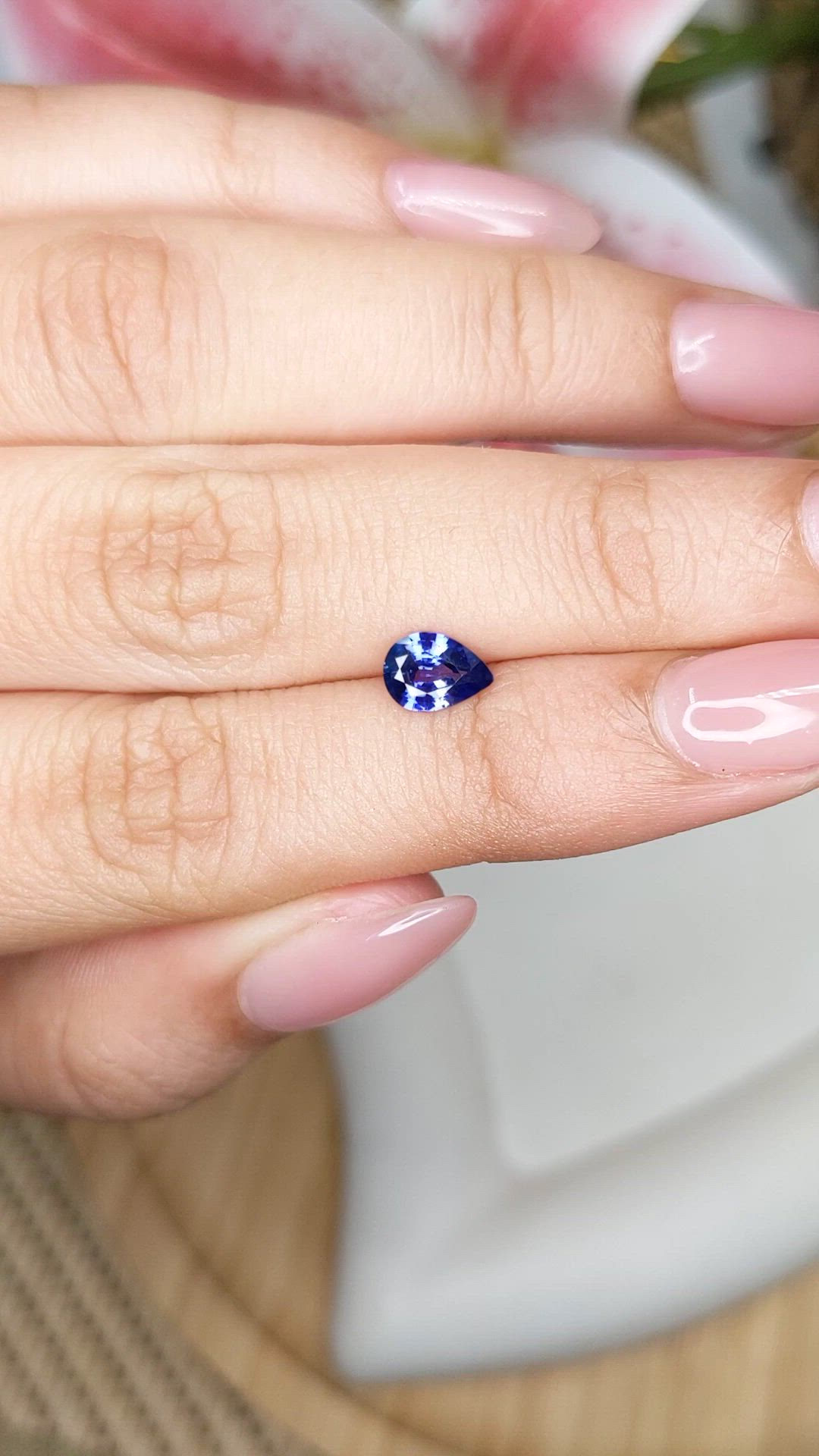
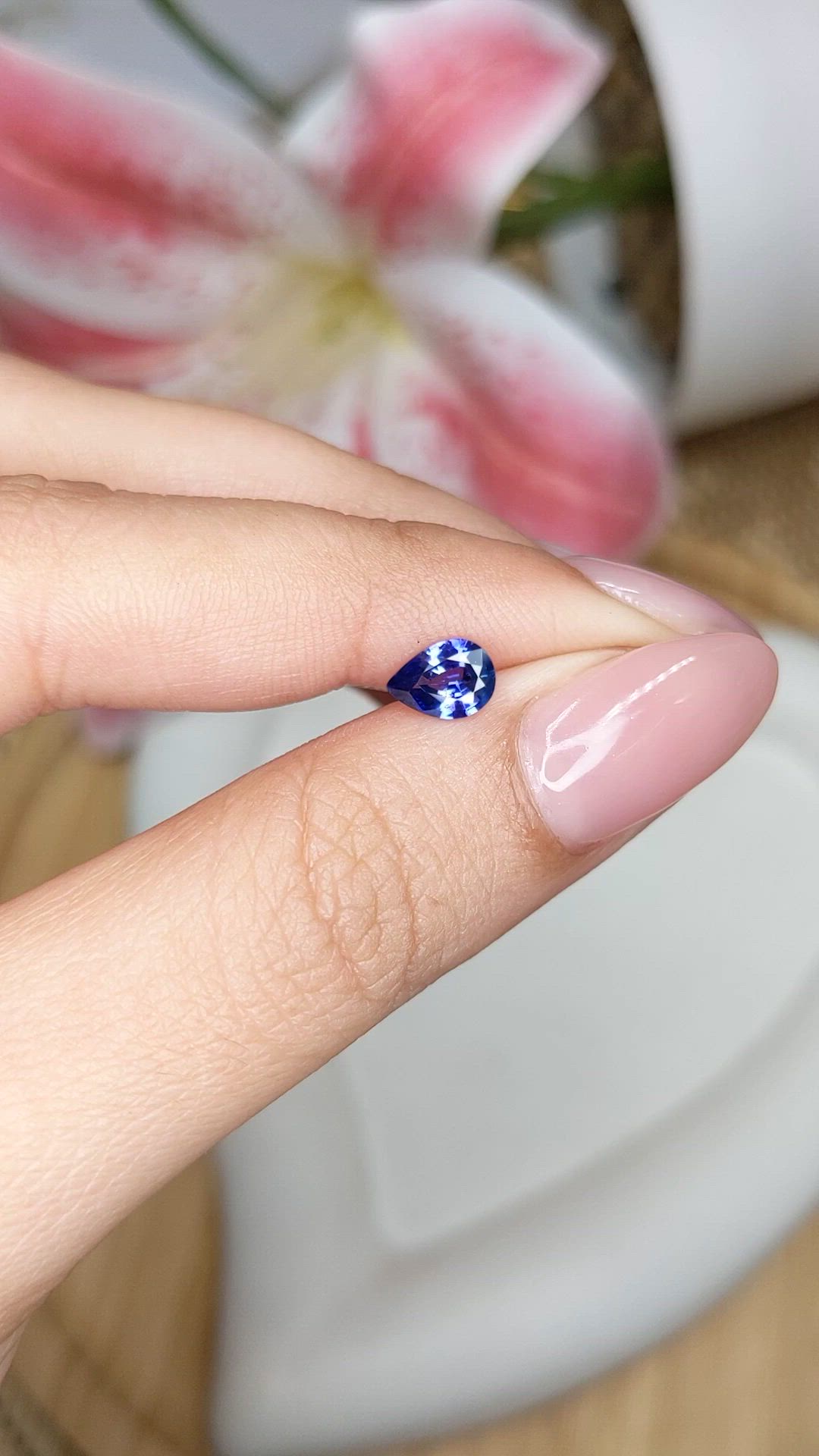
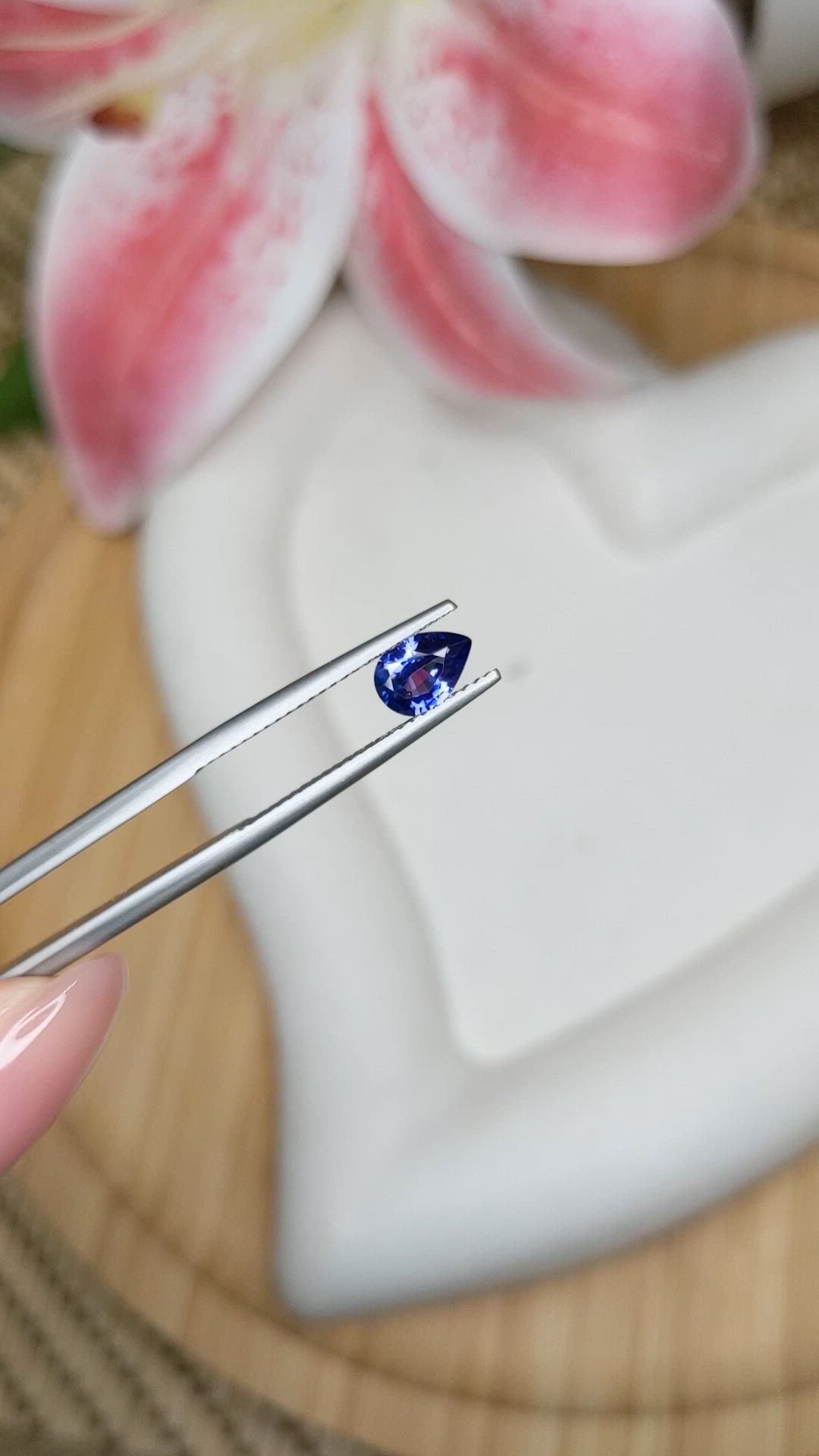
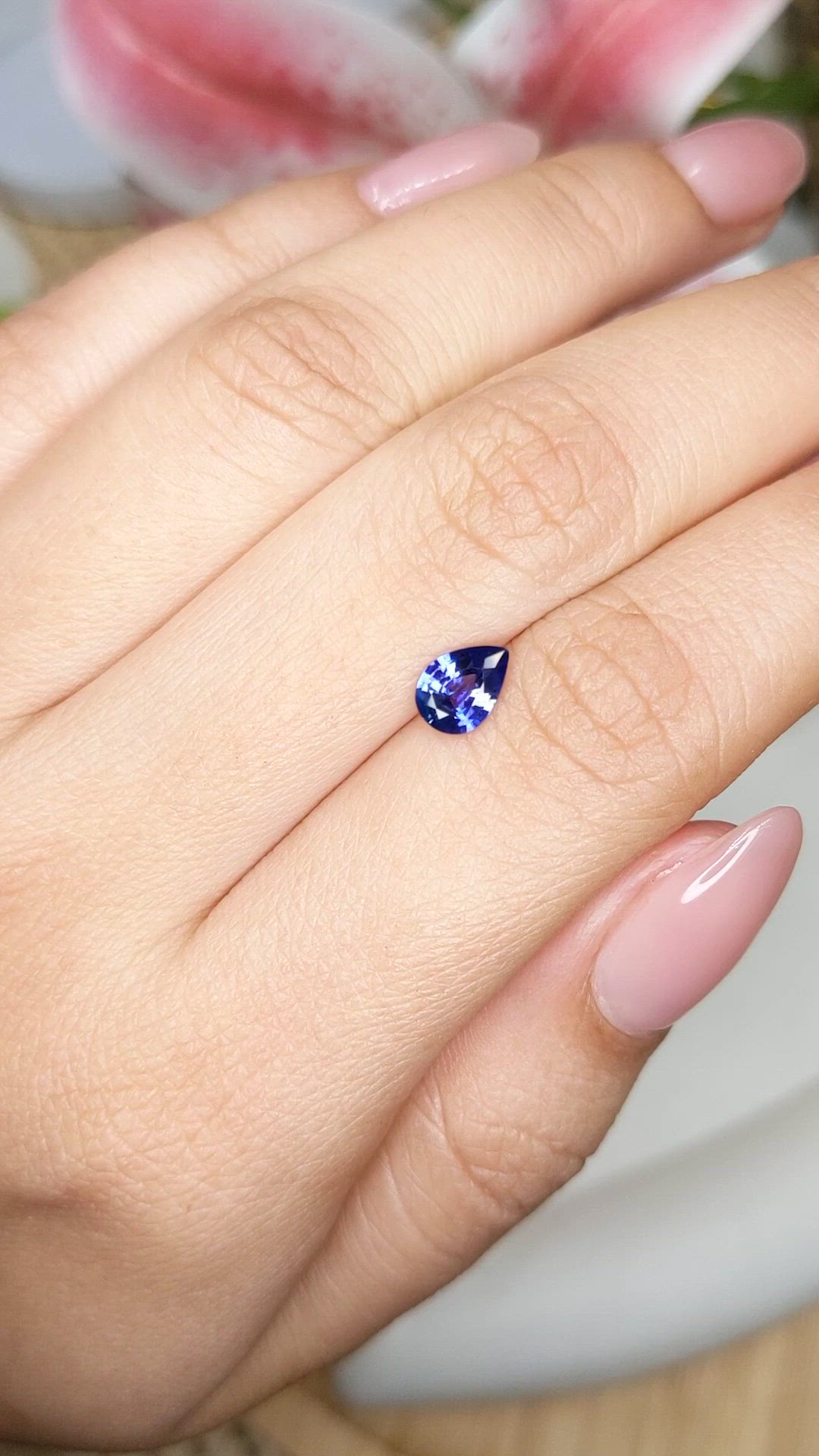
0.71 Ct. Purplish Blue Sapphire from Ceylon (Sri Lanka)
This loose stone is available to ship now
Item ID: | S46049 |
|---|---|
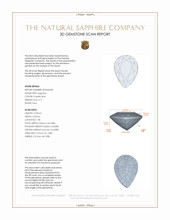
Dimensions (MM): help | Length: 6.94 Width: 5.02 Height: 2.82 |
Weight: | 0.71 Ct. |
Color: help | Purplish Blue |
Color intensity: help | Medium |
Clarity: help | Very Slightly Included |
Shape: help | Pear |
Cut: | Mixed Brilliant Cut |
Cutting style: | Faceted |
Enhancements: help | Heat Treated |
Origin: help | Ceylon (Sri Lanka) |
Per carat price: help | $600 |
This pear shape sapphire is a finely proportioned 0.71 carat gem, with exact dimensions of 6.94 by 5.02 by 2.82 mm, faceted with a mixed brilliant cut that balances scintillation with color display, and finished to an excellent polish. The transparency is high, and the clarity has been graded as very slightly included, evaluated at eye level, which means that inclusions are minimal and will not distract from the gem when set in jewelry, while also providing a fingerprint that confirms natural origin. The color reads as a purplish blue with medium color intensity, a tone that demonstrates enough depth to be clearly blue while showing a distinct violet component under certain lighting, and the stone has been heat treated, which is the industry standard enhancement used to stabilize and refine color and improve overall uniformity. As a sourcing specialist at The Natural Sapphire Company, I emphasize provenance, and this sapphire is identified as originating in Ceylon, Sri Lanka, an origin known for producing lively and transparent sapphires that combine brightness with a sweet, slightly secondary purple influence.
The purplish blue hue and medium tone of this gem position it somewhere between several world famous sapphire types, and comparing hue and tone to gemstones from other famous locations helps explain the appeal to a knowledgeable buyer. Sri Lankan sapphires typically exhibit the brisk, lively blue that favors light reflection and brisk scintillation, often with violet overtones that are visible when viewed at differing angles, which is precisely what this pear shape displays. By comparison, Kashmir sapphires are famed for a velvety cornflower blue with a soft, slightly silkier appearance, and they often show a more uniform diffusion of light that produces a plush, saturated look, whereas this Ceylon stone is brighter and more transparent in appearance. Burmese sapphires tend to present as a deeper, more saturated royal or pigeon blood blue when they are of high grade, with a warmer undercurrent, and they usually carry more saturation and less of the violet component than this purplish blue example. Australian sapphires are often darker and more inky, sometimes with greenish secondary tones, and they sit at a lower lightness level compared with the lively medium tone you see here. Madagascar produces a wide range of hues that can overlap with both Sri Lankan and Burmese styles, and in many cases Madagascans can show similar brightness to Ceylon stones but with different zoning patterns. For an educated buyer, this comparison means that the present stone offers the brightness and versatile wearability of Ceylon material, coupled with a charming purple nuance that makes it stand apart from the more monochrome blue examples from Kashmir and Myanmar.
From a technical and investment perspective, several attributes make this sapphire desirable for a collector or for use in a refined piece of jewelry. The mixed brilliant cut is chosen to enhance both color and light return, so the facets work to open up the medium intensity color while producing lively flashes of white light that offset the violet undertones, and the excellent polish maximizes surface reflection and final visual appeal. The clarity grade of very slightly included at eye level indicates that the stone will read clean in typical mounting configurations, and the inclusions are unlikely to affect durability because sapphire is a hard and robust gemstone with a rated hardness of nine on the Mohs scale, making it suitable for daily wear in rings and bracelets. Heat treatment is disclosed and it is stable and permanent, a treatment that is broadly accepted in the trade when fully documented, since it enhances color and sometimes clarifies internal features without compromising structural integrity. For buyers who weigh origin, clarity, cut, and color, this purplish blue Ceylon sapphire from The Natural Sapphire Company presents an attractive balance of provenance, optical performance, and market desirability, and it is especially appealing to those who appreciate a lively medium tone with a purple nuance, a look that offers greater versatility and visual interest than either the deeper inky blues of Australian material or the uniformly saturated tones of classic Burmese stones.


