
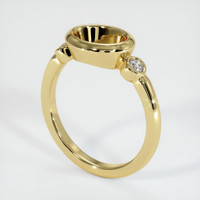
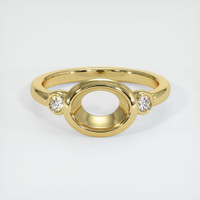
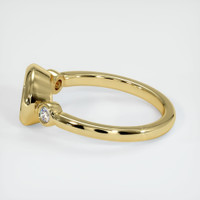
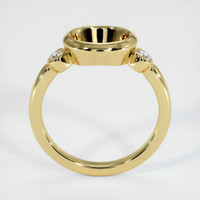


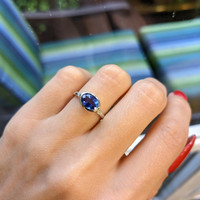
18K Yellow Gold Three Stone Ring Setting


The bezel setting on this custom made three stone ring is defined by a smooth metal border that fully and securely encircles the center gemstone, creating a continuous rim of metal that protects the girdle and pavilion, while conveying a sleek and understated elegance. This continuous rim is milled and formed to the exact proportions of the chosen center stone, providing a snug fit that minimizes exposed edges, reduces the risk of chipping, and stands up to daily wear with exceptional durability. Bezel settings offer a low profile that sits close to the finger, making the ring comfortable for active lifestyles, while the reflective channel of metal around the stone enhances perceived color saturation by controlling how light enters and exits the gem. The choice of metal is an important element of the bezel design, and this setting is available in rose gold, white gold, yellow gold, platinum, and two tone combinations that include white and yellow, or yellow and white, each alloy selected to complement specific gem hues and to provide the long term performance required of an heirloom quality piece.
The three stone composition of this design places a single, prominent center gemstone between two carefully chosen side accents, often interpreted to symbolize the past, the present, and the future, a narrative that resonates with buyers seeking meaningful design alongside technical excellence. The center stone may be selected from sapphire, ruby, emerald, or another fine gemstone, and it is cradled by the bezel to emphasize its hue and protect its form, while the four round side stones serve as balanced companions, adding sparkle and contrast without competing for attention. In practice the side stones are typically high quality accent diamonds, or they may be small sapphires or other complementary gems, each set to exacting tolerances so that the visual axis of the ring remains symmetrical, and the transition from bezel to shoulder is seamless. The proportions between center and side stones are calculated to maintain optical harmony, and the bezel profile can be adjusted in height and thickness to suit stones of varying depth, ensuring that the craftsmanship supports both aesthetic goals and structural integrity.
From a gemological perspective this ring invites careful selection of color grading, clarity assessment, and origin documentation to satisfy the educated buyer, and these technical factors determine both visual appeal and investment value. For sapphires, color saturation and tone are primary determinants of value, and provenances such as Kashmir, Sri Lanka, and Madagascar are commonly sought, with heat treatment being an accepted and widely practiced enhancement that should be transparently disclosed. For rubies, origin reports from Myanmar or Mozambique can materially affect market value, color is judged on a spectrum from pinkish to pigeon blood red, and heat treatment is the industry standard, so buyers should request laboratory grading when considering premium material. For emeralds, color and transparency are decisive, and origins such as Colombia, Zambia, and Brazil influence desirability, while surface reaching fissures and oil treatments are common, necessitating informed expectations about clarity and care. For the four round side stones, selecting clarity in the range of very slightly included to eye clean, and color in the near colorless range, will maximize complementary brilliance without distracting from the center gem, and buyers who seek certification should request reports from recognized laboratories such as GIA or AGL for the center stone, along with detailed disclosure of any treatments.
The tale of the jeweler carefully setting a precious gemstone into this bezel three stone ring is a narrative of precision, patience, and technical skill, beginning with the preparation of the bezel cup to the exact inner diameter required by the stone, followed by microscopic inspection of the girdle and pavilion to determine the best seating orientation. The craftsman cleans the bezel channel, seats the gemstone so that the crown height and table are aligned to the visual center, and then gradually burnishes the metal rim over the girdle, removing any burrs and smoothing the transition so that metal and stone meet without stress points. Every step is measured, the stone is checked under calibrated lighting to confirm that the face up color and brilliance meet the expected grade, and the bezel rim is polished to a mirror finish that both protects and enhances the gem. Final quality control includes a security test to confirm the stone will not rotate or dislodge under reasonable force, an assessment of how the metal tone influences the perceived color, and a review of documentation and certification to ensure full provenance and treatment disclosure, resulting in a custom made ring that combines meaningful symbolism, rigorous gemological standards, and enduring craftsmanship.

