
- Stone14
- Reports3
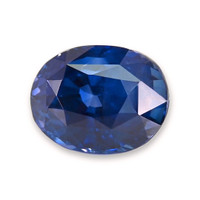
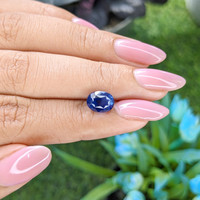
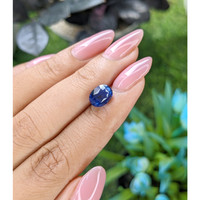
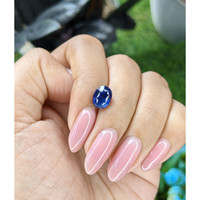
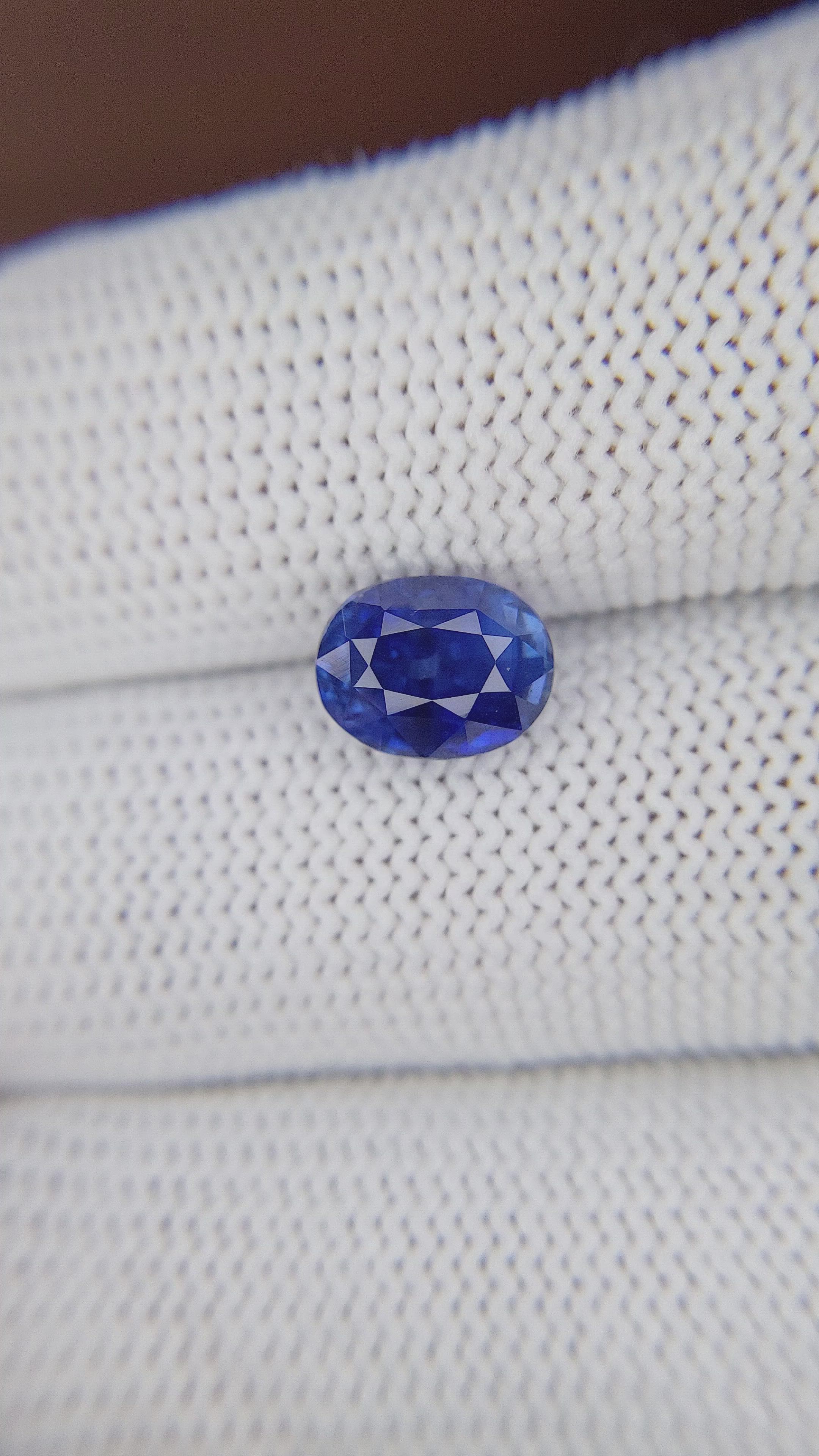
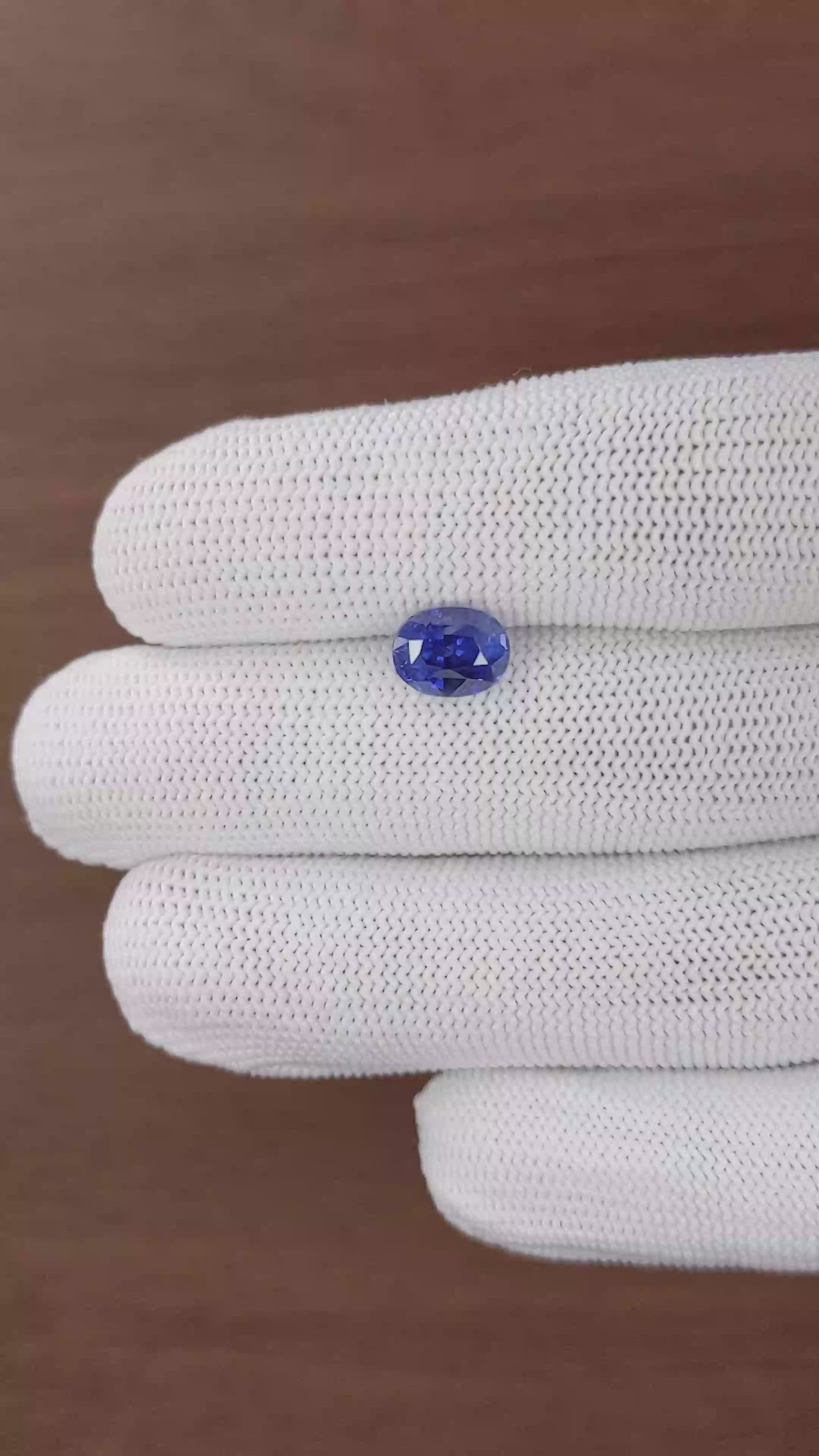
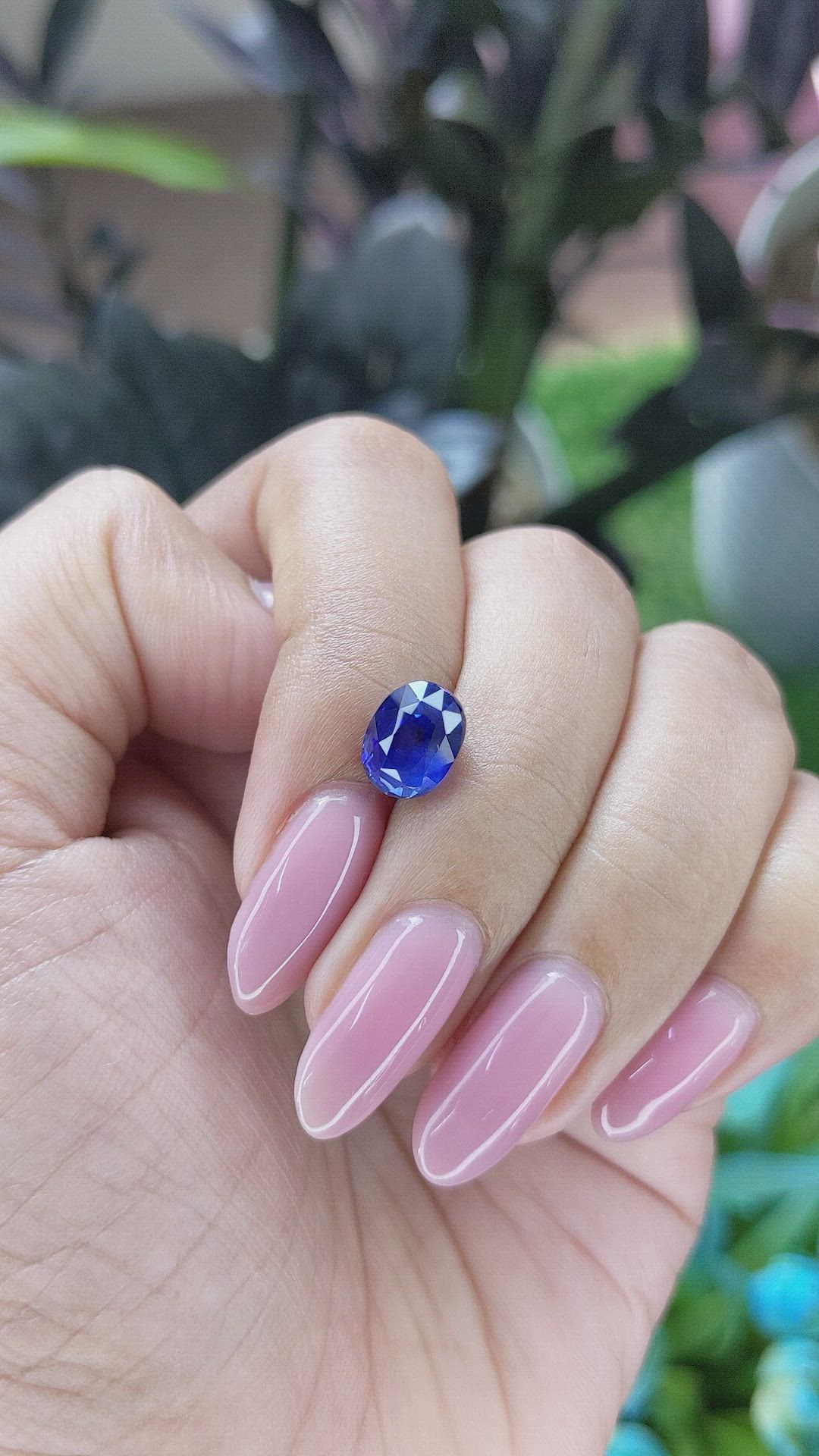
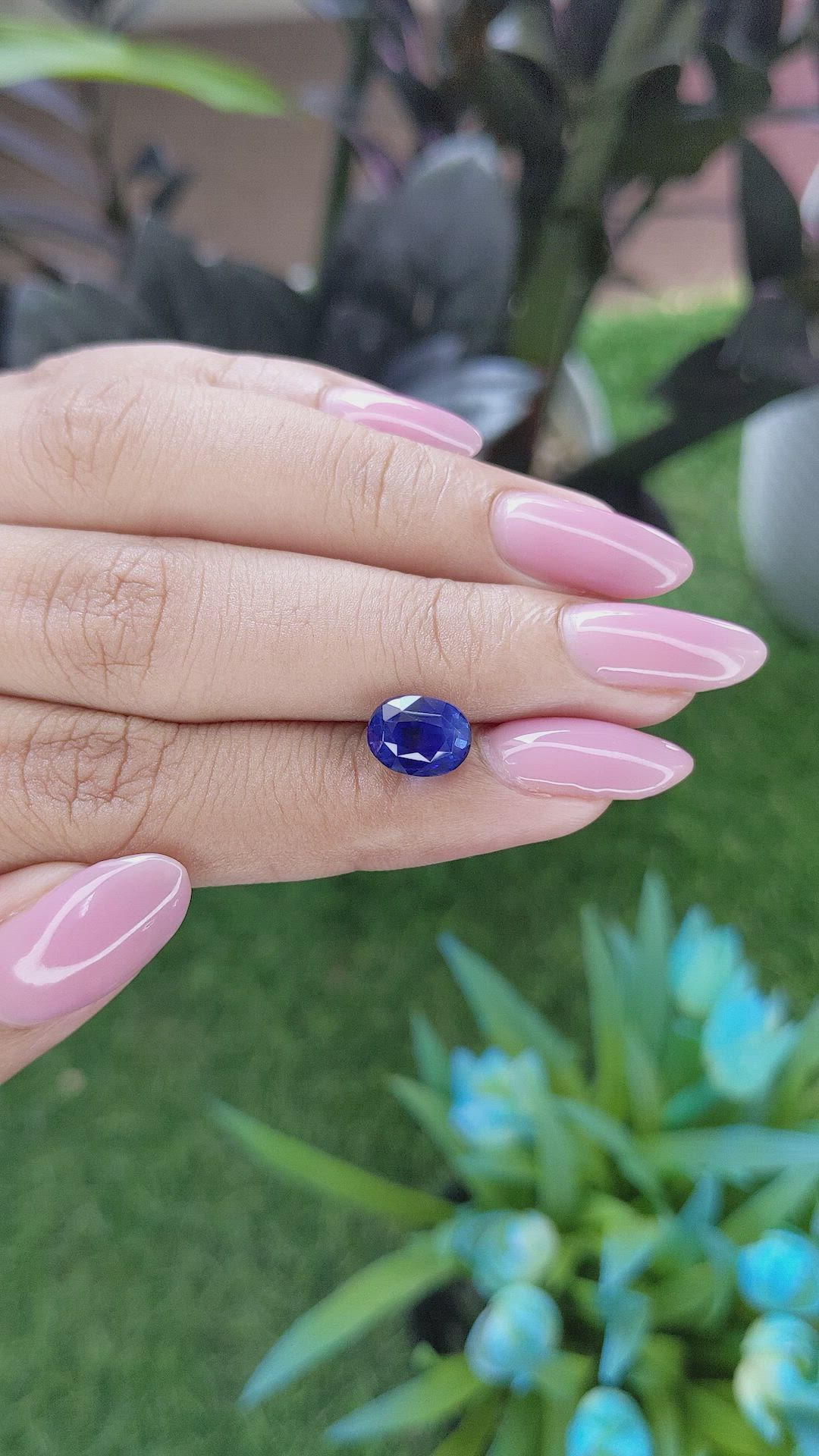
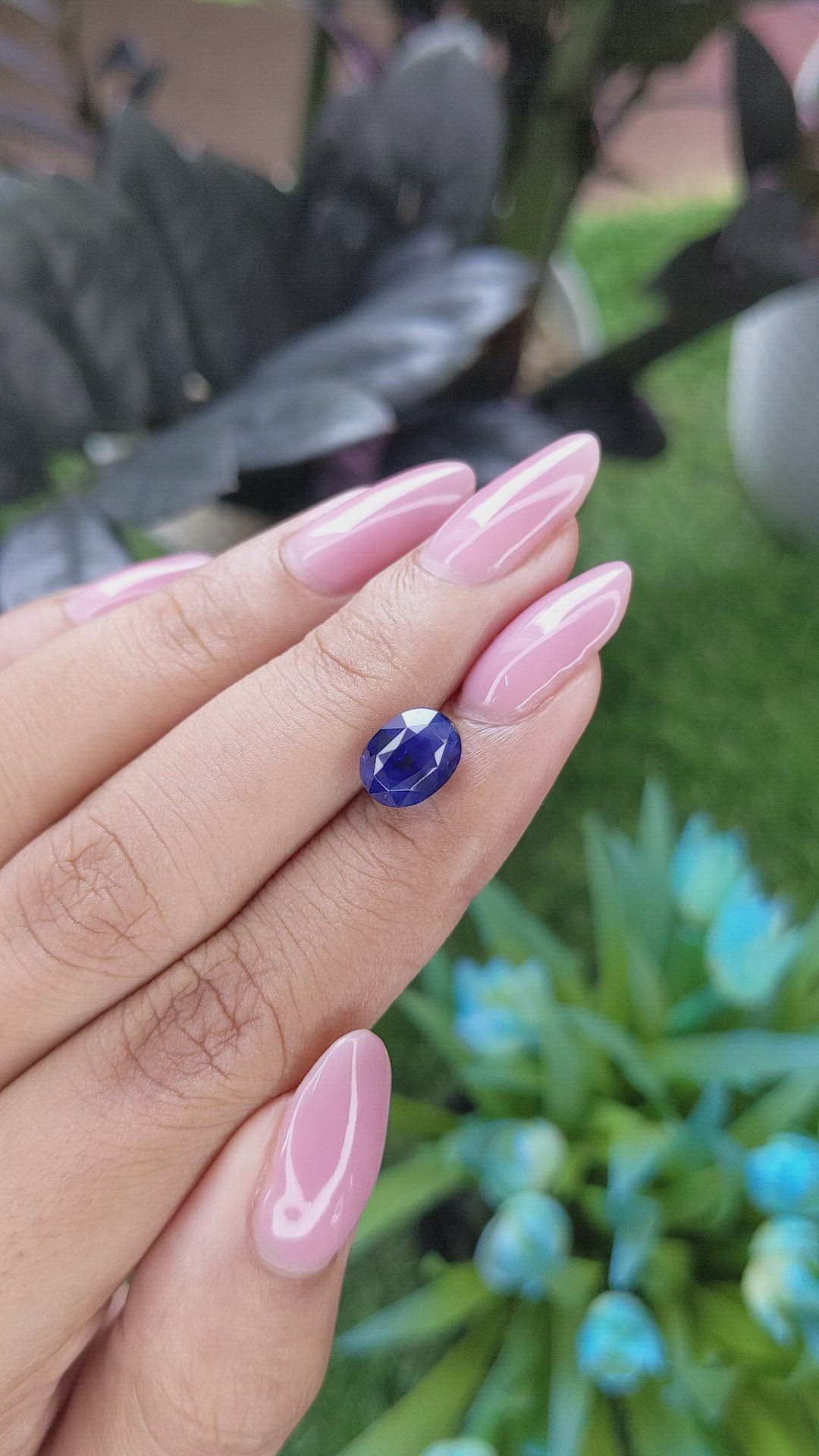

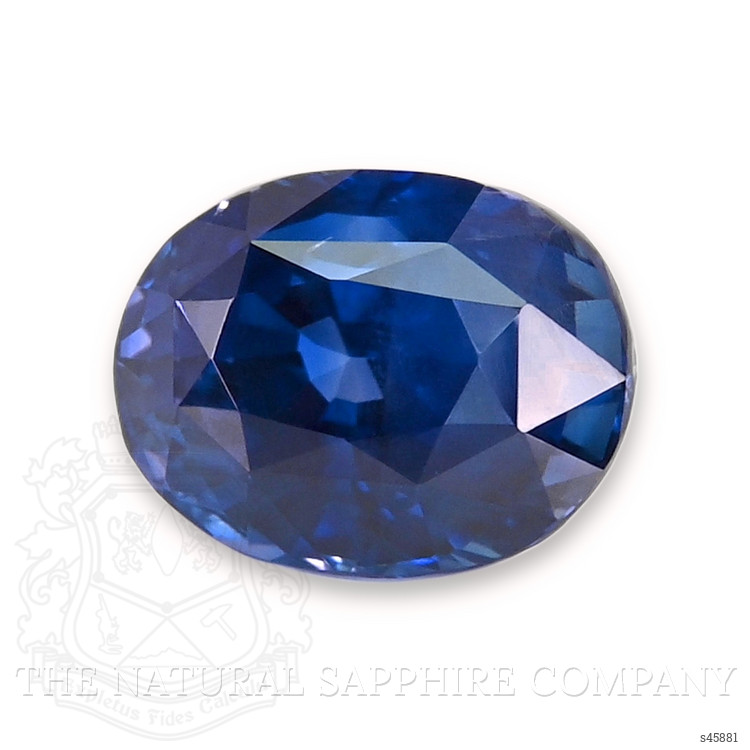
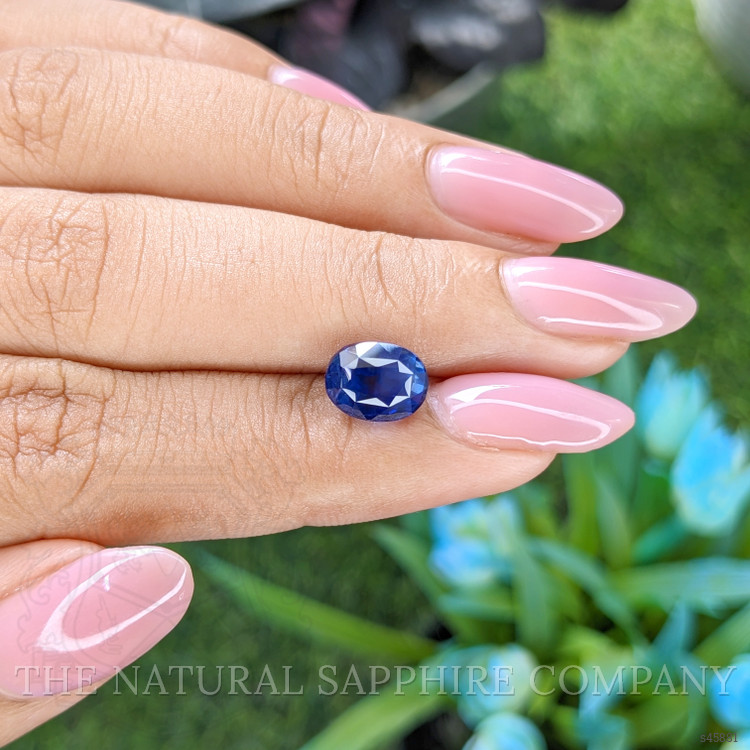
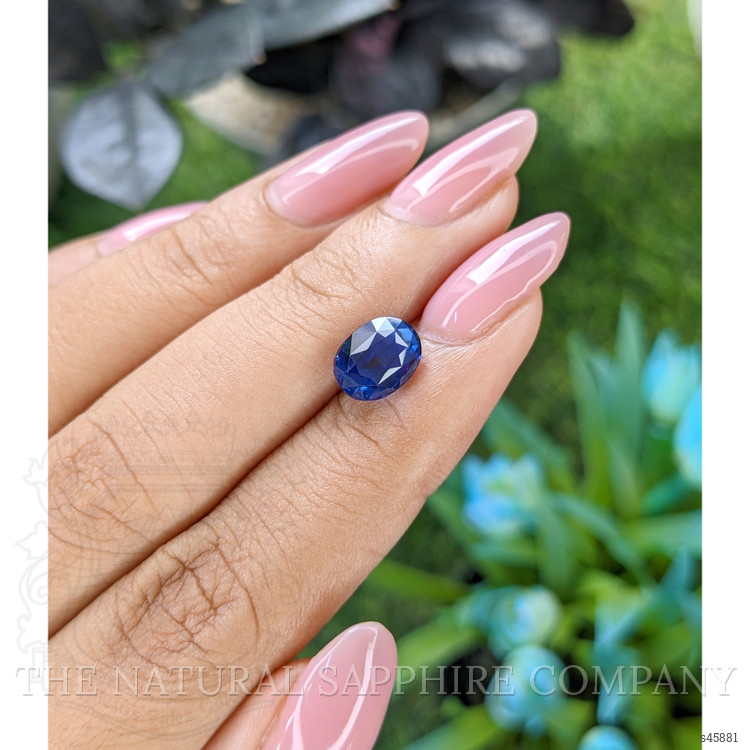
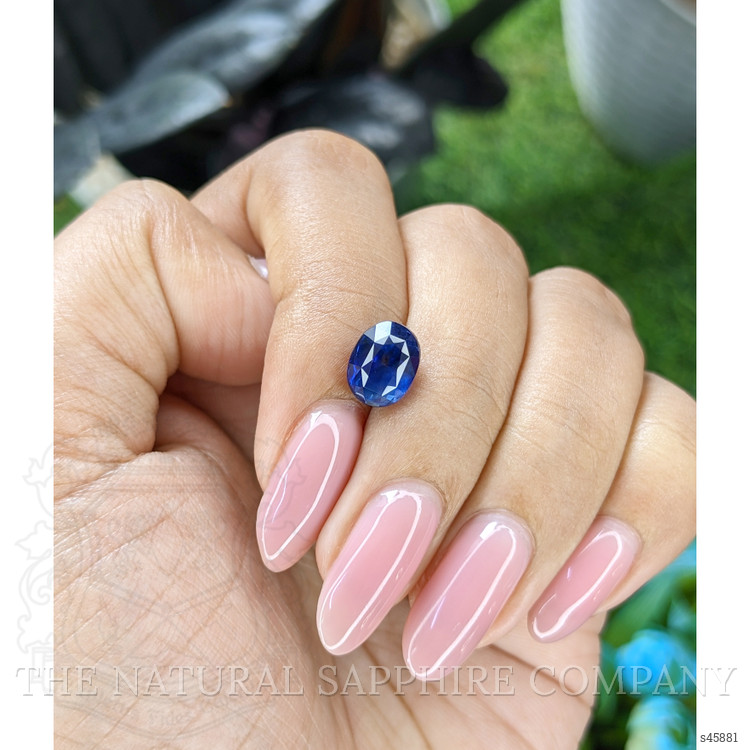

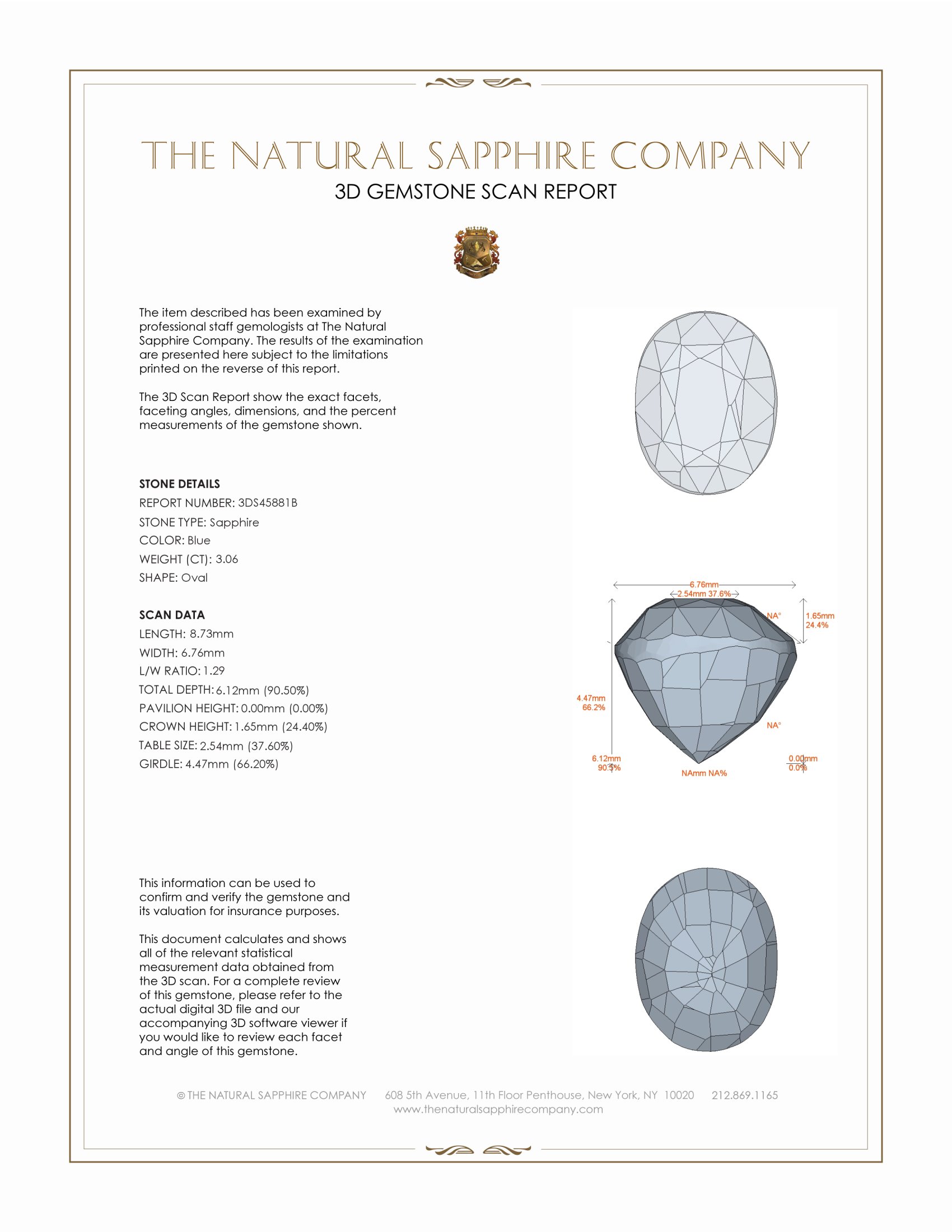
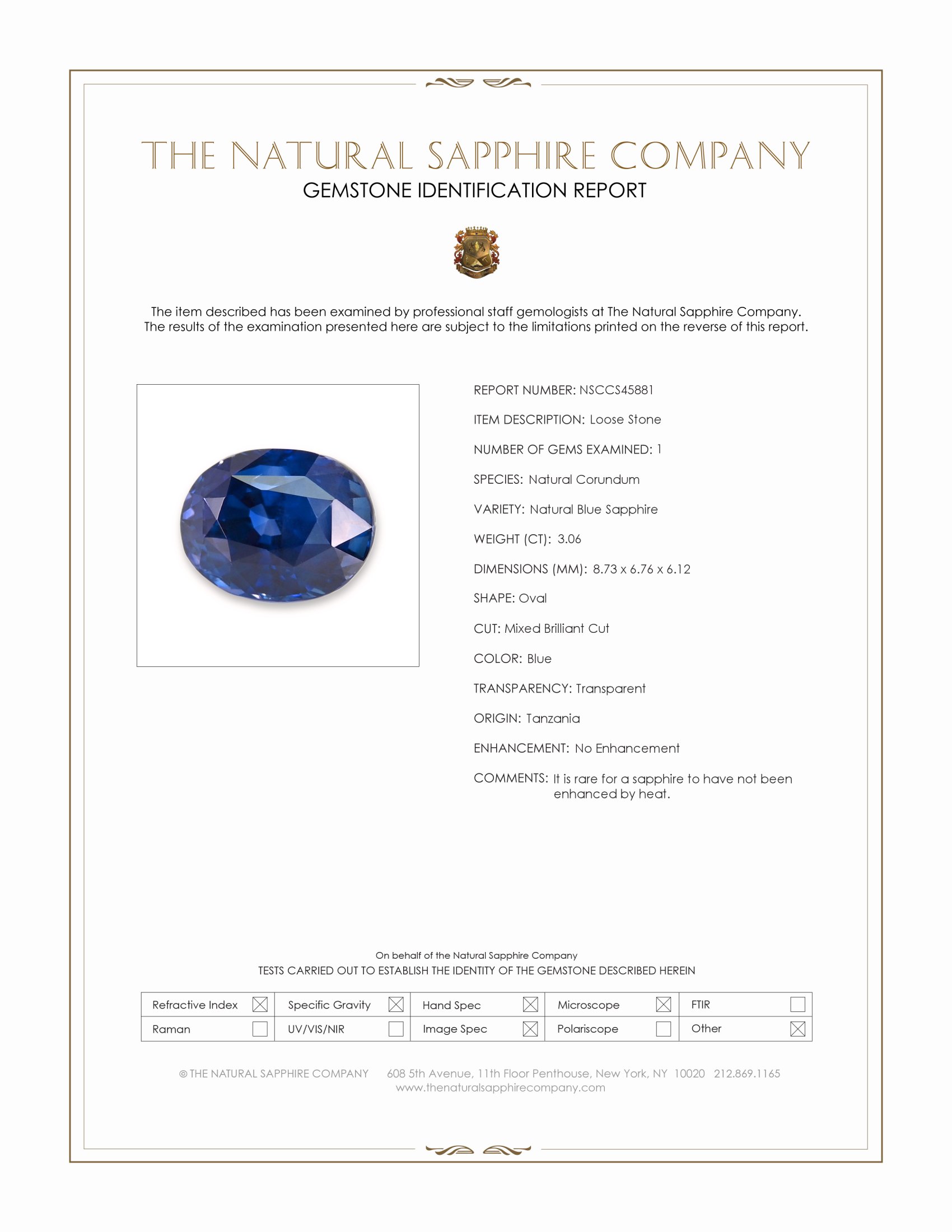
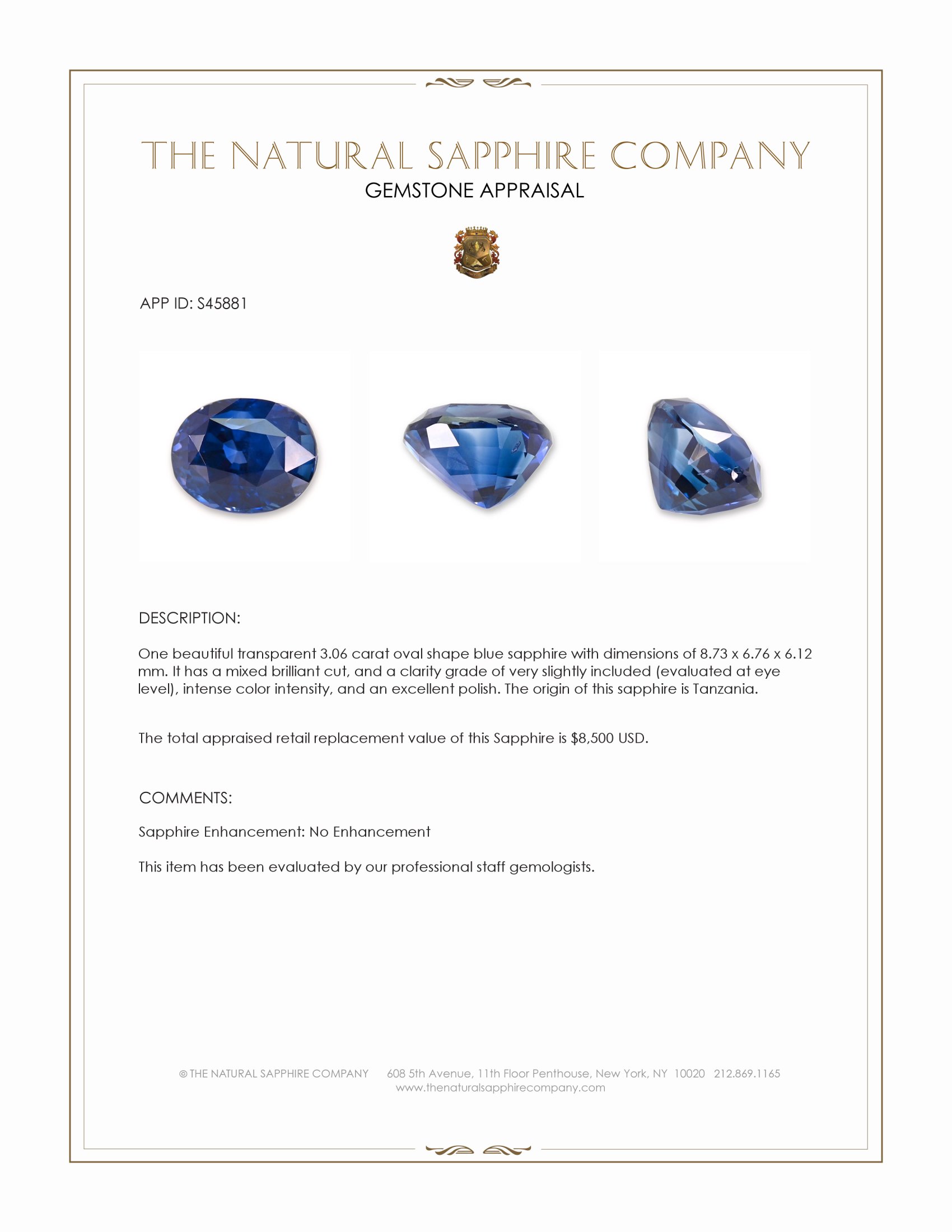
3.06 Ct. Blue Sapphire from Tanzania
This loose stone ships by Oct 13
Item ID: | S45881 |
|---|---|
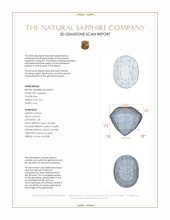
Dimensions (MM): help | Length: 8.73 Width: 6.76 Height: 6.12 |
Weight: | 3.06 Ct. |
Color: help | Blue |
Color intensity: help | Intense |
Clarity: help | Very Slightly Included |
Shape: help | Oval |
Cut: | Mixed Brilliant Cut |
Cutting style: | Faceted |
Enhancements: help | No Enhancement |
Origin: help | Tanzania |
Per carat price: help | $2,778 |
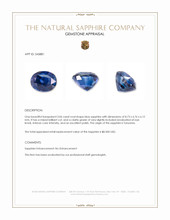
This transparent 3.06 carat oval blue sapphire measures 8.73 by 6.76 by 6.12 millimeters, and has been fashioned in a mixed brilliant cut with an excellent polish, a combination that balances lively scintillation with a pleasing, classic silhouette that sits beautifully in either a ring or a pendant. At three carats this sapphire has real presence without overwhelming proportions, and the oval outline preserves face-up size while concentrating color toward the center, producing a deep, saturated appearance. The 8.73 by 6.76 millimeter dimensions make it an ideal candidate for a tailored engagement ring or a refined solitaire pendant, and the mixed brilliant faceting is specifically chosen to enhance both table sparkle and pavilion light return. The Natural Sapphire Company presents this stone as a natural, untreated gem from Tanzania, and our descriptions reflect exact measured proportions, cut style, and visual characteristics so an informed buyer knows precisely what to expect when the sapphire arrives.
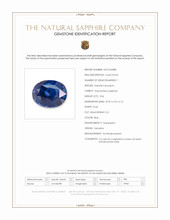
Clarity is described as very slightly included when evaluated at eye level, which means that under normal viewing conditions the stone reads as clean and transparent, while microscopic or loupe examination will reveal minor natural features that are typical and expected in corundum. These very slight inclusions do not disrupt the overall brilliance or color, and in many cases they serve as internal fingerprints that verify a natural origin, rather than detracting from the gem’s aesthetic value. Importantly, this sapphire has no enhancement, it has not been heat treated or diffused, and it retains its natural color intensity, a feature that significantly enhances its rarity and long-term value in the market. From a gemological perspective, the intense blue coloration is a function of the trace elements inherent to Tanzanian corundum, and the combination of strong saturation, transparent body, and minimal inclusions creates a stone that will perform exceptionally under magnification and to the naked eye alike.
When comparing brilliance and overall visual performance to more common gemstones, it helps to understand how corundum behaves optically. Diamonds are renowned for their high dispersion and fiery, white brilliance; they scatter light into spectral colors more readily than sapphires. Blue sapphires, however, have a higher refractive index than many colored stones and display a deep, velvety luster and concentrated color that diamonds cannot replicate. Compared to blue topaz or aquamarine, both of which tend to show lighter, more pastel tones and more obvious windowing in deeper sizes, this Tanzanian sapphire offers far greater saturation and presence. Compared to tanzanite, which often exhibits strong pleochroism and a violet-blue shift that can appear lighter in certain orientations, this sapphire maintains a consistent, intense blue that reads uniformly rich across the table, while its mixed brilliant cut introduces lively facets and scintillation that catch light in a way more akin to a very well-cut spinel or high-quality ruby, but with the unique depth of blue only corundum provides. The combination of dense, even color, excellent polish, and well-executed mixed brilliant faceting means that light is both absorbed to enrich color and returned to the eye as focused sparkle, giving the stone a luxurious visual weight and making it stand out among more commonly available blues.
For an educated buyer considering this sapphire as an investment or a lifetime piece, there are a few practical points to bear in mind. The untreated status and Tanzanian origin add measurable market premium, and its size and cut provide versatility for many design directions, from understated solitaires in platinum to warmer, more classical yellow gold settings that can slightly enhance perceived blue. The mixed brilliant cut will show best in settings that allow light into the pavilion, and a bezel or halo can protect the stone while complementing its high polish and color saturation. Care is straightforward, use warm soapy water and a soft brush for routine cleaning, avoid prolonged exposure to harsh chemicals or extreme heat, and have prongs checked periodically to protect the stone. At The Natural Sapphire Company we can supply additional imagery, and independent gemological reporting through recognized laboratories is available on request to document the natural, untreated origin and the measured properties of the gem. If you value color intensity, natural provenance, and a well-balanced combination of sparkle and depth, this 3.06 carat Tanzanian blue sapphire is a compelling option that integrates aesthetic appeal with responsible disclosure and long-term desirability.


