
The Great Montana Sapphire Rush
When people think of famous sapphire sources, Sri Lanka, Kashmir, and Myanmar often come to mind. Yet the United States has its own remarkable sapphire story. The Great Montana Sapphire Rush began with discoveries hidden beneath the mountains and river gravels of Montana, revealing sapphires that have been mined for more than a century and are now admired for their unusual colors and distinctly American origin.
The discovery of Montana sapphires was not originally the result of a search for gemstones. Instead, it began during the great search for gold.
An Unexpected Discovery During the Gold Rush
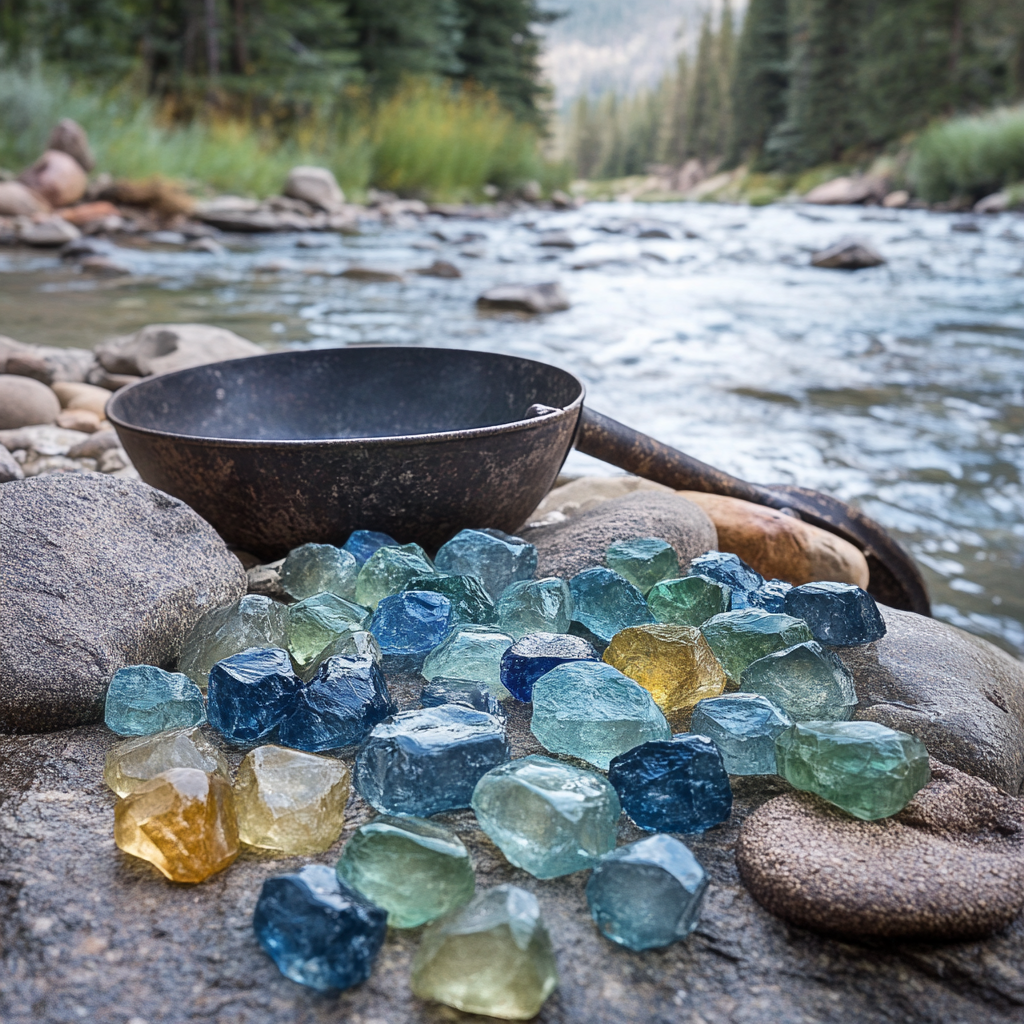
In the 1860s, prospectors were exploring Montana’s rivers and streams in search of gold. While washing gravel, miners began finding small, unusually hard and colorful crystals mixed with their gold-bearing material.
At first, these stones were more of a nuisance than a treasure. Many miners did not realize that the crystals were corundum, the mineral family to which ruby and sapphire belong.
As their identity and potential value became better understood, Montana gradually emerged as one of North America’s most important sapphire-producing regions.
The Discovery of Yogo Sapphires
One of the most important chapters came in the late 19th century with the discovery of sapphires at Yogo Gulch in central Montana.
Gold prospector Jake Hoover encountered blue stones in material from the area and eventually sent samples for examination. Their quality attracted attention, and Yogo Gulch became famous for producing naturally beautiful blue sapphires.
Unlike many Montana sapphires found in river gravels, Yogo sapphires occur in their original hard-rock deposit.
They are particularly prized for their attractive blue to violet-blue colors. Many Yogo sapphires also show excellent natural color without requiring the heat treatment commonly used to improve sapphire appearance.
Montana Produces More Than Just Blue
One of the most fascinating aspects of The Great Montana Sapphire Rush is the remarkable range of colors found in these American sapphires.
While blue remains the classic choice, Montana deposits can produce sapphires in shades of green, teal, yellow, gray, pale blue, and combinations of blue and green.
Teal sapphires have become especially popular in modern jewelry because their mixture of blue and green creates a distinctive appearance quite different from traditional royal-blue sapphire.
Some rough Montana sapphires may initially appear pale or muted. Heat treatment can improve the color and clarity of suitable stones, transforming them into brighter and more attractive gems.
Important Montana Sapphire Deposits
Yogo Gulch may be the most famous name, but it is only part of Montana’s sapphire history.
Deposits around Rock Creek, the Missouri River, and Dry Cottonwood Creek have also produced significant quantities of sapphire. Each locality has its own geological characteristics and can produce stones with different colors and appearances.
Rock Creek, in particular, has become an important source of the colorful Montana sapphires seen in contemporary jewelry.
What Makes Montana Sapphires Different?
Montana sapphires are interesting because they do not always follow the traditional idea of what a sapphire should look like.
Instead of only deep blue, they can display subtle combinations of blue, green, gray, and yellow. This natural variation means that individual stones can have considerable personality.
Their American origin also appeals to buyers interested in knowing where their gemstones were mined.
For collectors, Yogo sapphires occupy a particularly special place because of their historic deposit, distinctive color, limited production, and reputation for naturally attractive material.
From Gold-Mining Byproduct to Desired Gemstone
Perhaps the most interesting part of Montana’s sapphire story is how dramatically attitudes toward these stones changed.
Crystals that were once overlooked by miners searching for gold eventually became valuable gemstones in their own right. As gemology and cutting techniques developed, the beauty hidden inside Montana’s rough sapphire became increasingly appreciated.
Today, Montana sapphires are used in engagement rings, fine jewelry, collector pieces, and custom designs around the world.
A Unique Chapter in American Gemstone History
The Great Montana Sapphire Rush is a reminder that major gemstone discoveries do not always begin with someone looking for gemstones.
What started with curious crystals appearing alongside gold eventually sparked The Great Montana Sapphire Rush, revealing one of America’s most important colored gemstone resources.
From the historic blue sapphires of Yogo Gulch to the modern teal, green, and blue gems of Rock Creek, Montana has created a sapphire identity entirely of its own. For anyone fascinated by sapphires, these American gems offer something particularly appealing: a combination of geological history, unexpected discovery, unusual color, and more than a century of mining heritage.
Discover the unique colors of America’s treasured gemstones and explore our finest collection of natural Montana sapphires to find the perfect stone for you.