April 26th, 2013 by Paul
The Natural Sapphire Company Excited by Future of the Famous Cornflower Blue Sapphires
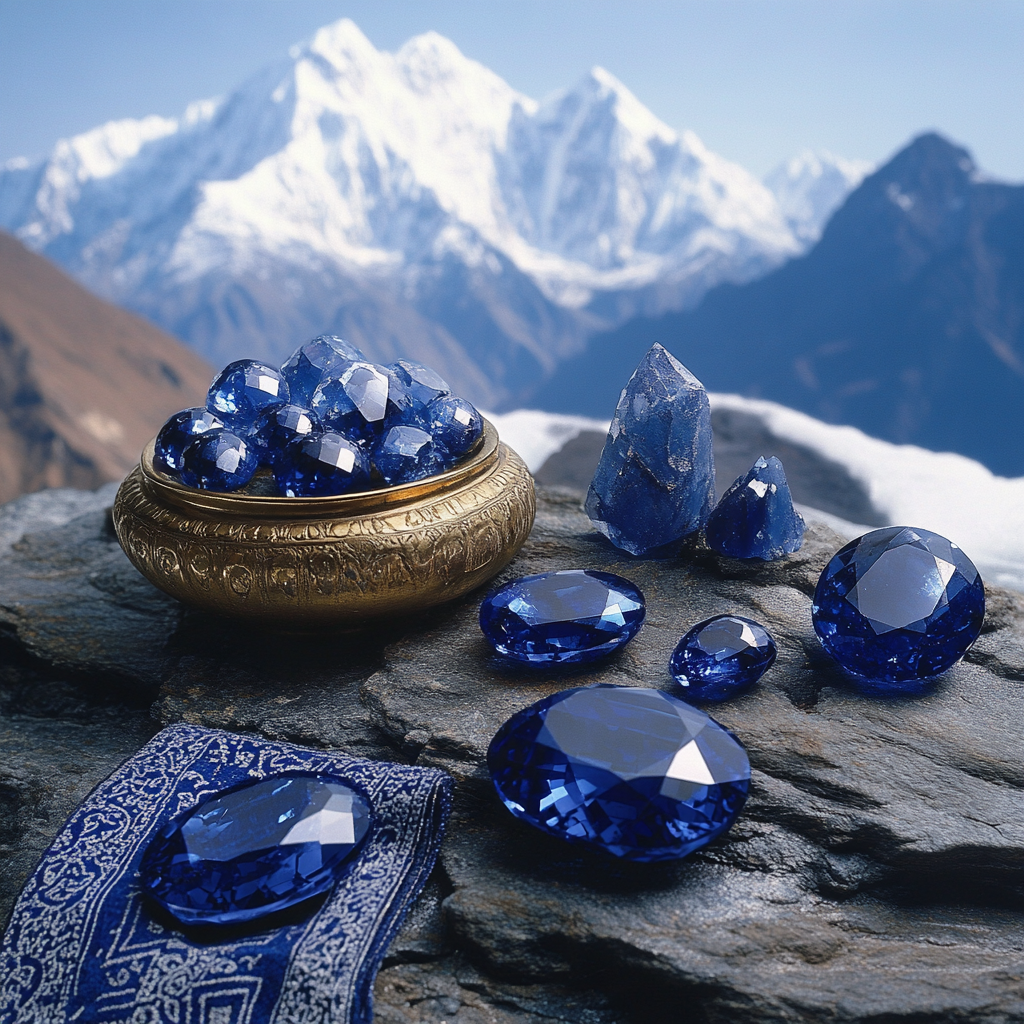
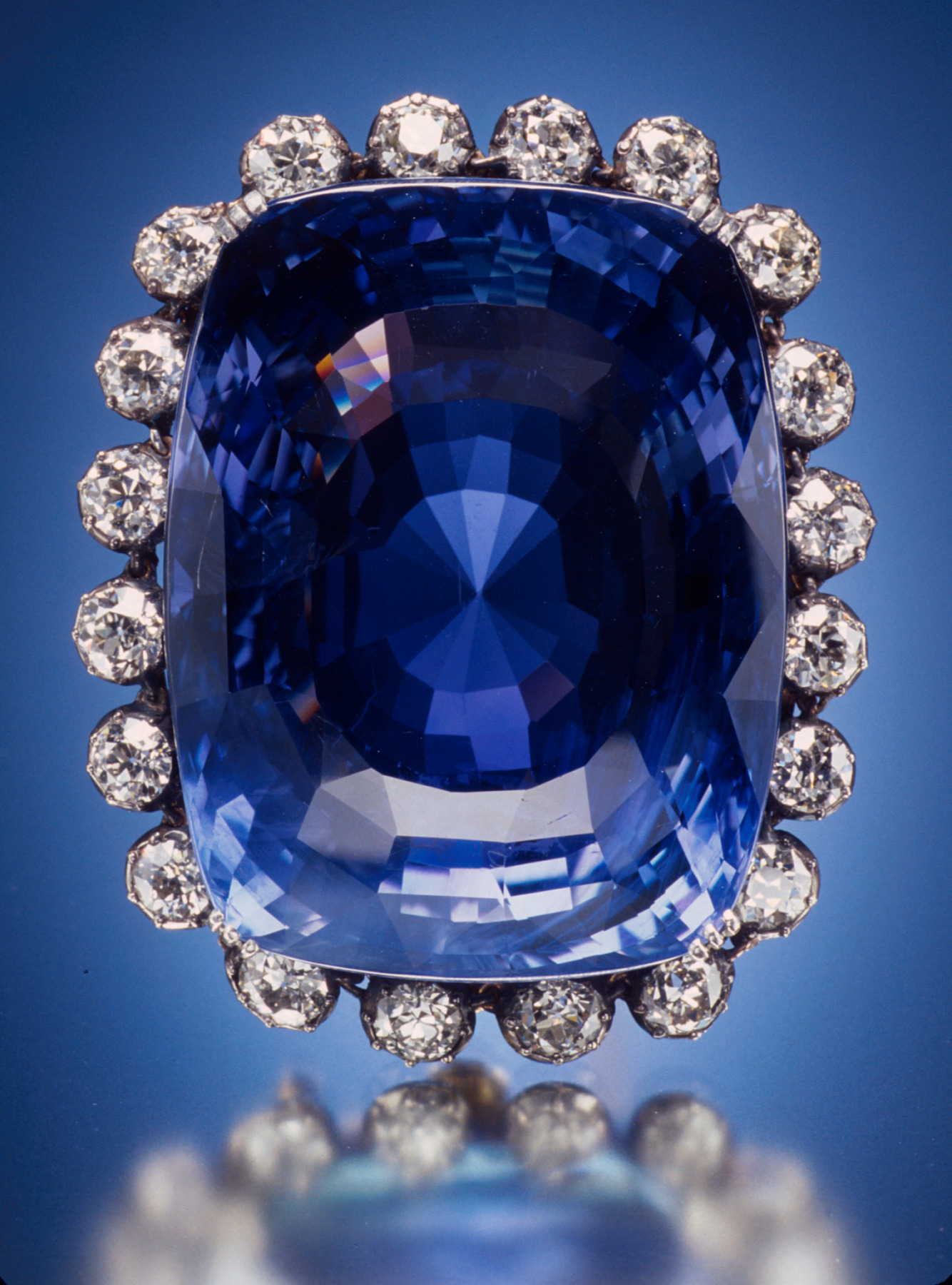
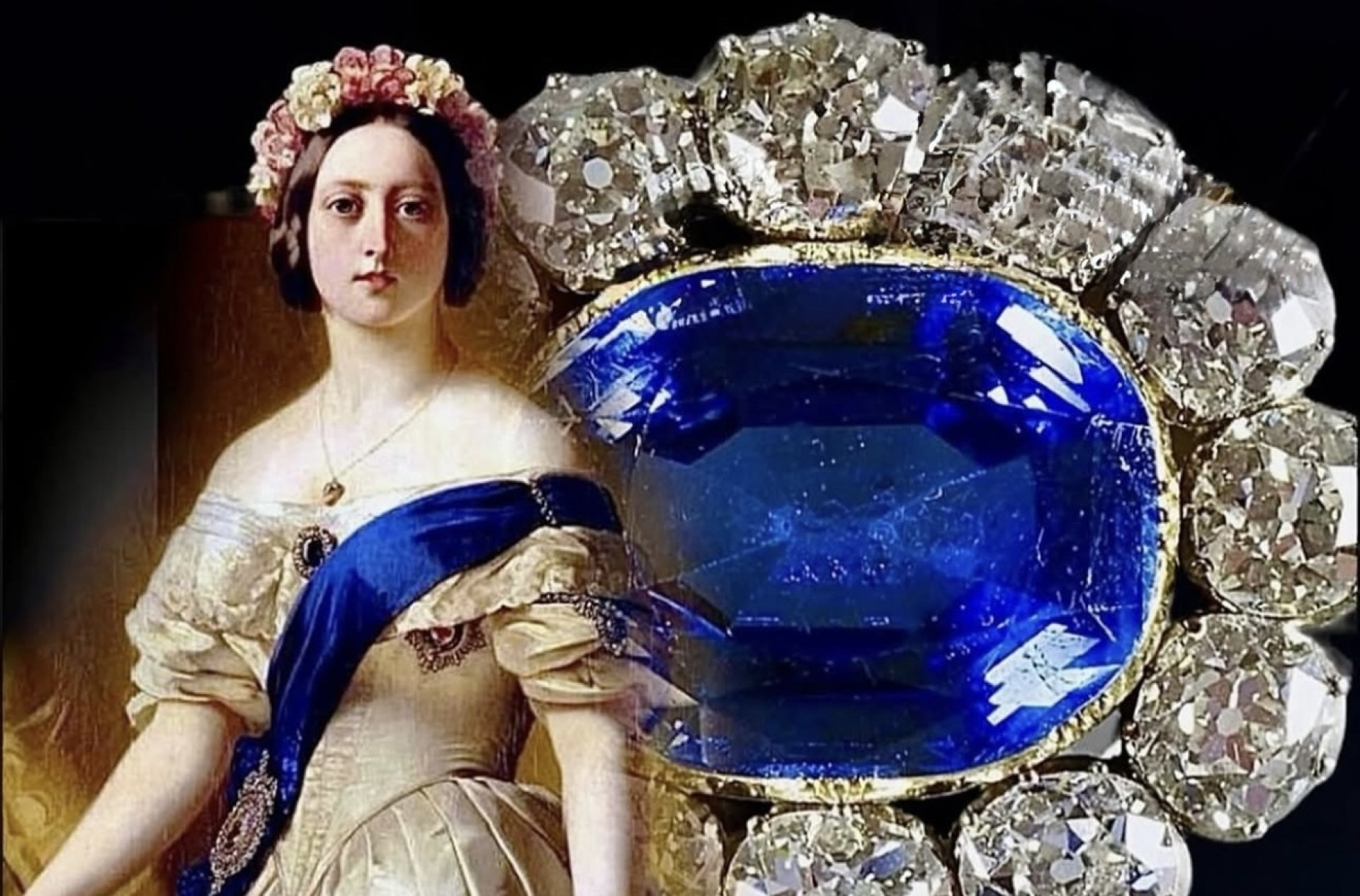
Without a doubt, the most rare, legendary, and prized sapphires in the world; the Kashmir sapphire’s velvety cornflower blue color is as well-known and regarded as Burmese “Pigeon Blood” Rubies. With the height of production lasting less than 10 years, and the Kashmir mines having been considered depleted; the Jammu and Kashmir government is now looking for mining companies with the financial and physical ability to explore the treacherous terrain and continue the production of sapphires in and around the Kashmir region. J & K Minerals Ltd, a state government enterprise that holds a mine lease covering over 1643 acres at a height of 12.981 feet, has extracted several thousand grams of rough sapphire, however the time that they are able to work at those heights and in good conditions only lasts about two months and production has been up and down, off and on since the 1960’s.
Now the Jammu and Kashmir government has invited parties with expertise in mining to undertake exploration of sapphires through a joint venture with J & K Minerals Ltd. The global tenders for sapphire mining in the region is not a new concept, as over the years the Indian government has often tried to get companies to come to the Kashmir region. However, this time the Jammu and Kashmir Industries Department is planning a satellite survey to find other sapphire deposits in the Paddar Valley, as other sources have been believed to be there since the sapphires initial discovery in the late 1800’s. Until now, two decades of militancy has hindered the exploration of the area, so the fresh tenders now being offered may mean there will be a greater supply of Kashmir sapphires in the future. Chances are, given the conditions of mining in the Paddar Valley, Kashmir sapphires will always be extremely rare.
 Figure 1 Christie’s Images Ltd. 2012
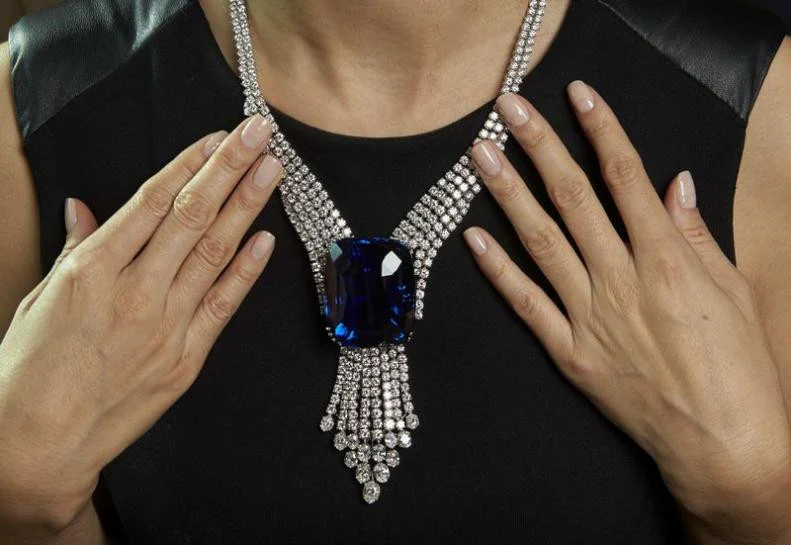
Words like “rare” and “precious” are thrown around quite a bit, but when it comes to Kashmir sapphires those two words are undeniable facts. In 2007, a 22.66ct Kashmir sapphire sold at a Christie’s auction for a record breaking $135,000 per carat. Then in 2011, in Hong Kong, a pair of cushion cut Kashmir sapphires sold for $145,339 per carat. Fast forward to 2013, at the April 16th Christie’s auction; an 8.91ct cushion cut Kashmir sapphire broke a new world record when it sold for $154,000 per carat. In this case it was not the Tiffany setting that raised the price or any sort of provenance, but simply that it was a beautiful untreated Kashmir sapphire of the true velvety blue that Kashmir sapphires are known for. Kashmir sapphires are a rare treasure that evidently will continue to increase in value.
First discovered around 1880 when a landslide 4500 meters high in the Himalayas, in the Padar region, revealed large sapphire crystals. The sapphires were first traded amongst locals, but quickly gained the interest of the Maharaja of Kashmir who confiscated the crystals and posted guards at the new found deposit. The Kashmir mine was operated from 1882 to 1887, and only for about 2 months out of each year, as the snow and ice throughout the rest of the year that high in the Himalayas made productive mining impossible. By 1887 the Kashmir mine was discovered to be exhausted by British geologist, T.D. La Touche, and over the course of the next century until the present the flow of sapphires from the region has been like the slow drip of a leaky faucet.
 Blue Kashmir Sapphire B2670
Most Kashmir sapphires that come on the market today are found in estate and antique jewelry. Some of the finest are found occasionally at auction, as was recently the case with the Christie’s Auction house. It is rare to find them available as loose stones. Our own 3.03ct untreated Kashmir sapphire here at The Natural Sapphire Company is one of our most loved sapphires, not only for its astounding rarity, but for its vivid untreated cornflower blue hue, stunning clarity, and sparkling facet arrangement. With reports from both the Gübelin Gem Lab and the Gemological Institute of America both stating the sapphire’s untreated Kashmir origins; our Kashmir sapphire is the real McCoy.
Posted in Paul | No Comments »
April 18th, 2013 by Livia
The Jazz Age, also known as the “Roaring 20s” has seen a resurgence in popularity as of late with the upcoming film The Great Gatsby starring Leonardo DiCaprio and Carey Mulligan.
This era is known as Art Deco in the jewelry industry.
This name is derived from the Exposition International des Arts Décoratifs et Industriels Modernes, which was held in Paris in 1925.
The style of this time was highly influenced by art of the time, which was the beginning of the Cubist and Fauve movements. So that would be mean geometric patterns and colors were all the rage.
This gorgeous blue sapphire and diamond bracelet showcases the geometric pattern and design surrounding the breathtaking blue sapphires.

Artists shared ideas from other world culture’s and designs. The garland style and geometric influence from the Far East is beautifully depicted in these gorgeous blue sapphire earrings.

After World War I the economy was transformed in Europe and here in the United States, so fashions and women’s designs were becoming more inventive with the rise of Coco Chanel’s elegant silhouettes.
The unique and innovative design of this ring is Parisian chic at its best!

Many jewelry techniques were developed during this era including the invisible setting.
The gorgeous ruby ring is comprised of rubies that have been cut and calibrated so they are set seamlessly to achieve this look.

You can see all of our gorgeous Estate Style inspired jewelry items and take a step back in time to timeless elegance.

Posted in Livia | No Comments »
April 5th, 2013 by Paul
The story we know begins in 2009 when a metal detector wielding Michael Greenhorn stood in a field, in the village of Escrick, south of York, England. It was there that he struck gold and unearthed what is now known as The Escrick Ring – a unique gold, sapphire and prestige glass ring that experts believe dates back to the 5th or 6th centuries A.D. and is notably the second known use of sapphire in the United Kingdom, the first being in a 5th century Roman sword.
 Image courtesy of BBC news: http://www.bbc.co.uk/news/uk-england-york-north-yorkshire-21183406
The great mystery though, the story we do not know and may never know, is when and where this ring was made, what did it symbolize, and most importantly who’s finger did it rest on?
In March, a workshop of 30 experts met at the Yorkshire Museum (the current owners of the ring) to do analysis and formulate opinions. By the end of their discussions and presentations they had developed theories which will now be expanded on as research continues. Some thoughts to expand on are their belief that based on the wear of the ring that it was worn for at least 50 years before being lost. They also believe the sapphire cabochon to have been cut much earlier during the Roman period, and that the ring was made in Europe, possibly having belonged to a King, leader, or consort. Natalie McCaul, curator of archaeology at the Yorkshire Museum was really puzzled by the ring, remarking that “Nothing like it has been found in this country from the 5th or 6th century.”
Though the exact story of this ring is still a mystery, there are a couple aspects of the ring that can be noted and help derive conclusions, or at least possible conclusions. To begin, the ring is fashioned from high karat gold, and features an outer design of gold granules, from an ancient jewelry technique called granulation. Granulation was practiced extensively by the Sumerians, Etruscans, and the Greeks, and involves the precise formation and placement of tiny spheres of gold. Though The Escrick Ring is believed to have been made much later than those civilizations, in Europe, it can be assumed that those civilizations inspired the creation of this ring. Jewelry designers continue to be inspired by the granulation technique, and more and more people are finding the classic designs to be the most unique.

 
The design motif of The Escrick Ring features at the ring’s center a blue sapphire cabochon. The design appears to be a 4-pointed star or sun design on top of a cross which is (and was) composed of prestige enamel glass. The design closely resembles the ancient symbol of the Mesopotamian sun-god Shamash. This brings the curious question of whether this ring was designed simply as an aesthetic appreciation for the Sumerian culture, or was there some connection between its wearer and ancient religions?
 Star of Shamash - http://en.wikipedia.org/wiki/File:Star_of_Shamash.png
If The Escrick Ring is from the 5th or 6th centuries, it is understandable why it has been difficult to compare this ring to anything from that time. The ring would have been worn just after the end of Roman rule, and just before the Anglo-Saxon period in a time known as Sub-Roman. Also notable are the 4 round points around the sapphire, which if indeed this ring belonged to a King, those 4 points may be representative of a fortress or castle, or even the four corners of their kingdom. If the ring’s owner was originally from York, the 4-points next to the sapphire could symbolize the four corners of the Roman fortress built in York, as the corners of the Roman fortress were positioned on the points of the compass, north, south, east, and west.
Everything is speculation at this point, but research is planned to continue with the University of Durham. X-Ray technology will be used to research how the ring was made and gemological testing will be done on the sapphire. Given the age of the ring, it is likely that the sapphire cabochon came from Sri Lanka, the oldest source of sapphires, not to mention the source of most of The Natural Sapphire Company’s untreated sapphires. Until more definite answers are determined The Escrick Ring will remain a mystery. If only sapphire rings could talk; without a doubt, The Escrick Ring would have a story to tell.
 Cabochon Blue Sapphire C2031
Posted in Paul | No Comments »
April 2nd, 2013 by Paul
On Sunday March 24th in Fontainebleau, France just outside of Paris, an incredible piece of historic jewelry sold at the Osenat Auction House. A simple, yet elegant sapphire and diamond engagement ring consisting of yellow gold with a pear shaped sapphire and pear shaped diamond, each about one carat, sitting side by side and pointing in different directions. Resting on the auction block for a mere 15 minutes; the hammer came down at $949,000, more than 47 times the ring’s presale estimate. With added percentages going to the auction house, the final selling price of the ring ended up being $1.17 million. The attraction towards this sapphire engagement ring was shared by historians, art collectors, jewelry professionals, and gemologists as well as countless people intrigued by the symbol of love for a very unique and historical couple.
 Figure 1 PATRICK KOVARIK/AFP/GETTY IMAGES www.nydailynews.com
The story of the ring begins in the year 1796, when a 26 year old soldier fell in love with a widow, six years his elder. He was not a wealthy man at the time, and paid what he could for a meaningful engagement ring for his beloved. Stepping into a jewelry store, the young soldier searched for a ring to represent the delicate beauty of his desire and symbolize the union of their souls in marriage. When he saw it, he knew that it was the One. The ring was in the “toi et moi” style, which translates to “You and Me,” and was set with a sapphire and a diamond side by side, each pear shaped and just under a carat, pointing in different directions. “Josephine will adore it!” he must have thought.
 Photo Credit: www.swide.com
The young soldier was Napoleon Bonaparte and he was ready to propose to the love of his life, Josephine de Beauharnais. Their wedding day fell on March 9th of 1796 and it was not a moment too soon as 36 hours later Napoleon would leave with the French army to invade Italy. While away with the army, Napoleon wrote often to his bride using passionate words to describe his hopeless love and adoration for Josephine, and how he longed for her to visit him at the front.
 Photo Credit: www.extravaganzi.com
A visit from Josephine would never come. And though the marriage of Napoleon and Josephine didn’t last due to certain infidelities and Josephine being unable to provide Napoleon with an heir, their Love was forever strong and lasting. It’s been written that upon his deathbed, Napoleon’s last words were, “France, the Army, Head of the Army, Josephine.” And as for Josephine’s feelings, it cannot be fully known, but even after their divorce, she cherished the sapphire and diamond ring that Napoleon had given her, and passed it down through the generations as a family heirloom.
Seeing sapphire jewelry like this come up for auction is exciting for The Natural Sapphire Company for similar reasons as everyone else’s piqued interest in the story. It is incredible to see something as simple and miniscule as a sapphire ring that actually holds so much greater meaning and symbolism. It is the intimate reality of the ring having held such importance to a man who had such an effect on the world of his time, and to the woman who originally received it and held it closer to her heart than any of the prizes of war that Napoleon sent home to her. For the winning bidder who now owns this ring, they own a piece of a great historical story. The rings design, however, can live on to symbolize the union of souls in future engagements.
It was out of the combination of interest in this sapphire ring’s story and with the simple elegance of the “toi et moi” ring design that led The Natural Sapphire Company to design a historical reproduction of the sapphire and diamond engagement ring Napoleon gave to Josephine. Fortunately, our ring won’t set you back $1.17 million as it doesn’t include the historical significance; however it is of course historically inspired. Call it the ring to begin your own Empire with – a family heirloom that might sell at auction in another 200 years.
 http://www.TheNaturalSapphireCompany.com/Press/Napoleon.jpg
Posted in Paul | No Comments »
March 12th, 2013 by Caitlyn
Are you a bride-to-be looking for a tool to help you plan your special day? Look no further than Onewed’s new iPad app! Browse photos in every wedding category you can think of, from wedding gowns to linens to hair glam. Shop, create idea boards, or even contact vendors all using this simple and convenient app. Perfect for the bride-to-be on the go! Download it here for free: – http://bit.ly/W2z7ql

Need ideas for a custom wedding set? Contact us today about creating your own unique his and her wedding bands or browse our selection of custom made sapphire bands!
 Custom Made Diamond and Sapphire Band
 Custom Blue Sapphire and Diamond Wedding Set
Posted in Uncategorized | No Comments »
March 4th, 2013 by Livia
Champagne and Peach sapphires have all of the sparkle and effervescence of a glass of champagne.
With the popularity of 14K Rose Gold settings, champagne and peach sapphires are the perfect choice and combination. As a result, these lovely sapphires have been in the spotlight!
Here is a stunning peach sapphire U2786 shown in our lovely and delicate rose gold setting JS43R14.
This is the perfect balance of refined beauty and femininity.
 Peach Sapphire U2786
 U2786 in JS43R14
Champagne and Peach sapphires looks beautiful with any metal type in fact.
The cool hue of white gold or platinum is beautiful next to this stunning vivid peach sapphire!
Champagne and Peach sapphires flatter every skin tone.
You are welcome to send us an inquiry and we will be happy to send you a 3D image of the sapphire you have selected in the setting of your dreams!
 3D Rendering Peach Sapphire Ring
Posted in Livia | No Comments »
February 27th, 2013 by Caitlyn
I came across an article around Valentine’s Day entitled, “Secrets of the Jewelry Industry: What Your Jeweler Won’t Tell You.” The article goes on to explain the plethora of treatments that are commonly used to enhance gemstones and make them more beautiful; treatments that aren’t always disclosed even by some of the most high-end jewelers worldwide. Though many of these treatments are routine in the industry, such as gentle heat in sapphires and rubies or fracture filling with colorless oils in emeralds, there are some treatments that alter the composition of the gemstone to the point that it can no longer be considered natural.
http://finance.yahoo.com/blogs/daily-ticker/secrets-jewelry-industry-jeweler-won-t-tell-135609102.html
With the growing demand for colored stones, new treatments and synthetics have entered the marketplace. The article points to one of the latest treatments to rock the industry (no pun intended), the lead-glass filled or composite rubies. Essentially, low-quality corundum not suitable for gemstone fashioning is bonded by lead-glass to the extent that it becomes mostly glass instead of the mineral itself. These materials are sold as rubies though in reality are compositionally polar opposites of rubies and different species altogether. This treatment has been around for years, but with consumers now becoming more informed, the cat’s out of the bag in many situations. And if it’s not, it should be. Some treated gemstones need extra care in cleaning and polishing and unless their treatment is disclosed, general maintenance can severely damage the stone. For example, fracture filling in emeralds can seep out during cleaning and composite rubies can break apart.
Treatments themselves aren’t necessarily a bad thing. Basic heat treatment is permanent and stable, simply enhancing the color and clarity without compromising the durability of the stone. Different levels of treatments and synthetics occupy niches in the marketplace that provide consumers with beautiful gemstones historically unavailable to anyone but the elite. However, it is unacceptable when these treatments aren’t disclosed and consumers purchase a gemstone believing it to be something it’s not. The article points out several questions to ask when buying rubies all aimed at exposing the potential treatment that your jeweler is neglecting to tell you. The aim is to make you aware of these realities so that you don’t buy a composite ruby with an untreated Burmese ruby price tag. But where do you draw the line? Yes, 95% of the sapphires and rubies in the marketplace are enhanced by heat and the treatment is routine. Is that reason enough to not tell the consumer about it? It’s an ongoing debate in the industry and in my opinion, any method by which your gemstone was changed from its original state should be disclosed, routine or not.
At The Natural Sapphire Company, we specialize in untreated rubies and sapphires, the types of stones the article above deems to be “among the rarest of all gems” and “often priced in the 7-figures.” With the majority of rubies and sapphires in the marketplace enhanced by heat treatment, the stones with unaltered beauty carry a higher price tag (all other factors equal, of course). We also offer a selection of heated gemstones, like heated padparadscha sapphires and heated pink sapphires since these stones are exceptionally rare, heated or not. We believe in full disclosure of enhancements and what’s more, we provide an education section where our customers can learn more about common gemstone treatments
http://www.thenaturalsapphirecompany.com/Education2/common-sapphire-treatments/overview/
Our goal is to provide our customers with something they will value and cherish forever by being completely honest from the start. Our customers don’t need to worry about information we’re not sharing because it’s written in plain sight. And if there’s anything else you’re questioning and curious about, all you need to do is ask! We are more than happy to share our expertise to ensure that you are getting exactly what you paid for.\

- Heated Treated Padparadscha Sapphire

- Unheated Padparadscha Sapphire
Posted in Caitlyn | No Comments »
February 20th, 2013 by Tin Maung
The Weekly Eleven News reports in its February 13, 2013 issue that a gem laboratory that meets international standards will be open in Yangon, Myanmar, this year.
Secretary Kyaw Htay of Myanmar Gems and Jewelry Entrepreneurs Association says gems produced in Myanmar need internationally recognized certificates to be accepted all over the world. According to Mr. Kyaw Htay, the equipment needed for the establishment of the gem lab is to be purchased soon. The guidance and assistance of the chairman of Myanmar Gems Entrepreneurs Association Tay Za is essential for the emergence of the new gem lab, he added. Despite several attempts to resign from his position since the US placed him on the sanctions list in 2007, Tay Za is being encouraged to remain in his position until the end of the year. Myanmar is currently known for producing some of the finest rubies, sapphires, and other gemstones in the marketplace, however the Association wishes to usher Myanmar into the finished jewelry realm by developing their own jewelry production industry. The Association views Tay Za’s dedication to his work as vital for this effort to be realized.
Arrangements are made to open the new gem lab in 2013, at Kaba Aye Gem Hall, in Mayangone Township of Yangon, near the famous Kaba Aye Pagoda “World Peace Pagoda.”
Another source reports that the staff for the new gem lab will be trained in Hong Kong.

The famous Kaba Aye Pagoda, in Mayangone township of Yangon. Kaba Aye means world peace in Burmese. The new gem lab is to be near the pagoda.
Posted in Tin-Maung | No Comments »
February 7th, 2013 by Livia
Happy Chinese New Year!
2013 is the Year of the Snake. Ancient Chinese wisdom says a Snake in the house is a good omen.
Red is found everywhere during Chinese New Year as red color symbolized good luck and is a symbolic color of happiness.
Rubies are also a stone of cultural significance in China. For example a Mandarin’s rank was indicated by the color of the stone in his ruby ring, so it is not surprising rubies are highly prized the world over.
What a better way to commemorate the Chinese New Year than a beautiful ruby ring!
J3384 is certainly one of the most striking ruby rings. The 9.23 carat ruby is set in 18K yellow gold and platinum. This impressive ring is flanked by trapezoid diamonds that frame it beautifully.
 J3384 Ruby and Diamond Ring
Our ruby bracelet J3615 has 5.47 carats of rubies beautifully set with an accent diamond in between. The timeless elegance of this bracelet makes this an ideal jewelry piece to cherish.
 J3615 Ruby and Diamond Bracelet
Posted in Livia | No Comments »
January 8th, 2013 by Caitlyn
The worldwide color institute Pantone has announced that the color of the year for 2013 is emerald green (see that article here).
Emeralds exhibit a lush, vibrant green color often with the slightest hint of blue. Along with rubies and sapphires, emeralds are one of what the gemological world calls “The Big Three”; gems that represent the kings of their color families. Rubies are the red that every garnet is measured against yet can’t ever equal. Sapphires are the blue that a blue topaz strives to be. Emeralds are the iconic green gemstone whose names conjours a specific and luxurious hue. Before the development of gemological testing in the mid-20th century, any green gemstone was simply deemed an emerald, regardless of intrinsic or observable mineralogical properties. Unbeknownst to gemstone enthusiasts throughout the ages, these green “emeralds” were actually peridots, tourmalines, and green sapphires!
Now as certified gemologists here at The Natural Sapphire Company, we know a thing or two about the Big Three, particularly rubies and sapphires as you may have assumed. We know how to create jewelry that will maximize the gemstone’s beauty while simultaneously protecting it from the hazards of every day wear. If you’re anything like me, you wear your jewelry day in and day out, subjecting it to whatever obstacles the day may bring (and if you aren’t like me, see how a piece from the Natural Sapphire Company could easily sway your jewelry-wearing ways). As much as I drool over emeralds and ogle the emeralds we feature in some of our jewelry (check out our antique-style brooches), emeralds lack the hardness and toughness that make sapphires such a perfect gemstone for jewelry. It’s a brave soul who will wear an emerald bracelet and they need to be set in protective bezel settings if you dare to wear them as rings. What’s the solution, you ask? Why, green sapphires of course!
 Green Sapphire U3463
With an extensive collection of unique and untreated sapphires, we boast an unparalleled selection of green sapphires, some rivaling the emerald green and some with a green all their own. What’s more, as a 9 on the Moh’s scale of hardness versus the emerald’s 6, a sapphire can stand up to the daily toils that face your beloved jewelry. But maybe as much as you love green, the trendy “emerald green” doesn’t do it for you. No problem; peruse our pages of Montana sapphires! These beauties blend hues of violet, purple, blue, and green to create a color palette that is simply perplexing in the most fantastic way imaginable – bluish green, greenish blue, or – just when you think you’ve figured it out – a color change from green in daylight to violetish purple in incandescent light! Whether you’re shopping for a sapphire engagement ring with a non-traditional center stone, an eye-catching statement ring (because let’s face it, we all need at least one of those), or a green sapphire pendant to showcase this year’s color trend, we have the perfect sapphire to make your friends green with envy!
This extraordinary green sapphire ring set in 14K rose gold and studded with round diamonds:
 Green Sapphire Ring J3517
Want to add a little splash of Pantone’s color trend? Our antique brooches set with rubies, sapphires, and emeralds can be a striking and classy addition to your lapel!
 Emerald, Ruby, and Sapphire Brooch J3421
One of my favorite pieces in our collection is this one-of-a-kind handmade pendant. With carved leaves of emeralds, rubies, and sapphires, this pendant has an enduring Art Deco feel with a touch of 18K yellow gold warmth:
 Emerald, Ruby, and Blue Sapphire Pendant J3422
Posted in Caitlyn | No Comments »
December 31st, 2012 by Paul

The color red is on the minds of us all every winter season when the thoughts of autumnal changes fade to those of the holidays, the New Year, and of course the fast approaching Valentine’s Day. We all know what red means – as the color is much associated with this time of year. Red will always be a color of Love, Passion and Devotion, associated with roses and the beating heart – the red of Love is forever, unending, undying. In antique stores, when you see a ruby ring, inevitably it was given as a token of love, and somehow the reason for which it was given, becomes the meaning of what it is. The red ruby ring is true love.
 Ruby Bracelet J3389
In the ancient Indian language of Sanskrit, the word “ratnaraj” was used to describe rubies, meaning “king of precious stones.” It is said that when a ruby crystal was found the Indian Emperor would send out a Royal committee to properly welcome the King of Precious Stones. It is understandable when seeing the fiery impassioned red of rubies why they would be deemed kings. Through the years and to the present day the ruby could still be crowned king of the precious stones as it’s rarity, far surpassing diamond, matched with a hardness second only to diamond, make this stone a piece of treasure that forever has and forever will be prized and valued.
 Ruby Ring J2542
Before the discovery of diamonds in South Africa in 1871, the later monopoly by De Beers, and the very successful marketing campaign leading to “A Diamond is Forever;” rubies were considered to be the finest and most precious of gemstones. Rubies were first mined in Sri Lanka in 600 BC, and during the Middle Ages and Renaissance rubies were considered the “Wedding Stone” as they were thought to keep passion alive, and promote a long lasting marriage. In the 1800’s, French jeweler’s called the ruby “the gem of gems” and also “The Dearly Loved Stone.”
 Ruby Ring J3465, Ruby Necklace J3367
Even though diamonds became the more popular and more grossly advertised engagement stone; rubies are still the most truly prized for their rarity, their intense inner glow, and the discerning sentiments of quality they necessitate. Rubies of comparable carat weight and quality to a diamond, will still fetch higher prices, as a diamond of equal quality is a far more often occurrence than the ruby. As the size of the ruby rises, so does its value and price, and while you might easily see a 3-4 carat diamond, many may never see a 3-4ct ruby. So, though they say “A Diamond is Forever,” the rare natural beauty of rubies will always make them the prized Kings of precious stones –and more emotionally enduring than diamond.
 Ruby Earrings J3522
Ruby jewelry is often given as a gift to celebrate the 15th and 40th wedding anniversaries, but maybe that’s if the bride had only previously been given a mere diamond engagement ring. Today’s brides to be are asking for what is truly rare and precious – the King of Precious Stones. Though Princess Diana and the Duchess of Cambridge both enjoyed being given a blue sapphire engagement ring, the ruby has long been a popular choice of Royal engagements as well, including “Fergie” the Duchess of York and Princess Margaret, Countess of Snowdon.
Here at The Natural Sapphire Company we have a large selection of rubies and ruby jewelry in our inventory, as well as pre-created designs and custom designers ready to create a one-of-a-kind ruby engagement ring. Our ruby inventory includes both heated and unheated stones, the latter being the most rare and prized. We supply the finest of Kings!
 Emerald Cut Ruby U3399
Posted in Paul | No Comments »
November 29th, 2012 by Caitlyn
One of the trends we’ve noticed among our customers and in the jewelry industry is the popularity of yellow gemstones. It was no surprise to me when I came across an article written in the Wall Street Journal about the soaring popularity of colored stones, particularly in shades of yellow (read that article here). We receive countless inquiries on a daily basis about our yellow sapphires – from light-toned, subtle beauties to rich, golden yellow rarities. As people have explored a myriad of hues for their engagement rings and keepsake jewelry, yellow sapphires have been making an imprint in the fashion industry.
We all know that celebrities are at the forefront of the fashion industry – setting trends in everything from haute couture to shabby chic. Their jewelry, however, is a whole different ball game. Celebrity engagement rings have become increasingly more ornate and more unique, showcasing the rarest gemstones in the most intricate ring designs to create a piece of hand candy that is simply their own.
Take for instance Carrie Underwood’s flawless yellow diamond engagement ring. Popular media was abuzz with articles commenting on its hefty proportions and off-beat color. Not only Carrie Underwood has been asserting her individuality through her drool-worthy bauble; Hale Berry rocks a vibrant green emerald and Penelope Cruz shows off a gorgeous blue sapphire (and trust me, we know gorgeous blue sapphires when we see them).
 Image courtesy of VH1.com
Our own yellow sapphire platinum ring J2543 is a dead ringer for Ms. Underwood’s fancy yellow diamond. A stunning 7.34ct untreated yellow sapphire surrounded in a pave diamond halo, framed in delicate milgrain, and a gallery studded in MORE diamonds is sure to rival any celebrity engagement ring you see at the latest Red Carpet event.

Our finished jewelry inventory is saturated with such eye-catching and one-of-a-kind designs that you can be sure to find something that fits your personal M.O. Oh, but there’s more. Want something that’s completely unique, featuring a sapphire whose color and characteristics cannot be duplicated in any other stone, to don your finger as your own masterpiece? Well, we can do that for you too. Choose a sapphire from our inventory and select a custom ring setting from our website. Still not satisfied? Speak with one of our gemologists and sales associates about designing your own 100% unique setting.
Posted in Caitlyn | No Comments »
November 27th, 2012 by Tin Maung
Mogok is known all over the world as the City of Ruby. In addition to ruby and sapphire, which are corundum, there are many types of gemstones produced by the mines of Mogok. Among the gemstones of Mogok are the rare painite and poudretteite.
Years ago, the gem dealers had concentrated only on ruby and sapphire, but afterward when they discovered that other gemstones were also marketable, they diversified into other types of gems.
There are two kinds of gem cutter in Mogok, the cutter who turned rough gemstones into faceted gemstones, and the cutter who performs the cutting en cabochon.

Faceted gemstones

Gemstones cut en cabochon
FACETING

The lap machine used for making faceted gemstones


The dop sticks, the lamp for heating dop wax, lighter, cutter, and jig for holding dop stick.
Dop wax is used to attach the stone to the dop stick. The same type of cutter is widely used to cut betel nut for use in making pan, a masticatory of betel nut, mineral lime, and betel leaf.


Fixing the dop stick to the jig

Gem cutter in action, cutting rough gemstones into faceted gemstones

Polishing the girdle

Gemstones in the rough are cut to round off the edges, cut into faceted form, and polished (right to left).

Gemstones in the rough

Rounded-edge gemstones

Faceted gemstones
As the lap machine is turned by pumping on the pedals and cutting is done under the natural light, (there is no need for electric power/there is no dependence on electric power.)

CABOCHON

A gem cutter who specializes in cutting gems en cabochon

A stone is cut into smaller pieces if it is a large one, as the tourmaline seen in the photo. The next step/ process is to form it into a gemstone of convex top and flat bottom. At the lower left corner are stones of various colors and types. Cutting en cabochon is usually applied to opaque gems, while faceting is usually applied to stones having good clarity.


The cutter used to cut large stone into smaller pieces. The cutter is turned by cranking the handle, eliminating the need for electric power.

After cutting a gemstone into smaller pieces of suitable sizes, a piece of gemstone is formed into a cabochon using the lap machine.

The gemstone is polished by hand

For the final touch, the stone is attached to a dop stick and polished. In cabochon, a stone is attached to each end of the dop stick; in faceting the stone is attached to only one end of the dop stick.
Traditional gem cutting and polishing in Mogok, whether faceting or cutting en cabochon, uses no electric power for turning the lap machine. Cutting and polishing is done under natural light.
Almost all of the gem cutters are man. There are very few gem cutting works in Mogok having more than two gem cutters in the same place. Many gem cutters not only do the cutting for other people, but also buy rough gemstones and sell them after cutting.
Posted in Tin-Maung | No Comments »
November 21st, 2012 by Paul
The Natural Sapphire Company wishes everyone a Happy Thanksgiving!
 http://www.thenaturalsapphirecompany.com/Sapphires/Sapphire-Jewelry/Sapphire-Rings/Jewelry=j2747
 http://www.thenaturalsapphirecompany.com/Sapphires/Sapphire-Jewelry/Sapphire-Rings/Jewelry=j1554
 http://www.thenaturalsapphirecompany.com/Sapphires/Sapphire-Jewelry/Sapphire-Rings/Jewelry=j291
 http://www.thenaturalsapphirecompany.com/Sapphires/Sapphire-Jewelry/Sapphire-Rings/Jewelry=j1446
Every Thanksgiving, or any holiday for that matter, there can usually be found historical TV programs on the subject of the holiday’s history, and how it all came to be. The thought occurred to me this morning to do a little research as to how the jewelry industry and especially sapphires could be connected to this American holiday celebrated annually since Abraham Lincoln proclaimed it a national day of Thanksgiving in 1863. Our national day of Thanksgiving derives its routes from “The First Thanksgiving which took place in 1621 between 53 Pilgrims and over 90 members of the Wampanoag Tribe, and it was adornments of this tribe that my morning thought was led to.
The pilgrims of the time were a mixture of Puritans and Separatists who wore little in the way of personal adornment, as it was considered to them to be sinful. So those who had worn most of the colorful adornments at The First Thanksgiving were the members of the Wampanoag Tribe.
You may have heard of Wampum, which is the Wampanoag word for the beads carved from Ouahog clam & the Atlantic whelk shells – purple and white beads carved from the inside of the shells. Wampum was used by many tribes of the Northeast as a means of trade as well as ways of telling stories by having them woven into belts. Wampum beads were considered sacred and given as a sign of respect and honor. Individual beads were given as symbols of a memory, and so a very long woven belt was considered to hold many memories.
 Image courtesy of the Peabody Essex Museum
This being said, it’s not hard to imagine the Wampanoag Tribe arriving for the Thanksgiving feast without a woven belt of colorful purple, violet, blue, and white beads to commemorate the occasion. And though it can be said with almost certainty that no sapphires were present at The First Thanksgiving, it would be safe to say the Wampanoag people would appreciate the colors of some of our unique sapphires.
 http://www.thenaturalsapphirecompany.com/Sapphires/Purple/Round/stoneid=u3880
 http://www.thenaturalsapphirecompany.com/Sapphires/Violet/Round/stoneid=u3815
 http://www.thenaturalsapphirecompany.com/Sapphires/Ice%20Blue/Round/stoneid=u4011
 http://www.thenaturalsapphirecompany.com/nscnet/watermark1.5.aspx?img=/images/Unique/Natural_Sapphire_Round_Unique_U3309_1.jpg
Posted in Paul | No Comments »
November 16th, 2012 by Paul
“Color… thinks by itself, independently of the object it clothes.” – Charles Baudelaire
“Color! What a deep and mysterious language, the language of dreams.” – Paul Gauguin
“Colors express the main psychic functions of man.” – Carl Jung
“There is no criterion by which to recognize what is a color, except that it is one of our colors.” – Ludwig Wittgenstein
From poets to painters, and psychologists to philosophers, and of course from you to me; color is the first thing we see before we know the words to describe them. Your favorite color is often the first thing you learn about yourself, and often still the first question one might ask you…or at least it is a part of the first 20 questions one might ask you. But what does it mean to favor the color Red or the color Green? And what does it mean to be given the color Purple or the color Yellow? Just as the Red Rose of Valentine’s Day is given to denote Love, all colors have their meanings derived throughout history, and exchanged by different cultures. Below you will find your favorite color, or the favorite color of the one you Love (hopefully you’ve asked that question). Use these color “definitions” as a way to bring more meaning to your gift, for when you give it, you can then be a Poet!
 Blue Sapphire
BLUE: Blue is one of those colors we see on a daily basis, it is all around us – in the sky and the oceans, in flowers and in the eyes of our loved ones. When the sky is blue we are often at our happiest. Woe is the grey sky that looms ahead with the upcoming cold months. As a color, Blue is seen as Trustworthy, dependable, and committed. Blue is a cooling color. Even refreshing – you want to dive into it on a hot day, and drink it when you’re parched. Many cultures attribute the color Blue to spirituality, heaven, and immortality.
 Ruby
RED: As blue is a cool color, Red is considered a warm color. Red is associated with two intense emotions: Love/Passion and Aggression/Anger…perhaps the two can go hand in hand. Other meanings of Red include excitement, sacrifice, joy and celebration; Good Luck, Long Life, and Nobility. Red has also been associated with war, strength, and power. In heraldry, the color Red indicates Courage. It is a very noticeable color – the reason it is the color of Stop signs, Red Lights, and Danger.
 Green Sapphire
GREEN: Like fertile lands and spring’s new growth, is a refreshing and soothing color that is both warm and cool. The color green has been associated with relieving depression, nervousness, and anxiety; as well as money, life, and nature. Green is very healing and is known to be the most restful color for the human eye. In heraldry, green signifies growth & hope. Aqua Green can symbolize emotional healing, and Olive Green (like the Olive Branch) is a symbol for peace.
 Pink Sapphire
PINK: Like the English Rose, the color Pink is and always has been a very feminine color, however, “Real Men Wear Pink.” Pink is symbolic of youth, purity, sexuality, and love. Lighthearted pink is a color of happiness and joy. Bright pinks stimulate energy and can increase the heartbeat and pulse rate. Pink blossoms are a favorite flower of many, and in Japan the color is representative of the spring blooming of cherry trees. Pink is the oldest of Rose Colors and denotes several meanings depending on the shade of pink.
 Orange Sapphire
ORANGE: Other than bringing to mind the obvious like juice, pumpkins, and Halloween; the color is said to stimulate activity, appetite, and socialization. In some cultures, the color Orange is associated with strength, courage, and love. Orange is also the color of the Harvest Moon, and for many is considered one of the main autumnal colors. Orange is an optimistic and uplifting color that brings a positive outlook on life. Being a mix of red and yellow; Orange combines the stimulation of red with the cheerfulness of yellow.
 Yellow Sapphire
YELLOW: Shinning with warmth and rejuvenation like the Sun; Yellow is a color of optimism, enlightenment, and happiness. Yellow is mentally stimulating, activating memory and encouraging communication. Cultures have associated the color with hospitality, benevolence, strength and reliability. Yellow also inspires creativity, original thought, and inquisitiveness. In heraldry, Yellow indicates honor and loyalty. An interesting note, and something to remember; babies tend to cry more in Yellow rooms!
 White Sapphire
WHITE: Like a blanket of freshly fallen snow and the softness of cotton; White is likened to Purity, Cleanliness, Neutrality, Peace, Harmony, and of course the age old symbol of Virginity. The color White aids mental clarity, fresh beginnings, purification of thoughts, and encourages a clean space. White is associated with lightness, the Good, and the innocent. In heraldry, white denotes faith and purity. White is considered to be the color of Perfection, and can represent a successful beginning.
 Purple Sapphire
PURPLE: A historical color for Royalty, the color Purple has also been associated with Nobility, Virtue, and Reincarnation. Purple is often a liked color by creative and eccentric people. The color can be uplifting, calming, and offer a sense of spirituality. Purple is also the color of the Crown Chakra located at the top of the head, and is representative of pure thought. Purple can also be a symbol of courage, pride, wealth, and position. Interesting note: Purple is the color of the highest denomination poker chip, worth $5000.
 Cognac Sapphire
BROWN (Cognac): Quickly conjuring images of fertile soil; Brown leads us to a connection with the earth. It creates feelings of wholesomeness, orderliness, and stability. Like the color orange, this is another “autumnal” color. A few interesting notes on the color Brown: the Japanese do not have a word for Brown, but may describe it as “fallen-leaf;” Native American’s believe the color brown represents the power of self-discipline; and, if you dream of the color brown, it means that you will be lucky with money.
Posted in Paul | No Comments »
|